Studs are the earrings you stop noticing you are wearing, which is exactly the point. A good pair goes from a video call to dinner without a second thought, sits flat under a winter hat and does not catch on a sweater. Picking one still takes a little thought, though: the metal decides whether your ears stay comfortable, the setting decides whether the stone snags, and the backs decide whether you still have both earrings at the end of the week. If you are not sure which size or shape suits you, our guide to choosing earrings for your face and plans covers that first.
What we looked for
We focused on the classic everyday categories: a clear stone, a pearl and a plain gold stud, plus one inexpensive pair for anyone who loses earrings or wants to try a size before investing. We checked the metal behind each pair, since solid gold and well-made sterling silver are kinder to sensitive ears than plated base metals, and looked closely at settings and backs, because they decide comfort and security more than the stone does. Then we read buyer reviews on each store’s own site for the details that only come out with daily wear, such as how big the studs look in person and whether the posts and backs hold up. Pieces that already appear in our hoops, necklace and waterproof jewelry reviews are left out on purpose.
Quince 14K Gold Lab-Grown Diamond Four-Prong Solitaire Studs
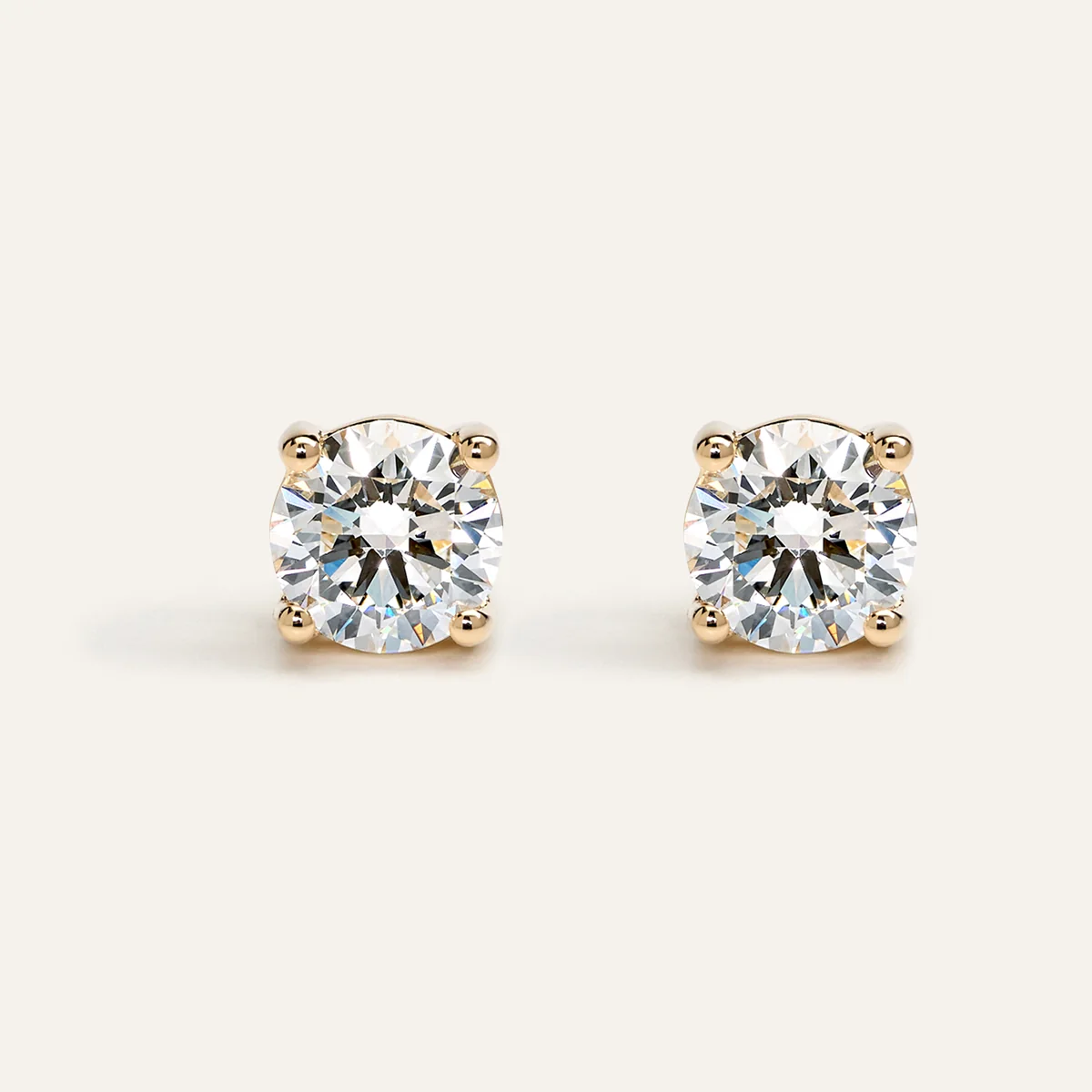
This is the classic diamond stud, made far more approachable by using lab-grown stones. Lab-grown diamonds are real diamonds, chemically and physically the same as mined ones, just created above ground. Quince sets them in 14k yellow or white gold, in a four-prong basket that lifts the stone to catch light, and the stones are IGI certified with an excellent cut, VS2 clarity and F to G color. The posts are double notched and come with butterfly backs, and sizes run from 0.50 up to 5 carats total.
Buyers rate them very highly and many say they wear them every day without taking them out. They describe strong sparkle, a secure back and no trouble for sensitive ears. The most common mistake is on sizing: carat weight is listed for the pair, so 1 ctw means two half-carat stones, and one buyer had to reorder for that reason. A few wished they had gone a size bigger. Prongs can catch on fine knits and collect lotion behind the stone, so a quick clean with warm soapy water keeps them bright.
Fit note: 0.50 to 1 ctw reads as an everyday size on most lobes; go larger only if you want the studs to be noticed across a room.
Mejuri Mini Bezel Round Lab-Grown Diamond Studs
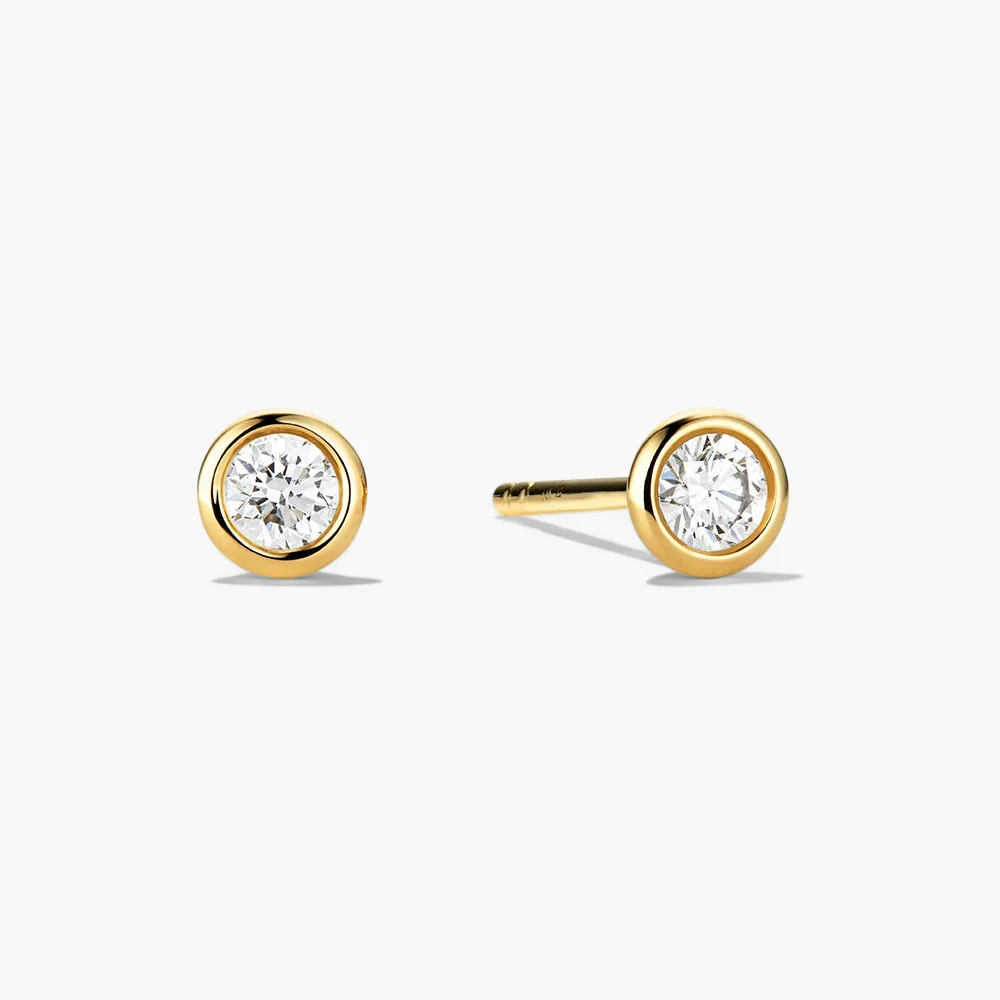
If prongs feel too formal, or you keep snagging them, a bezel setting is the answer. Here a thin rim of gold wraps around each small lab-grown diamond, so there are no points to catch on hair, scarves or pillowcases, and the stone’s edge is protected from knocks. The studs are 14k solid yellow gold, measure about 4.1mm across with a 2.9mm stone, and sit low at roughly 2.4mm high. Total minimum carat weight is about 0.18.
Mejuri designs them for an ear stack, and reviewers use them both ways: alone in the first hole as a quiet bit of sparkle, or in a second or third piercing next to hoops. One buyer was pleased to find them larger in person than she expected from other reviews. The same reviewer noted that the posts are fine and could bend, so push the backs on straight rather than at an angle. The gold rim also makes the diamond look a touch bigger than its size.
Best for: low-key everyday sparkle, second and third piercings, and anyone who catches prongs on knitwear.
Mejuri Sphere Studs
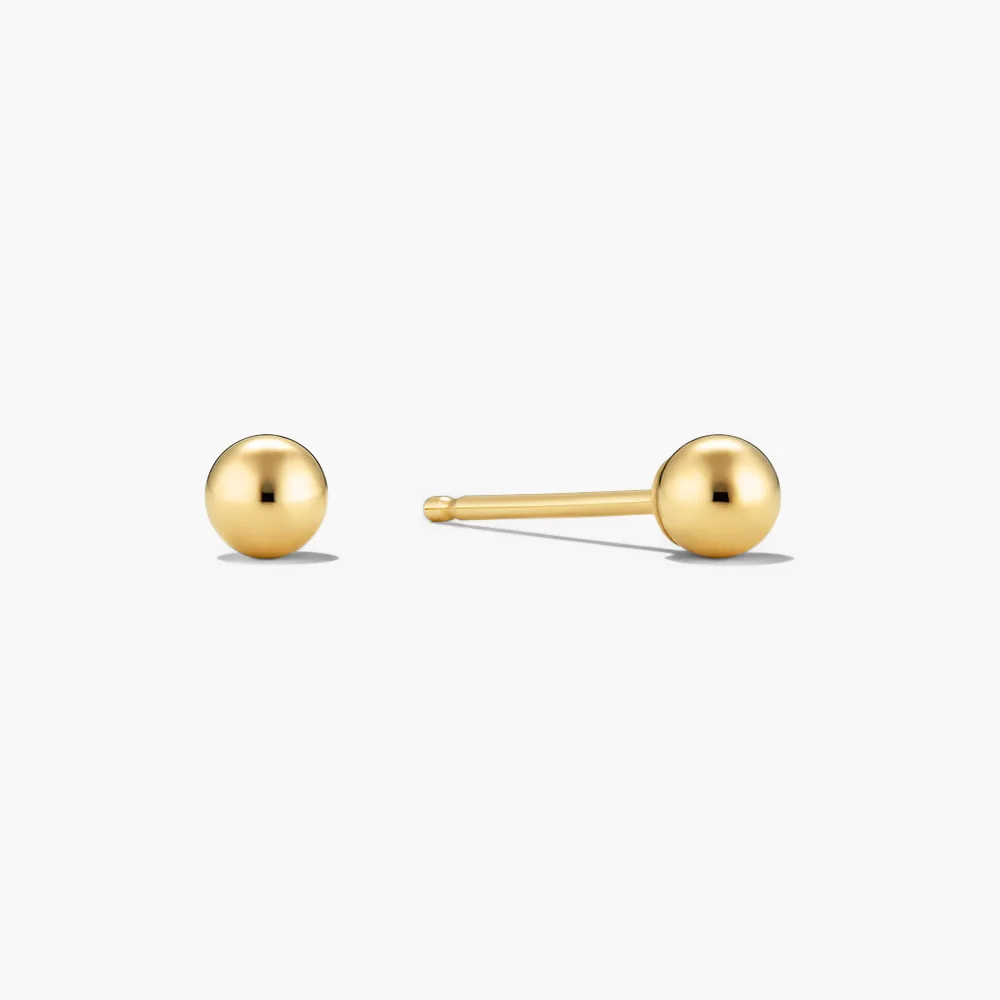
A tiny gold ball is the most neutral earring there is, and Mejuri’s Sphere Studs are the brand’s own idea of a starter stud. Each sphere is 3mm, made in 10k solid yellow gold or in sterling silver. Mejuri says its 10k gold is more durable than 14k, a sensible trade for a small stud you rarely take out, and it is still solid gold that will not flake.
Reviews are short and consistent: buyers say they forget they have them in, wear them all day and like how they slip into a stack of other earrings, silver or gold. People with several piercings use them to fill the gaps between bigger pieces. The size is the thing to understand before you buy. At 3mm, they look like a dot of gold, which is ideal for second holes and minimal looks but may feel too small in a first piercing if you want something visible.
Good to know: if you have a nickel sensitivity, solid gold and sterling silver are usually much easier to wear daily than plated brass.
The Pearl Source Freshwater Pearl Studs
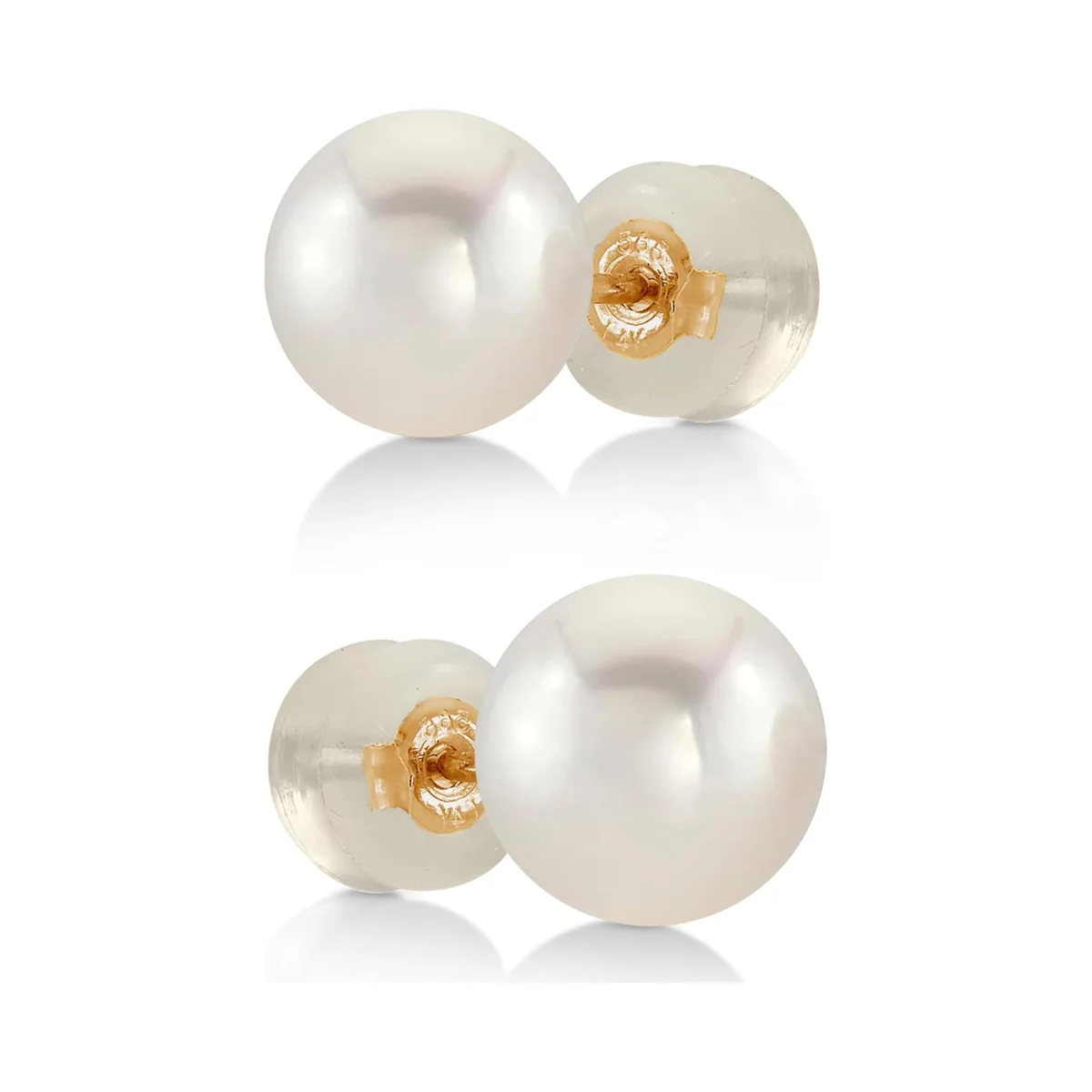
Pearl studs work with almost anything, from a T-shirt to a dress, and freshwater pearls are the durable, wallet-friendly way in. This long-selling pair uses AAA-grade cultured freshwater pearls at 7 to 7.5mm, the size pearl specialists often suggest for daily wear, set on 14k gold posts. It also comes in smaller and larger sizes, from 6mm up to 9.5mm, and arrives boxed with a certificate.
Buyers are most impressed by the shine and the size for the money, and several describe the color as a soft white with a slight iridescent sheen, which is typical of good freshwater pearls. Reviews are mixed on durability: most report no problems, but a few had a pearl separate from its post or lost an earring, so check the backs regularly. Pearls are softer than gemstones, so they last longest when they go on after perfume, hairspray and lotion, get a wipe with a soft cloth after wearing and are stored separately from harder jewelry.
Fit note: 6 to 7mm looks delicate; 8mm and up starts to read as a statement.
Amazon Essentials Gold-Plated Round Cubic Zirconia Studs
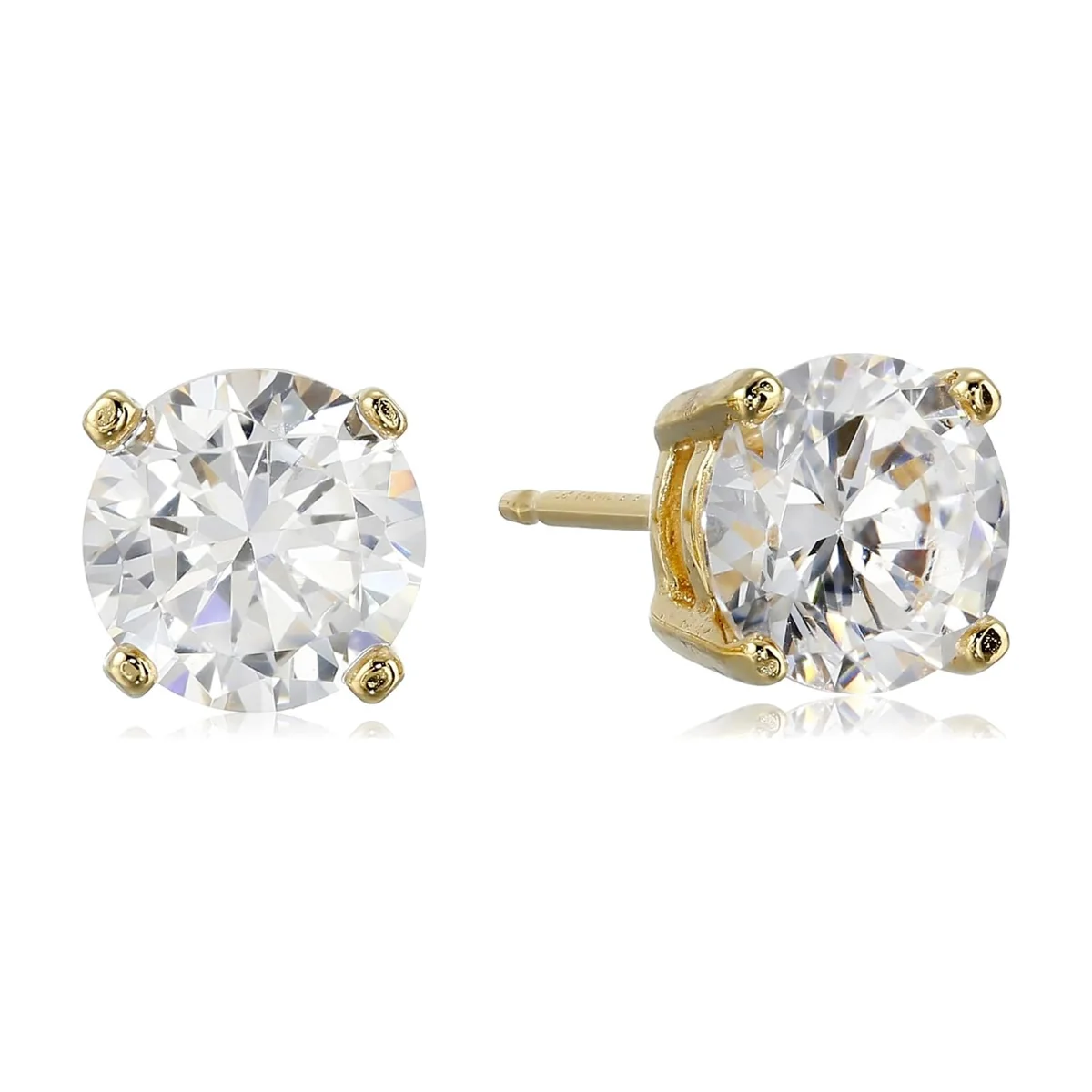
Not every everyday pair needs to be fine jewelry. These cubic zirconia studs are the low-risk option for gym days, travel, kids who borrow earrings or simply testing which stone size suits you before buying diamonds. The version shown is 18k gold plating over sterling silver with a 5mm round stone in a four-prong basket and butterfly backs, and the listing offers sizes from 4mm to 7mm along with other finishes and a princess-cut version.
Thousands of buyers say they look expensive and believable, with sparkle that is bright without being flashy, and many wear them daily. The complaints are the ones you would expect at this level: some found the backs loose, and a small number had a pair fall apart after a few wears. Plating also wears faster than solid metal, so take them off for showers and swimming. Swapping in snug replacement backs is an easy fix that many reviewers recommend.
Best for: a budget everyday pair, a backup for travel, or trying out a size before buying diamonds.
How to choose
Choose the metal first. Solid 10k or 14k gold and sterling silver suit most sensitive ears and do not flake. Plated studs are fine for occasional wear but last longer if you keep them dry. If your ears react to inexpensive jewelry, prioritize the posts, since they sit inside the piercing.
Size by placement. Stones and spheres of 2 to 4mm suit second and third piercings and minimal looks. Around 5 to 6mm, or about half a carat per diamond, is the classic first-hole size. Pearls of 6 to 8mm cover most everyday wear.
Pick a setting for your routine. Four-prong settings show off a stone but can snag fine knits. Bezel settings and smooth spheres sit flat and are easier for sleeping and wearing under hats.
Check the backs. Butterfly backs on notched posts are standard and easy to use. If you lose earrings often, look for snug or locking backs, and replace any back that starts to slide.
For care habits that keep gold and plated studs looking new, read how to keep everyday jewelry from tarnishing.
Quick answers
What does ctw mean? Carat total weight, the combined weight of both stones. A 1 ctw pair has two half-carat diamonds.
Are lab-grown diamonds real diamonds? Yes. They have the same chemical makeup and hardness as mined diamonds. The differences are origin and price, and resale value is typically low.
Can I sleep in my studs? Small, flat studs such as bezels and spheres are the most comfortable at night. Larger prong-set stones and butterfly backs can press on your neck or catch on bedding, so many people take those off.