You put on wide trousers and ballet flats, and the shoes disappear. You swap in loafers, and suddenly the whole outfit looks planned. Flats sit at the same height, but a ballet flat, a loafer and a mule each change the line of an outfit in their own way. Here is what each shape does, what to wear it with, and which pair to reach for on which day.
How they differ at a glance
Ballet flats are low-cut and soft, with a thin sole and a vamp that shows a little of the top of the foot. They read light and pretty, and they relax anything structured.
Loafers are closed slip-ons with a higher vamp, a firmer sole and usually a low stacked heel. They come from menswear, so they look tailored and grounded, and they hold the foot better than either of the other two.
Mules are backless. They slip on in seconds and feel easygoing, though a pointed toe or sleek leather can make them surprisingly sharp. With nothing holding the heel, they are the least secure for long walks.
Ballet flats: the softest option
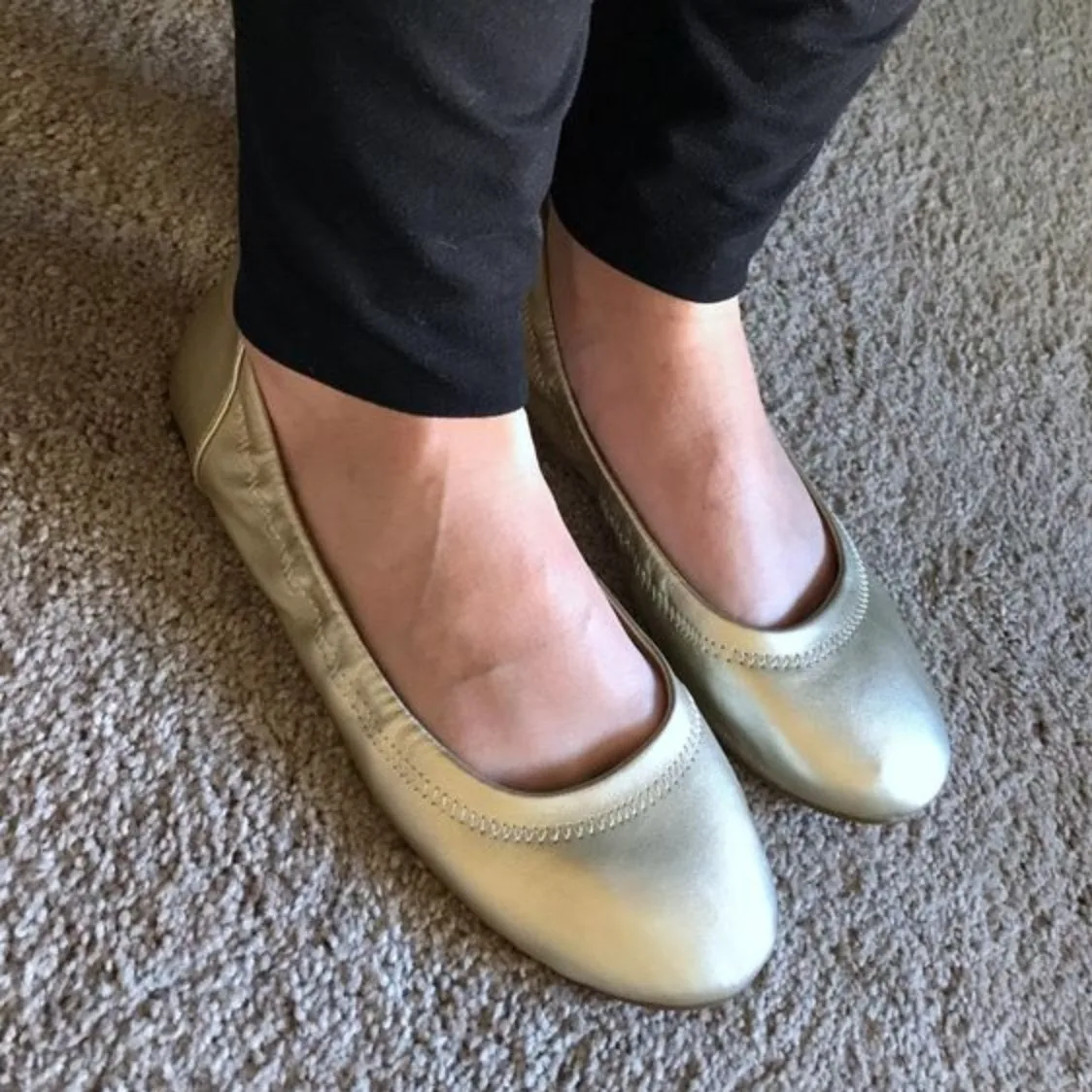
Ballet flats look best when a little ankle shows. Cropped trousers, straight or slim jeans that stop at or just above the ankle bone, and pants cuffed once all leave a gap between hem and shoe, which keeps the leg looking long. Full-length wide trousers tend to swallow such a slight shoe, as the gold pair above shows: it works because the dark pants stop short.
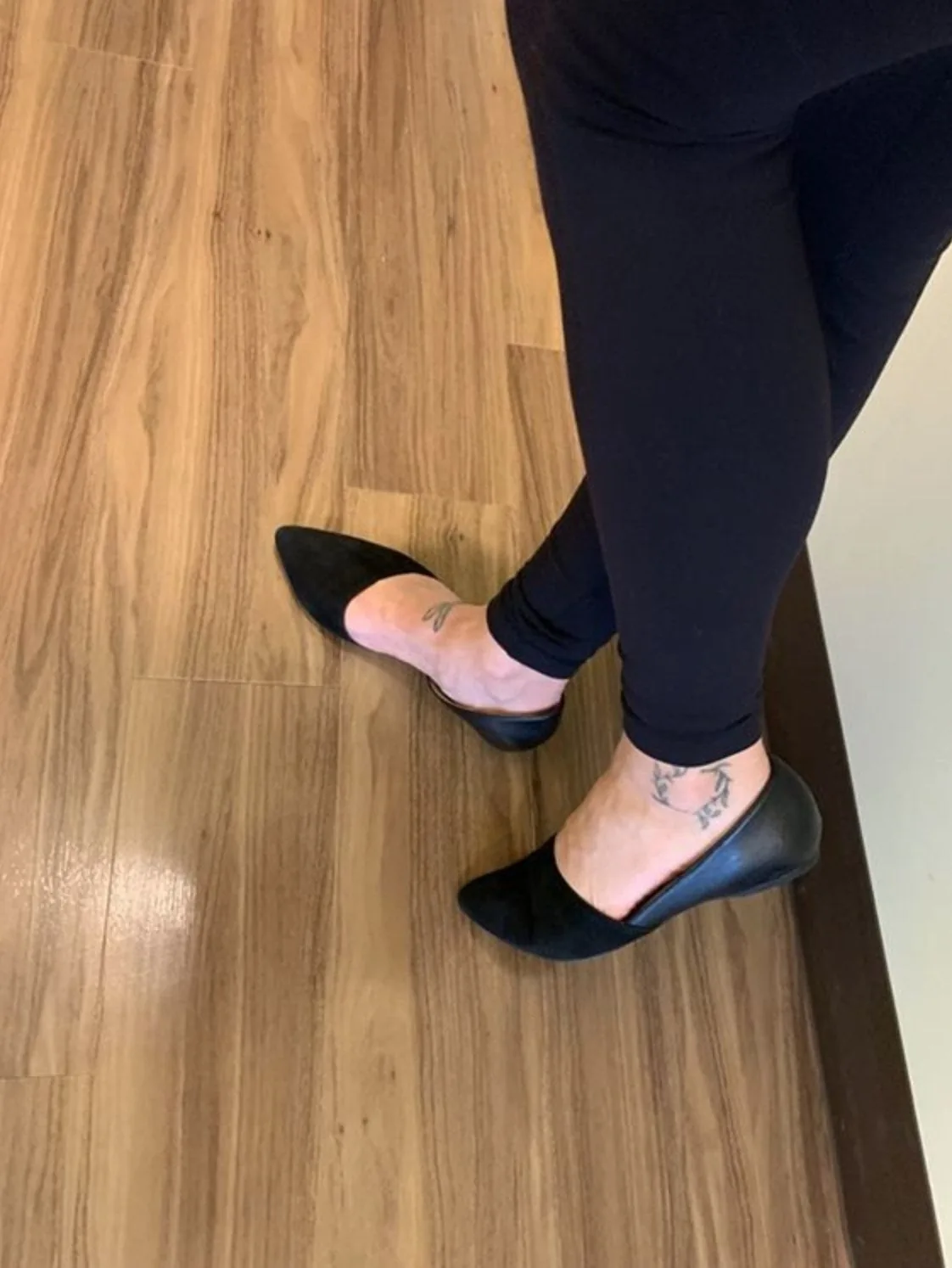
Toe shape sets the mood. A round toe looks sweeter and more casual; a pointed or almond toe looks more grown-up and lengthens the foot, which helps with midi skirts and work trousers. Black pointed flats with slim black pants, a fine-gauge sweater and a structured tote is about as easy as office dressing gets.
With skirts and dresses, flats sit naturally under anything above the knee and under fluid midis and slip dresses that move as you walk. Try a navy slip dress, a cream cardigan over the shoulders and metallic flats for a weekend lunch.
Comfort is the catch. Many ballet flats have almost no arch support and a thin sole, so look for a cushioned footbed, a slightly thicker sole or a tiny heel. If your heel slips out, the shoe is usually a touch long; buy the pair that fits snugly rather than sizing up. Liner socks cut for low shoes help with rubbing without showing.
Foot specialists are blunt about the classic paper-thin flat: fine for an evening or a short office day, not for hours of walking or standing. A sole that folds in half offers no side-to-side stability and leaves the arch, calves and Achilles doing all the work, which is how heel and arch pain creep in. Rotating flats with sneakers or loafers through the week helps more than any single perfect pair.
A quick in-store test for flats
- Bend it: the sole should flex where your toes bend, near the front, not fold in the middle under the arch.
- Twist it: hold both ends and wring gently. A shoe that twists like a dishcloth will not steady your foot.
- Press the heel: a firm heel counter that cups your heel keeps the shoe on without you gripping with your toes.
- Check the toes: you should be able to wiggle them. A toe box that squeezes from the sides will only get worse by afternoon.
- Look for a little lift: a few millimetres of heel and a padded footbed take strain off the arch and lower back.
Loafers: the hardest-working pair
If you can only own one pair of flats for work, make it loafers. Their structure stands up to tailoring and makes jeans and knits look deliberate rather than thrown on.
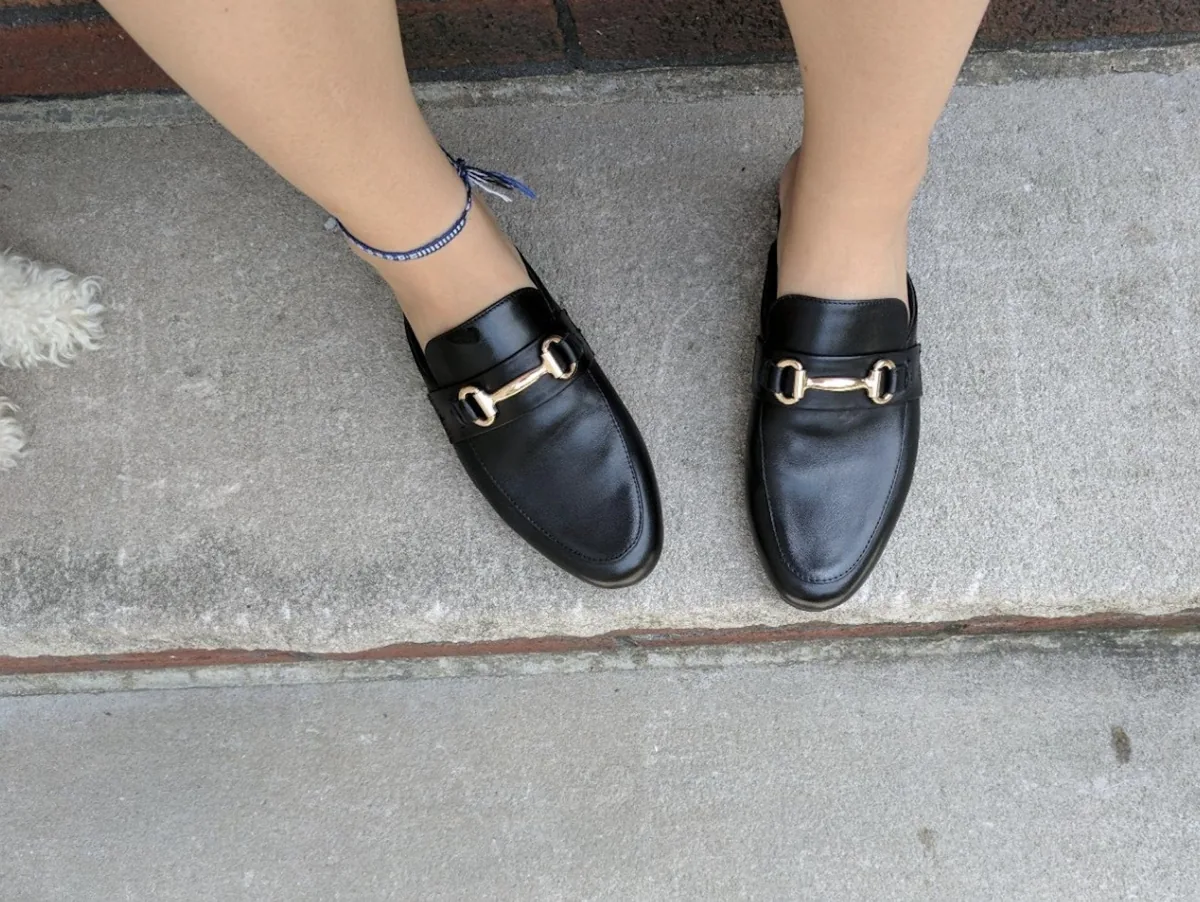
Wear them with straight or relaxed trousers that just skim the top of the shoe, cropped jeans with a sliver of ankle or sock, and blazers or chunky knits. Black horsebit loafers with grey trousers, a white shirt and a camel coat is a formula you can repeat all winter.
In cooler months, loafers with a knee-length or midi skirt and opaque black tights take you from the office to dinner. Chunky lug-soled pairs add weight and suit wide jeans, cargo pants and heavy coats; slim, low-profile pairs suit fine trousers and dresses.
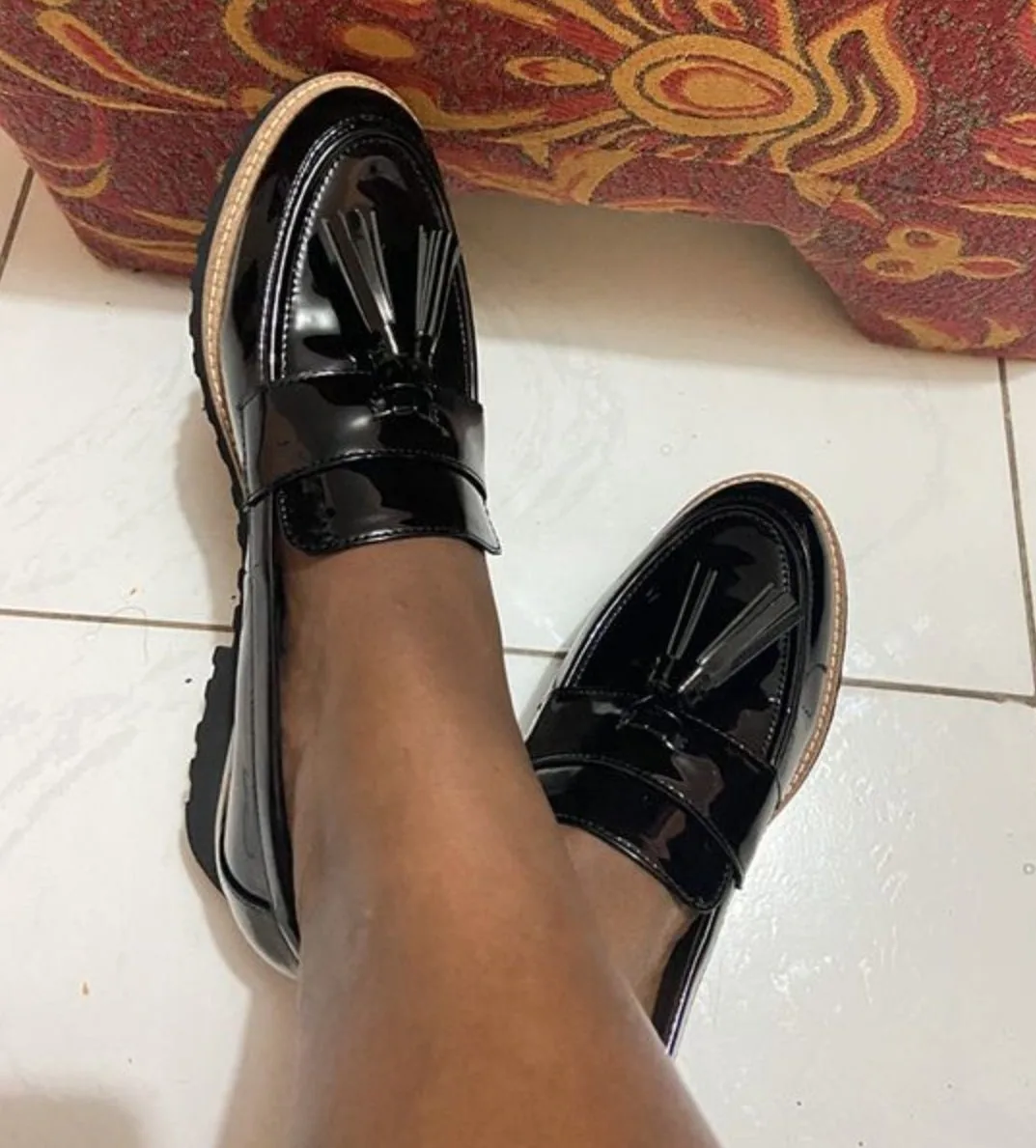
Patent and tassels, like the pair above, dress loafers up for evenings and pair well with cropped tuxedo-style trousers. Socks are optional and part of the look: a fine sock that matches your trousers keeps things quiet, while a ribbed or contrasting sock under cropped pants feels more playful. Going bare-ankled? No-show liners protect both the lining and your heels.
If you want the sock to show on purpose, keep the colors close: cream or oatmeal with brown loafers, crisp white or soft grey with black. Matching the sock to your trousers lengthens the leg; a white ribbed sock with black loafers is the one contrast that almost always looks deliberate. Under skirts and dresses, knee-high socks can stand in for tights when the weather is cool but not cold.
Fit matters more here because there are no laces to adjust. The shoe should hold your heel without rubbing and feel snug across the instep. Leather gives a little in width with wear, but it never gets shorter, so a pair that slips badly from the first steps rarely improves. If you are between sizes, our guide to finding your true shoe size and width walks through measuring at home.
A small amount of heel lift in brand-new leather loafers is normal, since the sole is still stiff; a few millimetres that eases over the first several wears is fine. If the heel rises with every step, or you can slide a finger behind it, the pair is too long or too wide and no amount of breaking in will fix it. Try a half size down or a narrow width, and always try loafers on with the socks you plan to wear, because a ribbed or wool sock takes up real room. Suede softens faster than polished leather, so it is the kinder choice if you hate a break-in period.
Mules: easy, but choose them carefully
Mules look best with clothes that move or with a clean, cropped line. Wide-leg trousers that end a little above the ankle, straight jeans with a raw or cropped hem and flowing midi dresses are natural partners. With the back of the foot on show, the outfit feels lighter, which is much of the appeal.
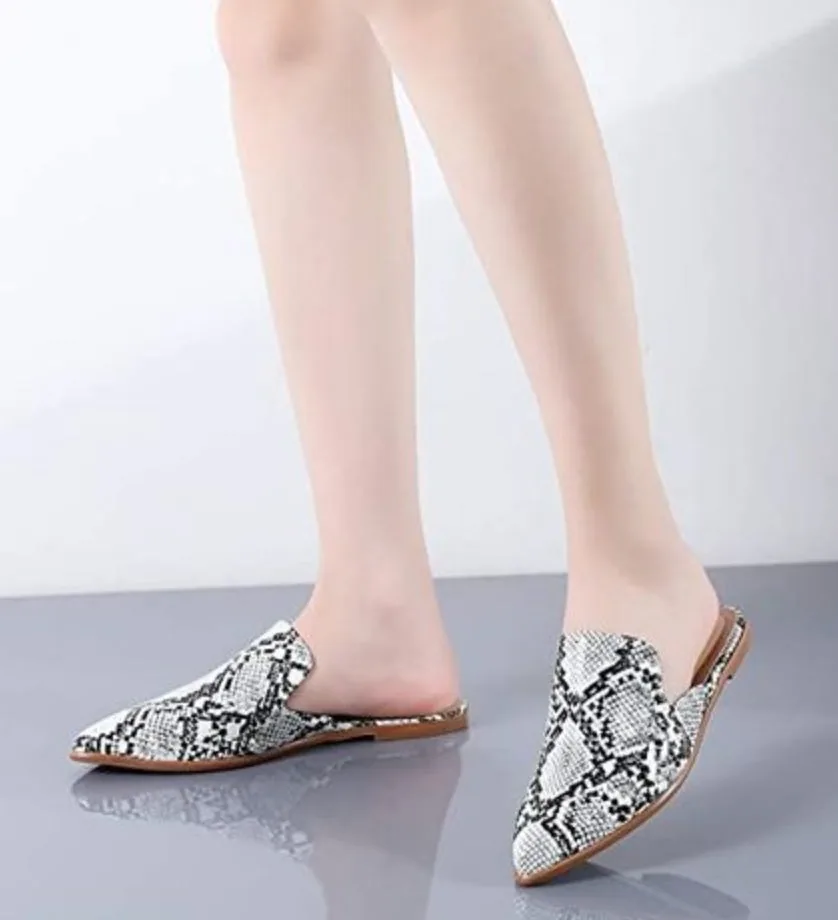
Texture makes a mule look intentional. Snake print, suede, woven leather or a bit of metal hardware turns a simple shape into the most interesting part of a plain outfit. Snake-print mules with straight blue jeans, a white tee and a black blazer is a reliable weekend-to-dinner look.
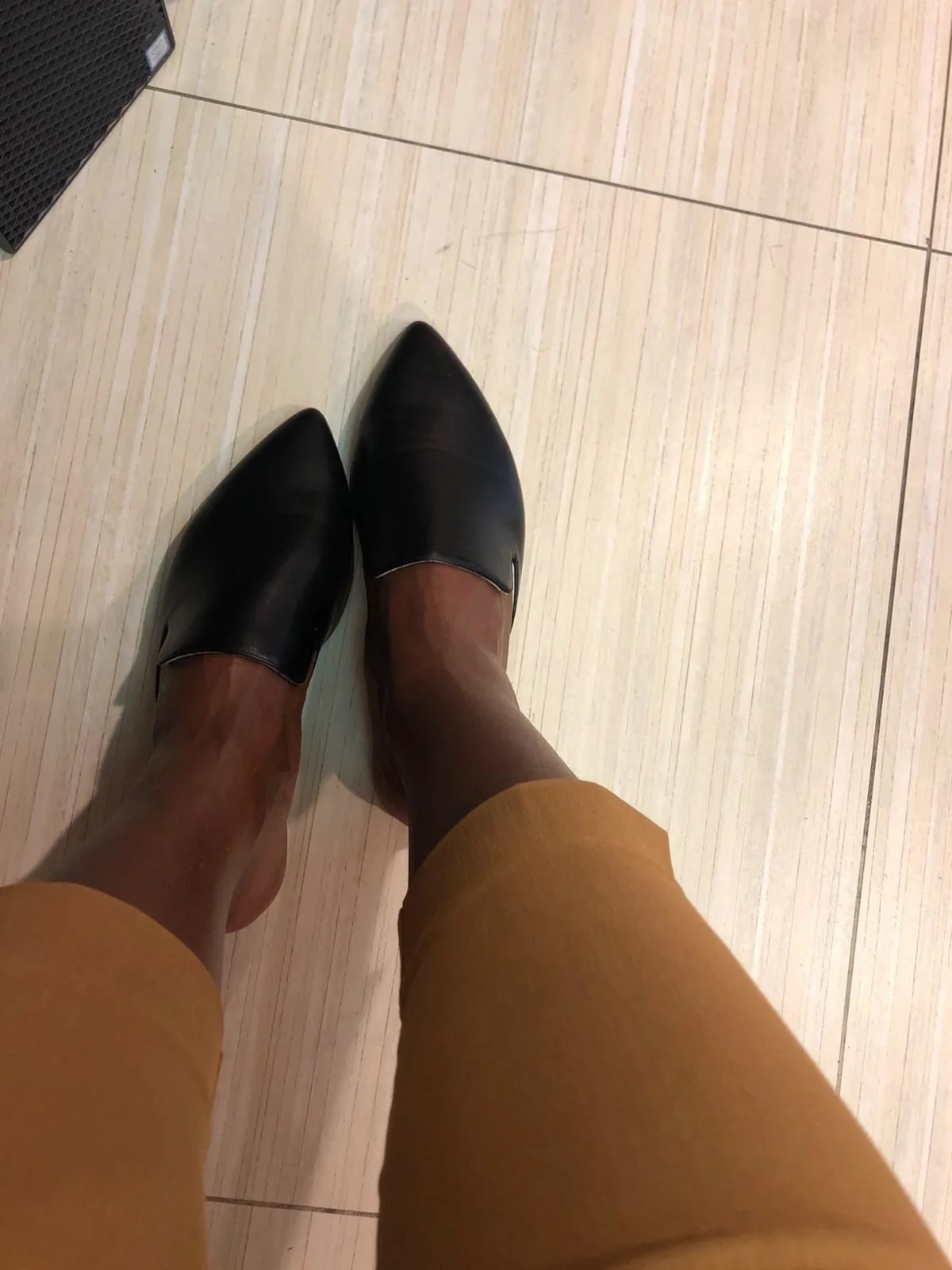
A pointed black leather mule can stand in for a smart flat in a relaxed office, especially with tailored trousers. Colored trousers like the mustard pair above look sharp with black mules, a black knit and a slim belt. Rounder, softer or embellished mules lean weekend.
The trade-off is grip. Without a back, your toes grip to keep the shoe on, which gets tiring on long walks and makes stairs and wet pavement trickier. Look for a vamp that covers enough of the foot to hold it, a lightly textured footbed and a sole that is not too stiff. Mules are great for short days, dinners and warm weather, less so for sightseeing.
Your foot shape decides a lot here. Mules tend to stay put on feet with a high instep and a wider footprint, because the vamp has something to hold. On narrow, low-volume or bony feet they slide around, and buyers with that foot type often say the fix is a narrow width, a higher vamp that wraps the sides of the foot, or a small block heel rather than a flat. Socks and tights make mules slippier, not safer. If backless shoes never feel secure on you, a slingback gives a similar open look with a strap to hold the heel.
Which pair for which day
- Office with a dress code: loafers first, then pointed ballet flats. Both work with trousers, skirts and blazers.
- Relaxed or creative workplace: any of the three, with pointed mules giving trousers and knits a modern edge.
- Weekends and travel: loafers or cushioned ballet flats for walking, mules for errands, lunches and evenings out.
- Dresses: ballet flats for short or flowing styles, mules for midi and slip dresses, loafers when you want to toughen up something pretty.
Colors that work hardest
Black and a mid-tone brown or tan cover most wardrobes. A metallic flat in gold, silver or pewter behaves like a neutral and lifts simple clothes, while a shade close to your skin tone lengthens the leg under dresses and cropped trousers. Once those are covered, prints and colors are the fun pairs to rotate in.
Quick answers
Are ballet flats bad for your feet?
Not in small doses. The problem is wearing thin, unsupportive flats all day, every day. Choose pairs with a firmer sole, a cupped heel and some cushioning, slip in a thin arch insert if you need one, and save the flimsiest pairs for short outings.
Can you wear loafers with dresses?
Yes. Slim, low-profile loafers suit midi and slip dresses; chunky lug-soled pairs suit heavier knit dresses and shirt dresses, especially with tights or knee socks.
Should loafers fit tighter than sneakers?
Snug, yes; painful, no. With no laces, the shoe has to hold your heel and instep on its own, so many people end up a half size smaller than in sneakers. Sizing varies by brand, so measure your feet and read each brand’s own size advice rather than assuming.
Do mules work for wide feet?
Often better than for narrow feet, as long as the vamp is not cutting into the top of the foot. Soft leather, an almond or square toe and a wide-fit option help most.
If you are building a work wardrobe from scratch, start with one pair of black loafers and add flats or mules once you know which days you actually wear them. Our guide to business casual outfits has full looks to try them with, and you can browse more picks in Our Finds.