That sweater you loved in October is covered in fuzz balls by January, and the cuffs have started to sag. Most of that damage comes from four habits: washing too often, washing too roughly, drying with heat and hanging knits up. Fix those, and even an inexpensive sweater lasts noticeably longer, whether it is a plain crewneck or a delicate open-back knit like the one above.

Why sweaters pill in the first place
Pills are tiny balls of tangled fiber. Knit yarns contain short, loose fiber ends, and when the fabric rubs against itself or something else, those ends work their way to the surface and twist together. That is why pilling shows up first under the arms, on the sides, at the cuffs and anywhere a bag strap, seatbelt or desk edge rubs.
Some pilling is normal in the first few wears of wool and cashmere, while loose surface fibers work their way out, and on a well-made sweater it should ease off after a wash or two. Persistent heavy pilling usually points to the yarn itself: short fibers, a loose knit and soft, low-twist yarn all pill more.
Fiber content matters too. Pills on wool and cashmere tend to break off over time, while pills on acrylic and polyester are anchored by strong fibers and stay put. That is why a cheap acrylic blend can look worn out after one season. Our guide to reading fabric labels explains what to check before you buy.
When you shop, a few quick checks predict pilling better than the price tag:
- Stretch a corner gently. A dense, tight knit springs back; a loose, airy one that gapes open will pill and sag faster.
- Rub the surface between your fingers for a few seconds. If it already looks fuzzy in the store, it will look worse after a month.
- Read the blend. Merino gets the most consistent praise for staying smooth. Cashmere varies a lot with fiber quality, so very cheap cashmere often pills heavily. Small amounts of acrylic or polyester mixed into a natural fiber are the usual culprits behind stubborn, permanent pills.
You can’t make a knit pill-proof, but you can cut down on friction. Wear a smooth layer underneath rather than a textured one, move a crossbody strap to the other shoulder now and then, and give sweaters a day off between wears so the fibers can recover.
Wash less than you think
Wool and cashmere naturally resist odor and shed many light stains, so they don’t need washing after every wear. After you take a sweater off, let it air out flat or over a chair back for a few hours before putting it away. A common rule of thumb is to wash after about five wears, sooner if the sweater is visibly dirty, smells or sits against bare skin. Cotton and synthetic knits pick up odor faster and usually need more frequent washing.
How to hand wash a sweater
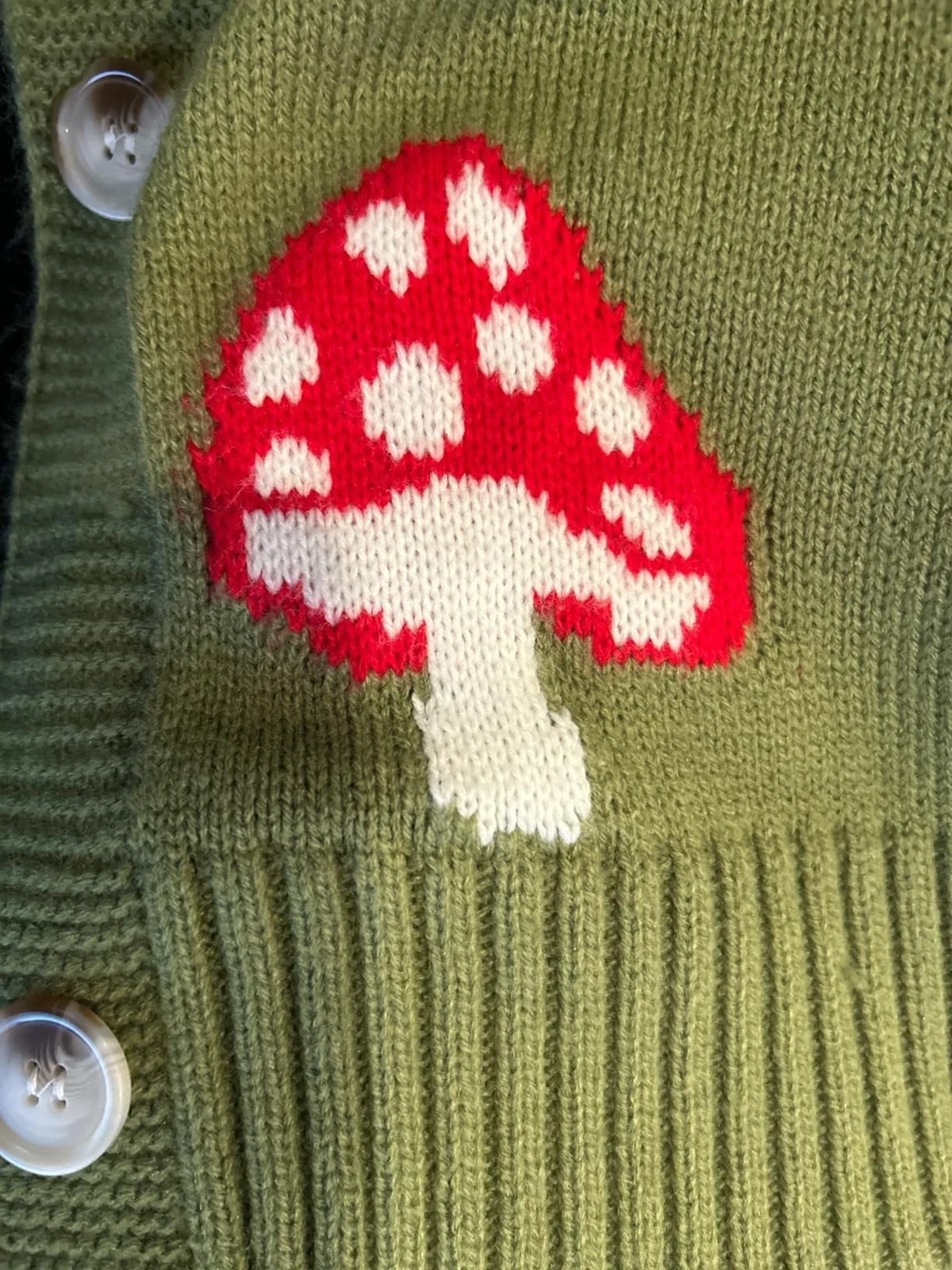
Hand washing is the gentlest option, and it is the safest bet for colorwork and intarsia knits like the mushroom cardigan above, where colors can bleed and floats can snag. It takes only a few minutes of actual work:
- Fill a clean sink or basin with lukewarm water, around 86°F (30°C), and add a small amount of wool or cashmere wash, or a mild gentle detergent. Avoid regular “bio” or stain-fighting detergents: their enzymes are designed to break down protein, and wool and cashmere are protein fibers. Skip bleach entirely.
- Turn the sweater inside out, submerge it and gently press it through the water. Do not rub or scrub.
- Let it soak for around ten minutes.
- Drain, then rinse in water of the same temperature until no suds remain. Sudden temperature changes plus agitation are what cause wool to felt and shrink. A slightly cooler final rinse is fine; a jump from hot to cold, combined with rubbing, is the problem.
- Press out water with your hands. Never wring or twist.
Skip fabric softener. It leaves a coating on the fibers and wool doesn’t need it; good yarn gets softer on its own with gentle washing and time.
If you’d rather use the machine
Check the care label first. If it allows machine washing, turn the sweater inside out, put it in a mesh laundry bag, and use the wool or delicates cycle with cold water and the lowest spin setting. Wash it with similar light items rather than jeans or towels, which act like sandpaper against the knit.
Label says dry clean only? Respect it for structured, lined, embellished or very delicate pieces. Many plain wool and cashmere sweaters handle careful hand washing well, but test a hidden spot first, and know that the risk is yours.

Dry flat, never hot
The dryer is the fastest way to ruin a sweater. Heat and tumbling shrink and felt wool, and can stretch or warp other fibers. Instead:
- Roll the wet sweater in a clean, dry towel and press to soak up most of the water.
- Unroll and lay it flat on a fresh towel or a mesh drying rack.
- Gently reshape it, smoothing the body and easing the cuffs, hem and neckline back to their original size. Ribbed cuffs and hems, like the wide ones on a striped rib sweater, spring back best when you push them together while damp.
- Let it dry away from direct sun and radiators, flipping once. Thick knits can take a day or two.
Removing pills without damage
Lay the sweater flat on a table and work in good light. You have a few tools to choose from:
- A sweater comb or de-pilling brush works well on wool and cashmere. Use short, light strokes in one direction.
- A battery or electric fabric shaver is fast on larger areas. Hold the fabric flat and taut, keep the shaver moving, and don’t press down, or you can nick the knit.
- Small sharp scissors are fine for a few scattered pills. Snip, don’t pull.
Avoid pulling pills off with your fingers, which drags more fibers out of the yarn and creates new pills. De-pill before washing if you can, so loose fuzz doesn’t tangle further in the water.
Which tool to reach for depends on the knit. A comb is the gentler choice for cashmere and fine merino and is ideal for regular upkeep. Save the shaver for heavy pilling on sturdier knits, and use it sparingly on cashmere, where it can thin the fabric or cut a hole if pressed too hard.

Fold, don’t hang
Hangers stretch knits out of shape, pulling the shoulders into points and lengthening the body. Long, heavy cardigans like the grey one above suffer most, since their own weight drags on the shoulders.
Fold sweaters and store them on a shelf or in a drawer, with heavier knits at the bottom of the stack. Don’t cram them in tightly; crowded sweaters rub against each other and against the shelf, which adds to pilling. If you must hang a sweater for a short time, fold it over the bar of a hanger rather than hanging it by the shoulders.
For creases, a handheld steamer is kinder than an iron. If you do iron, use the wool setting, turn the sweater inside out and press through a damp cloth rather than sliding the iron across the knit.
Storing knits for the off season
Moths and carpet beetles are drawn to wool and cashmere, and especially to the traces of skin, sweat and food left on worn clothing. That is why a sweater should always be cleaned before it goes into storage, even if it looks fine.
- Make sure every piece is completely dry to prevent mildew.
- Store knits in breathable cotton bags or sealed bins, one per item or in small groups. Vacuum bags save space but can trap moisture and crush fibers, so they are a poor choice for fine knits. A sachet of silica gel in a bin helps in damp climates.
- Add cedar blocks or lavender sachets near (not pressed against) the clothes, and refresh cedar by sanding it lightly each season.
- Pull everything out a few times during storage, shake it out and check for damage.
Look sweaters over when you bring them back out. A small hole caught early is an easy fix with a darning needle or a quick visit to a tailor; left alone, it grows.
Rescue fixes for common sweater mistakes
It shrank in the wash
You can sometimes win some of it back. Soak the sweater for 15 to 30 minutes in lukewarm water with hair conditioner mixed in, roughly a tablespoon or two per quart or liter. The conditioner coats the fibers so they slide. Press out the water without rinsing, then gently stretch it back toward its old measurements and dry it flat, pinning the edges to a towel if needed. Expect partial recovery: lightly shrunk wool responds best, while heavily felted knits and blends with little wool barely move.
The cuffs and hem have gone baggy
Dampen just the ribbing, push it together into shape and let it dry flat. On wool, a few seconds of steam over the scrunched ribbing helps it tighten. Cotton and acrylic ribbing rarely recovers, which is one more reason to check the blend before buying.
There is a small hole
Look for the telltale signs of moths first: several small holes in one area, or fine, silky webbing. If you find them, clean everything nearby before storing it again. A single snag can be pulled back to the inside with a crochet hook.
If you change just one habit this winter, make it the dryer: keep every knit out of it, and dry flat instead. For outfit ideas that put them to good use, see our cozy weekend outfits, or browse Our Finds.