Sniffles, Fevers and Stubborn Medicine: A Parent’s Sick-Day Kit

Small children catch everything, and they can’t blow their own noses, describe how they feel or swallow medicine on request. A cold that would barely slow an adult down can mean a congested baby who can’t nurse, a toddler who won’t sleep and a parent trying to read a thermometer in the dark.
None of the items below replace a call to your pediatrician. What they do is make the ordinary parts of a sick day (checking temperatures, clearing noses, getting a dose in) quicker and less of a fight. Keep them together in one basket so they’re ready before you need them.
No-Touch Forehead Thermometer
Taking a temperature shouldn’t wake a child who finally fell asleep. This thermometer reads from a couple of inches away from the forehead, without touching the skin, and shows the result almost immediately on a large, clear display. It stores readings for up to eight family members, which helps when you’re tracking a fever across a long night or more than one sick kid.
Parents point out that because nothing touches the child, toddlers don’t get startled by it. There’s a fever alarm, a silent mode for night checks and a second mode for measuring objects instead of foreheads.
NoseFrida Nasal Aspirator
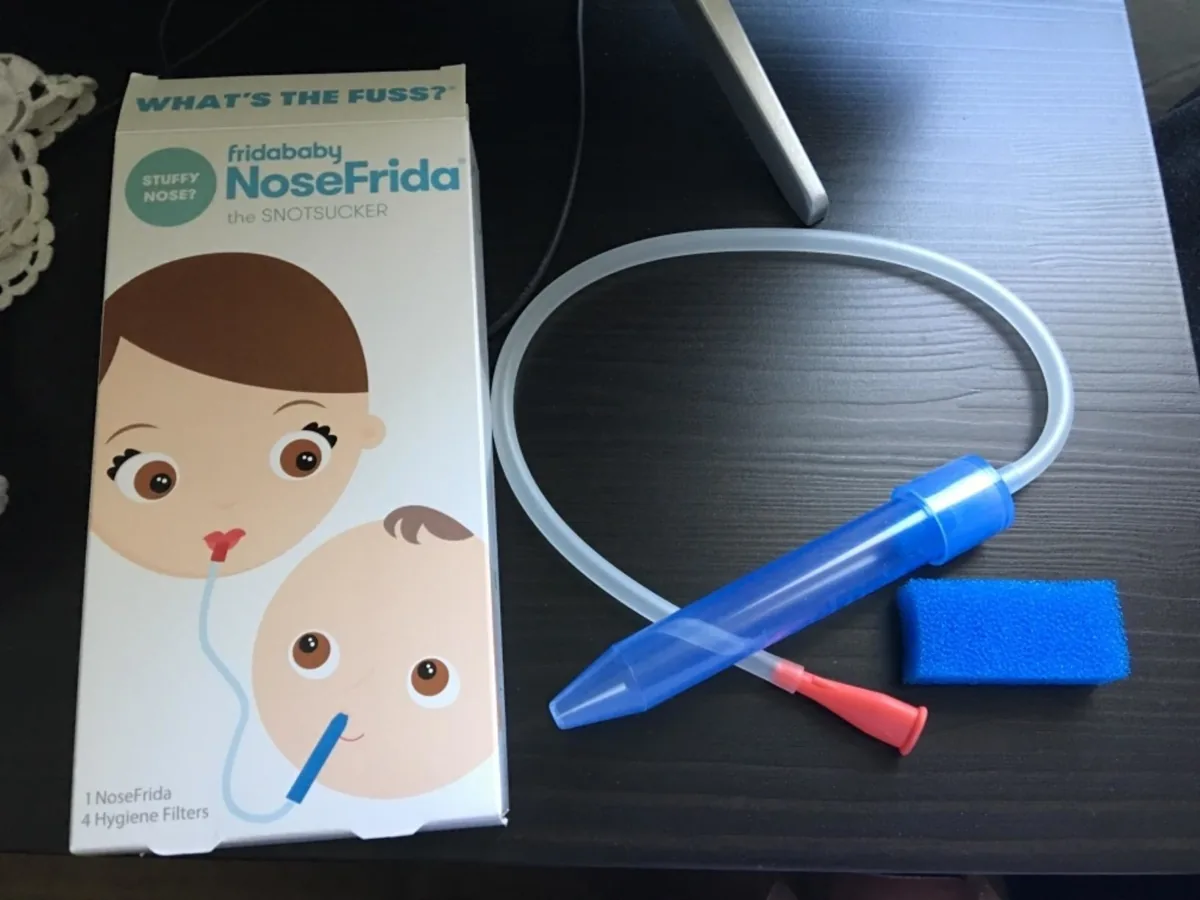
Babies breathe through their noses, which is why congestion hits them so hard, especially at feeding time. The NoseFrida is a simple tube system: you place the tip at the nostril and use your own gentle suction through the tube, while a disposable hygiene filter keeps everything on the baby’s side. The box includes four filters.
The idea puts some parents off at first. One mother whose doctor told her to stay on top of her baby’s congestion during an ear infection says it turned out to be easy to use, and that her daughter, who resisted at first, stopped fussing within days once she realized it didn’t hurt.
Boogie Saline Nose Wipes
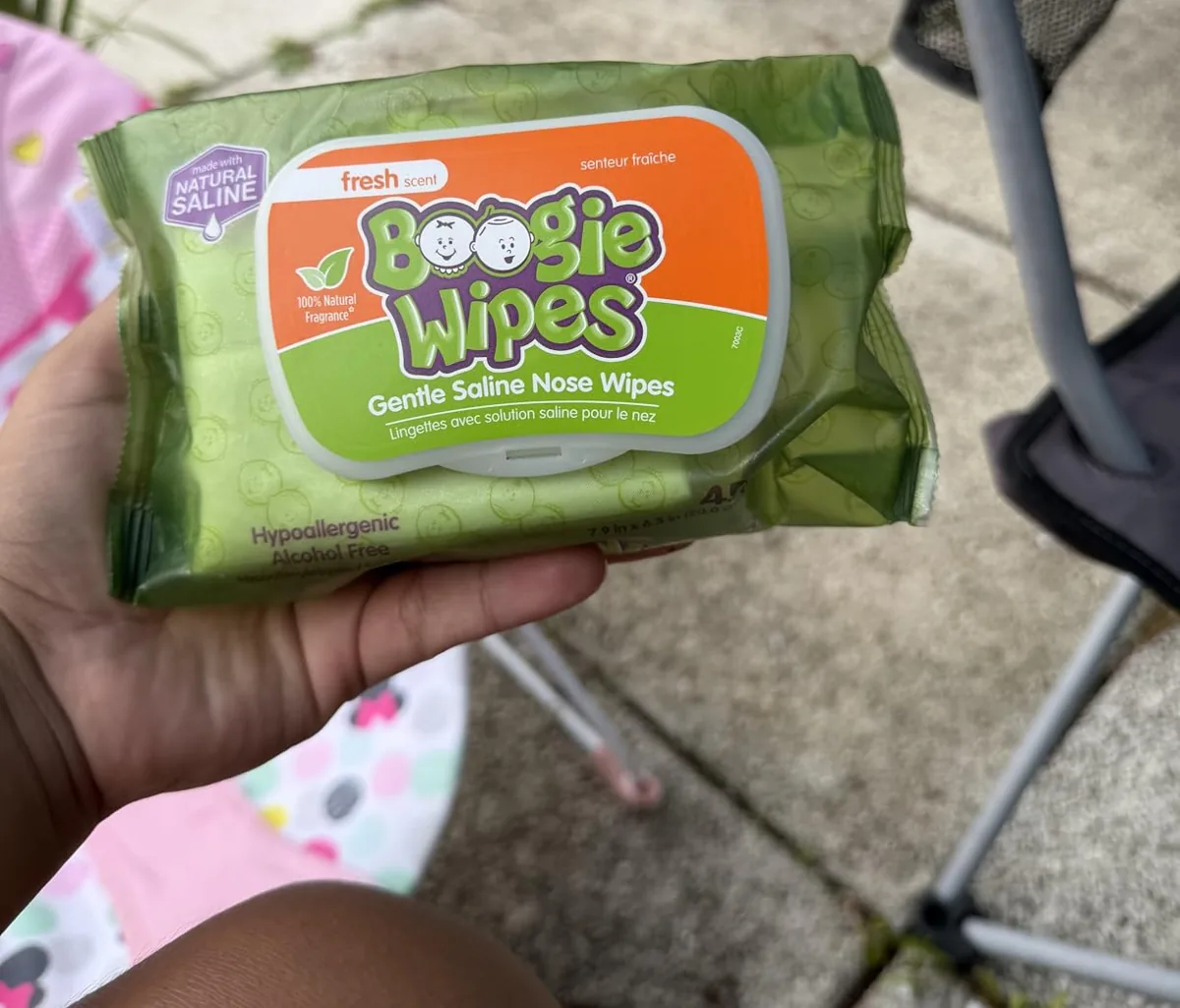
Between aspirator sessions, there’s the constant wiping. Dry tissues rub little noses raw quickly. These wipes are moistened with saline, which helps loosen dried, sticky mucus so it comes off with less scrubbing.
One father says his son no longer cries during nose cleanups now that they use them, and that they have the right amount of moisture and a scent that isn’t overpowering.
Good to know: A pack in the diaper bag is worth it all winter, not just on sick days.
Frida Baby Pacifier Medicine Dispenser
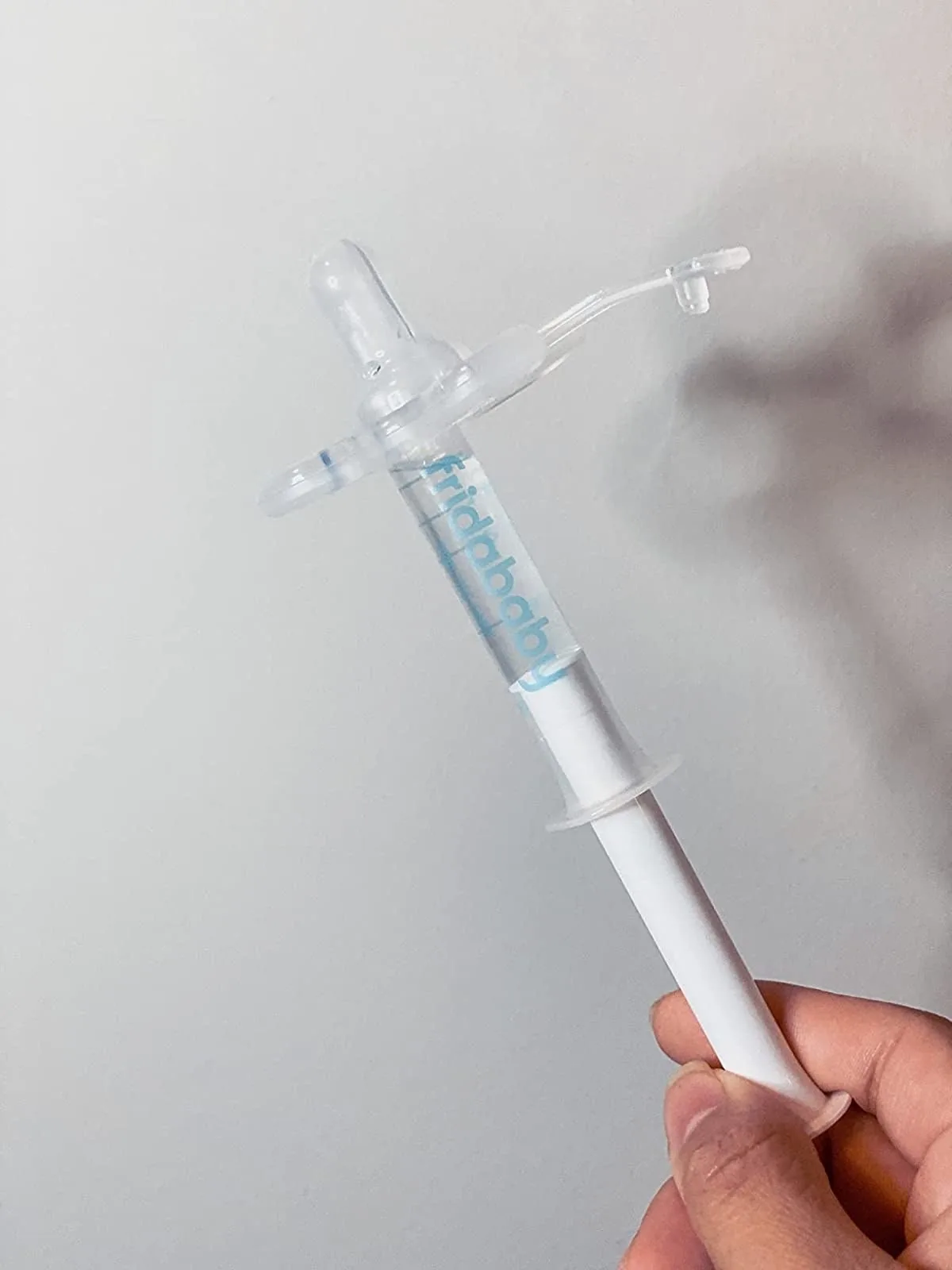
For infants, the problem with an oral syringe is that a lot of the medicine ends up on their chin, or on you. This dispenser fits a syringe through a pacifier-shaped nipple, so the baby sucks the way they would on a bottle or paci while you press the plunger slowly.
Parents of babies with ear infections and spit-up-prone eaters describe the same thing: doses that used to end up spat out now go down, with less coughing and sputtering. One mom notes her daughter has never turned it away over the taste, and that it soothes like a regular pacifier afterward.
Best for: Babies still on a pacifier or bottle.
Playhouse MD Butterfly Medicine Dispenser

Older babies and toddlers are a different challenge. They know what a syringe means and they’ve learned to clamp their mouths shut. This dispenser hides the dosing syringe inside a bright butterfly, turning medicine time into something closer to play. It was created by a pair of sisters, one a doctor and one a toy designer, and also comes in a spaceship version.
One parent whose daughter fought every syringe says this one works every time: the child plays with it, puts it in her mouth, and the dose is in before the protest starts.
Welly First Aid Kit
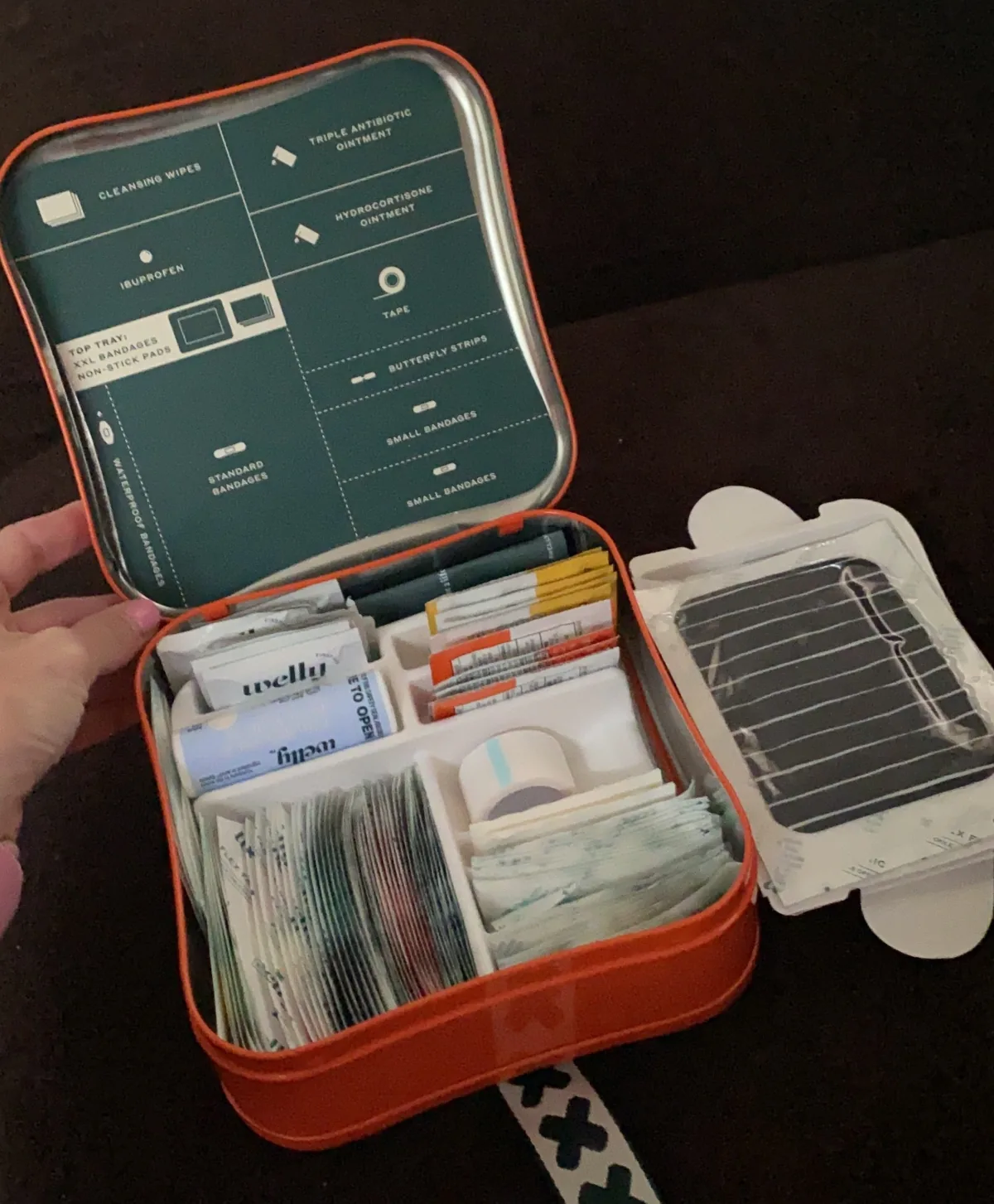
Sick days and scraped knees tend to come in the same season. This tin is organized into compartments of flexible fabric and waterproof bandages, tape, non-stick pads, butterfly strips, single-use antibiotic and hydrocortisone ointments, and ibuprofen. The bandages are colorful enough that kids tend to ask for them, and buyers say they stay on through baths and swimming.
The tin is compact enough for a diaper bag or the car glovebox, so the kit doesn’t have to stay home.
The best time to put this kit together is on a healthy week. Check the thermometer batteries, restock the wipes and bandages, and keep everything in one place, so that when the next cold arrives, the only thing you have to focus on is your child.