You do not have to choose between looking good in heels and feeling your toes at midnight. Plenty of heels are wearable for hours. They just share a few design traits that are easy to miss when you are looking at color and shape.
Learn to read those traits and you can tell, within a minute of picking up a shoe, whether it will carry you through a long wedding or send you hunting for flip-flops by the second speech.

Height is only half the story
People tend to judge a heel by how tall it is. What your foot actually feels is the pitch: the angle between the heel and the ball of the foot. A steep pitch pushes body weight forward, so the ball of your foot carries far more pressure than it was built for. That burning under the ball of the foot after an hour in a high stiletto is exactly that.
A platform under the toes reduces the pitch. A shoe with a tall heel and a thick front platform can feel gentler than a thinner shoe with a shorter heel, because the angle is softer. When you try a pair on, pay less attention to the number and more to how much weight you feel on the ball of your foot while standing still.
Lab measurements back this up. In one small gait study, moving from a heel of about three-quarters of an inch to one of about two and a third inches raised peak pressure under the forefoot by roughly a third, while the heel and midfoot carried less. Another study, which tested women on an adjustable platform, found that the highest heel each person could stand on safely varied enormously, from under an inch to more than three inches. There is no universal comfortable height. Many foot specialists suggest keeping everyday heels around two inches or lower and saving taller pairs for occasions with plenty of chances to sit.
Wider heels, steadier steps
The size of the heel where it touches the ground matters as much as its height. A block heel spreads your weight across a bigger area and keeps the ankle from wobbling, which is why block-heel sandals and pumps show up at so many outdoor weddings. They also do not sink into grass or catch in pavement gaps the way slim heels do. The nude sandals at the top of this page combine a block heel with wide straps, about as easy as a dressy heel gets.

Where the heel sits matters, too. A heel placed directly under the center of your own heel bone feels stable; one set too far back makes every step feel like a balancing act. Look at the shoe from the side: the heel should come down roughly below where your heel will rest, not behind it.
The case for a little lift
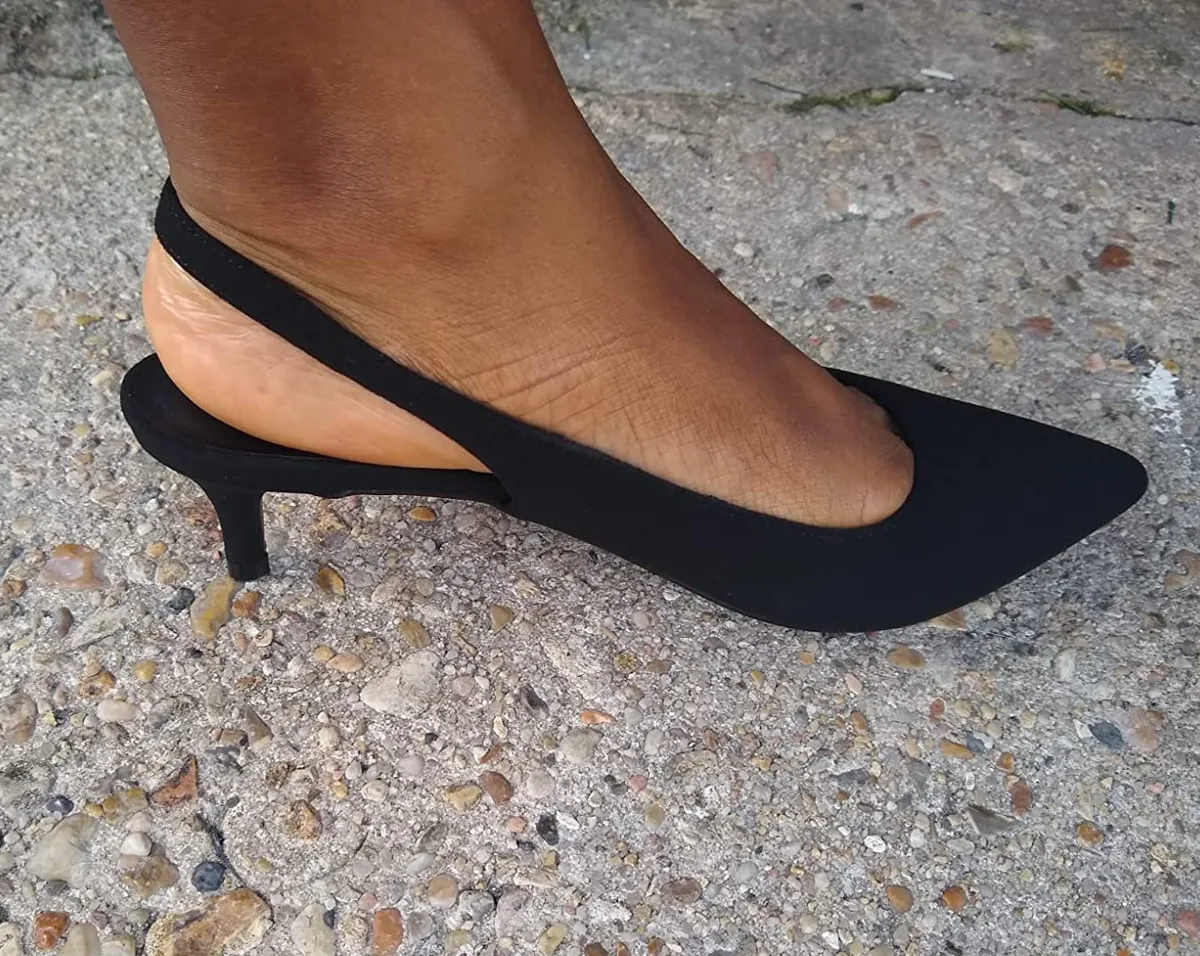
If you are not used to heels at all, start low. Kitten heels, usually somewhere around an inch and a half to two inches, and low block heels give a bit of height without much strain. A black kitten-heel slingback like the one above works with cropped trousers and a knit for the office, or with straight jeans and a blazer for dinner. Some people even find a small lift more comfortable than a completely flat shoe, especially if their calves feel tight.
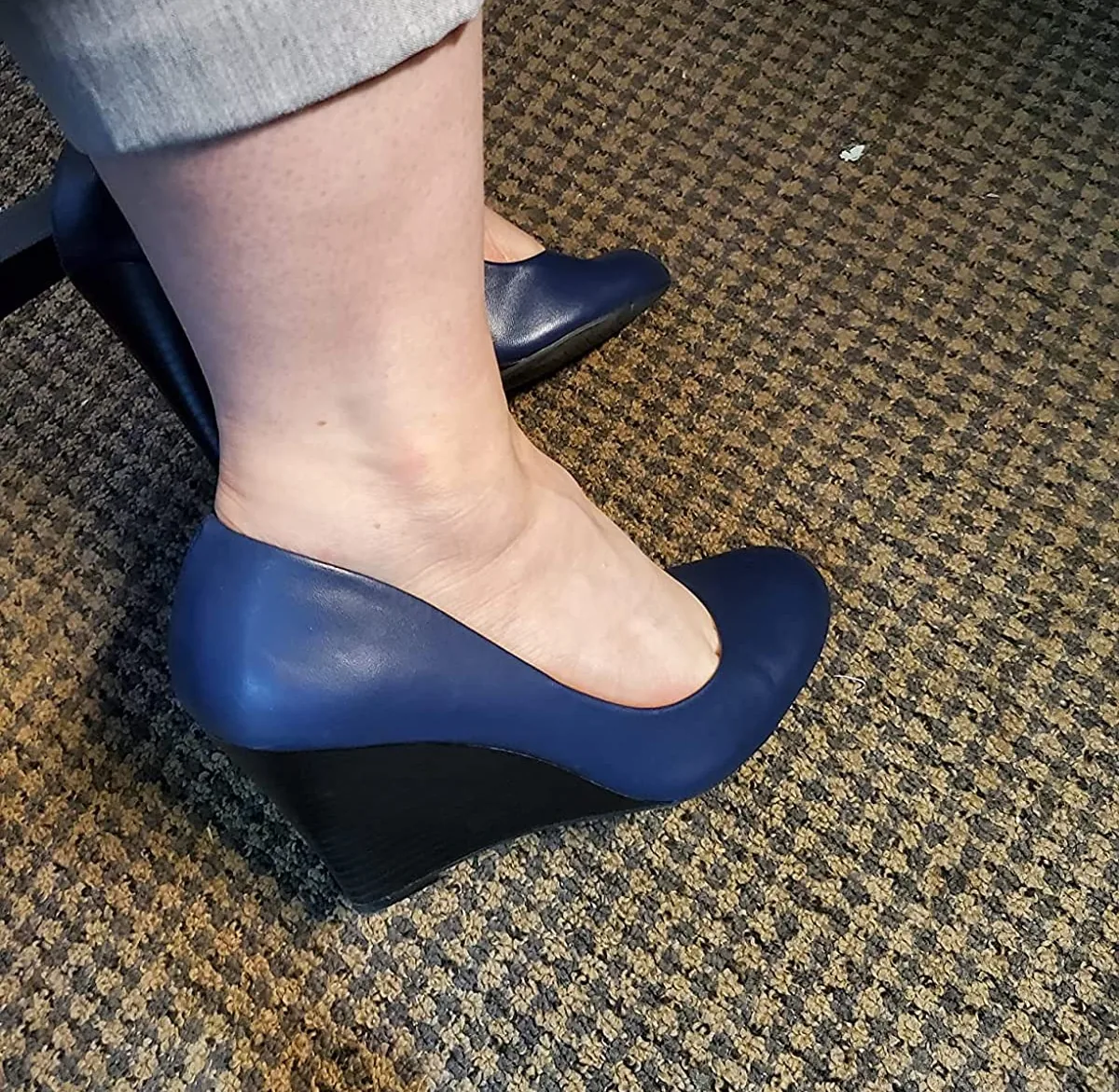
Wedges deserve a mention as well. Because the sole is supported from heel to toe, the weight is spread along the length of the foot instead of on two points. A navy wedge pump with navy or grey trousers is one of the easiest ways to wear height to the office.
Straps do more than look pretty
When a shoe is loose, your toes grip to keep it on, and that clenching is what makes feet ache. Straps take that job away from your toes. An ankle strap keeps the heel locked in place; a strap across the instep, like on a Mary Jane, stops the foot sliding forward into the toe box.
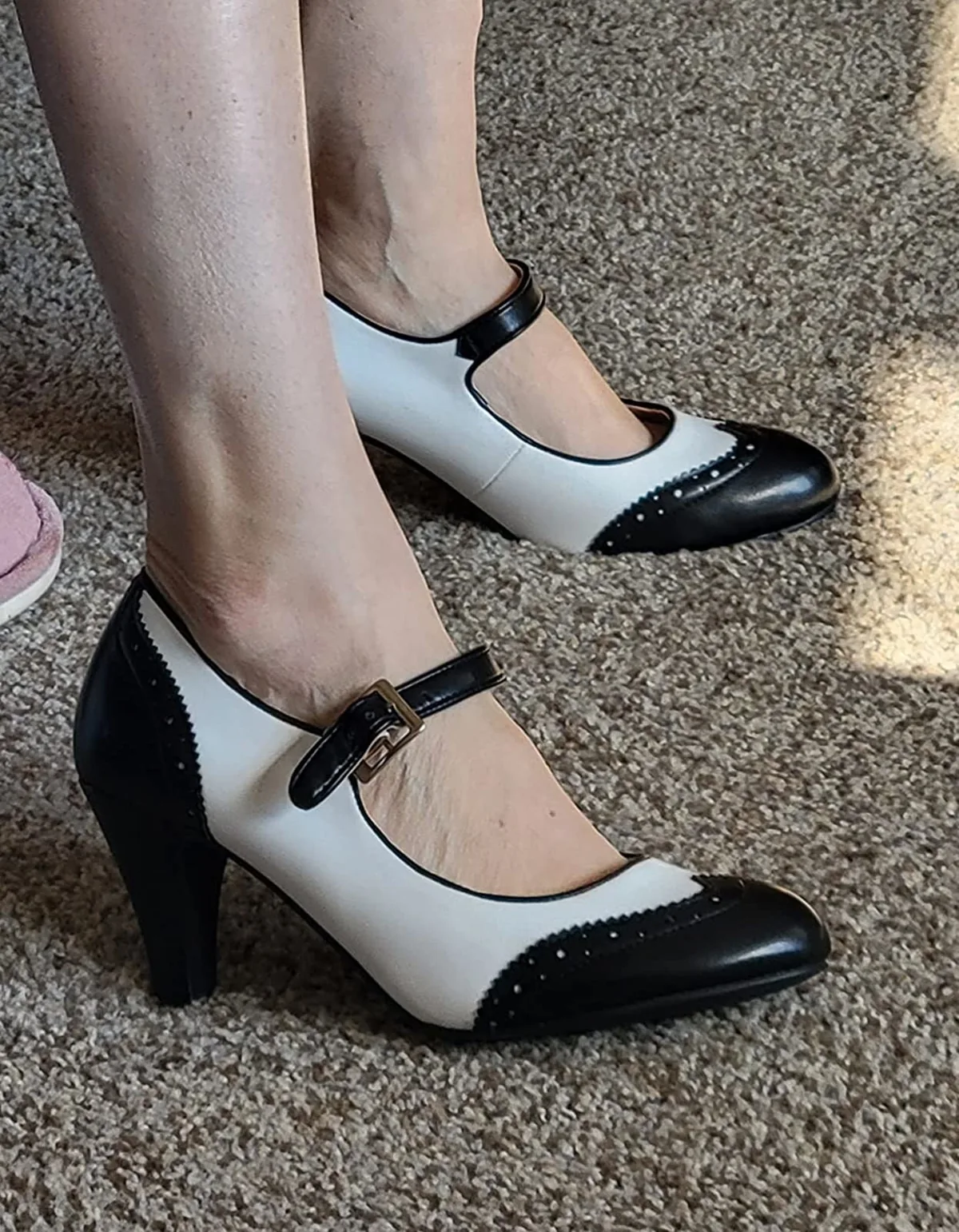
Adjustable buckles or hook-and-loop closures let you loosen the fit later in the day when feet swell. Wide straps are generally more comfortable than thin ones, which can cut in over a long evening. If you love a slim, strappy look, check that the straps are soft and finished on the inside, not raw-edged.
Give your toes somewhere to go
A pointed toe can be comfortable, but only if the point begins after your toes end. If the shoe starts tapering across the widest part of your foot, your toes will be squeezed together with every step. Almond and round toes are easier for most feet, and open-toe styles remove the problem entirely.
Check width, too. Heels tend to run narrow, and if the sides of your foot spill over the sole, no amount of padding will fix it. Many styles come in wide fits, and soft materials like suede and stretchy fabrics forgive a bit more than stiff patent. If you are not sure of your width, our guide to measuring your true shoe size shows how.
Do not size up to make a heel feel roomier. On a slope, the foot slides forward, so extra length ends up as a gap at the back and more pressure on the toes. If the length is right but the heel slips, a heel grip fixes it; if the toes are jammed against the front, the shoe is too short or too narrow, and no padding will solve that.
Padding and grip
Press the footbed with your thumb. A cushioned insole, particularly under the ball of the foot, makes a real difference over hours of standing. A rubber sole, or at least a textured one, keeps you from slipping on polished floors and wet steps. If a pair you love has a slick sole, a cobbler can add a thin rubber layer, and stick-on cushions can pad the ball of the foot.
Try them on like you mean it

Shop in the afternoon, when feet are at their largest, and wear the type of hosiery you plan to wear with them. Walk on a hard floor, not just carpet, and try a few steps quickly and slowly. Your heel should not lift out of the shoe as you walk, and nothing should pinch while you stand. With a slim stiletto like the nude ankle-strap pair above, also check that you can stand still for a minute without shifting your weight.
At home, wear new heels around the house for short stretches before the big day. Add heel grips if there is a small gap at the back, and keep blister plasters in your bag for the first outing. If a shoe still hurts after a few short wears, it is rarely going to come right on its own.
You will also hear about taping the third and fourth toes together before a long night in heels, to take pressure off the nerve that runs between them. Podiatrists do not use it as a treatment, and there is no research behind it, but some wearers say it helps them feel steadier; it does nothing for blisters. If you try it, use soft medical tape, not household tape.
Plan the evening, not just the shoes
Even the best pair benefits from a little strategy. Sit when you can, swap into flats for a long commute, and pick a lower or chunkier heel for anything outdoors or on cobbles. If you only check one thing in the store, stand still for a full minute and notice how much weight sits on the ball of your foot; that tells you more than the heel height ever will.
After you take them off
- Stretch your calves. Hands on a wall, one foot back, press that heel to the floor with the knee straight and hold for 15 to 30 seconds. Repeat a few times on each side, since heels keep the calf muscles shortened for hours.
- Roll the soles. A tennis ball or a chilled water bottle under the arch eases tightness after a long event.
- Rotate the next day. Wear flats with some support or sneakers the following day rather than another pair of heels.
- Pay attention to pain that lingers. Burning under the ball of the foot or numb toes that last after the shoes come off are worth showing to a podiatrist.
Quick answers
What heel height is the most comfortable?
For most people, a block or wedge heel of about two inches or less, ideally with a slight platform. Feet vary, so trust how the ball of your foot feels after standing for a minute more than any chart.
Are platforms easier to wear?
A platform lowers the pitch, so the forefoot carries less pressure. The trade-off is a stiffer, heavier sole that does not bend much, which can make walking clunky and ankles more prone to rolling on uneven ground.
Do heel grips and gel cushions really help?
Yes, for small fit problems. Heel grips take up a few millimeters of slip at the back, and a cushion under the ball of the foot softens pressure. Neither fixes a shoe that is the wrong length or width.
How do I walk better in heels?
Take shorter steps than usual, land heel first and roll through to the toe, and keep your weight over the heel rather than tipping forward. Practice on hard floors at home before the event.
Dressing for a wedding? Our guide to the semi-formal wedding guest dress code helps you match the shoe to the invitation. For more outfits to wear with your new pair, browse our holiday party outfits, or see more footwear tips in Shoes & Bags.