From November to March, your coat is the outfit most people see, and you will wear it more hours than anything else you own. It is also easy to buy badly. A coat that looks perfect on the hanger can turn out too thin for your commute, too tight over a sweater or too short to keep your legs warm at the bus stop.
Rather than starting with style, start with three questions: where will you wear it, how cold does it get there, and what will you wear underneath? The answers narrow down the length, the fabric and the fit, and the style choices get much easier after that.
Start with your actual winter
A coat for a city with damp, chilly days around freezing has a different job from a coat for snowy, windy weeks well below it. Be honest about your routine, too. If you mostly go from a warm car to a warm office, a smart wool coat may be all you need. If you walk, wait for trains or chase kids around a park, warmth and weather protection matter more than polish.
Many people end up with two coats for this reason: a tailored wool coat for milder days and dressier plans, and an insulated coat for the truly cold stretch. If you only want one, choose for the coldest weather you face regularly, not the rare extreme day.
As a rough guide to which coat fits which winter:
- Damp cold around freezing, roughly 25 to 40°F (-4 to 4°C): a dense wool coat is in its element. It keeps insulating when a little wet and looks right for work and evenings.
- Regularly below about 15°F (-10°C): wool alone needs serious layering. A thin packable down jacket or vest under a wool coat is a common fix, or switch to an insulated coat.
- Dry, deep cold near 0°F (-18°C) and below: a long down parka, ideally with a hood, is the sensible choice for anyone outdoors for more than a few minutes.
Treat temperature ratings on coat tags with caution. There is no standard test behind them, and wind, damp and how long you stand still all change how warm a coat really feels.
Choose the length before the style
Length changes how warm a coat feels more than most details do, because it decides how much of your body is covered when the wind picks up.
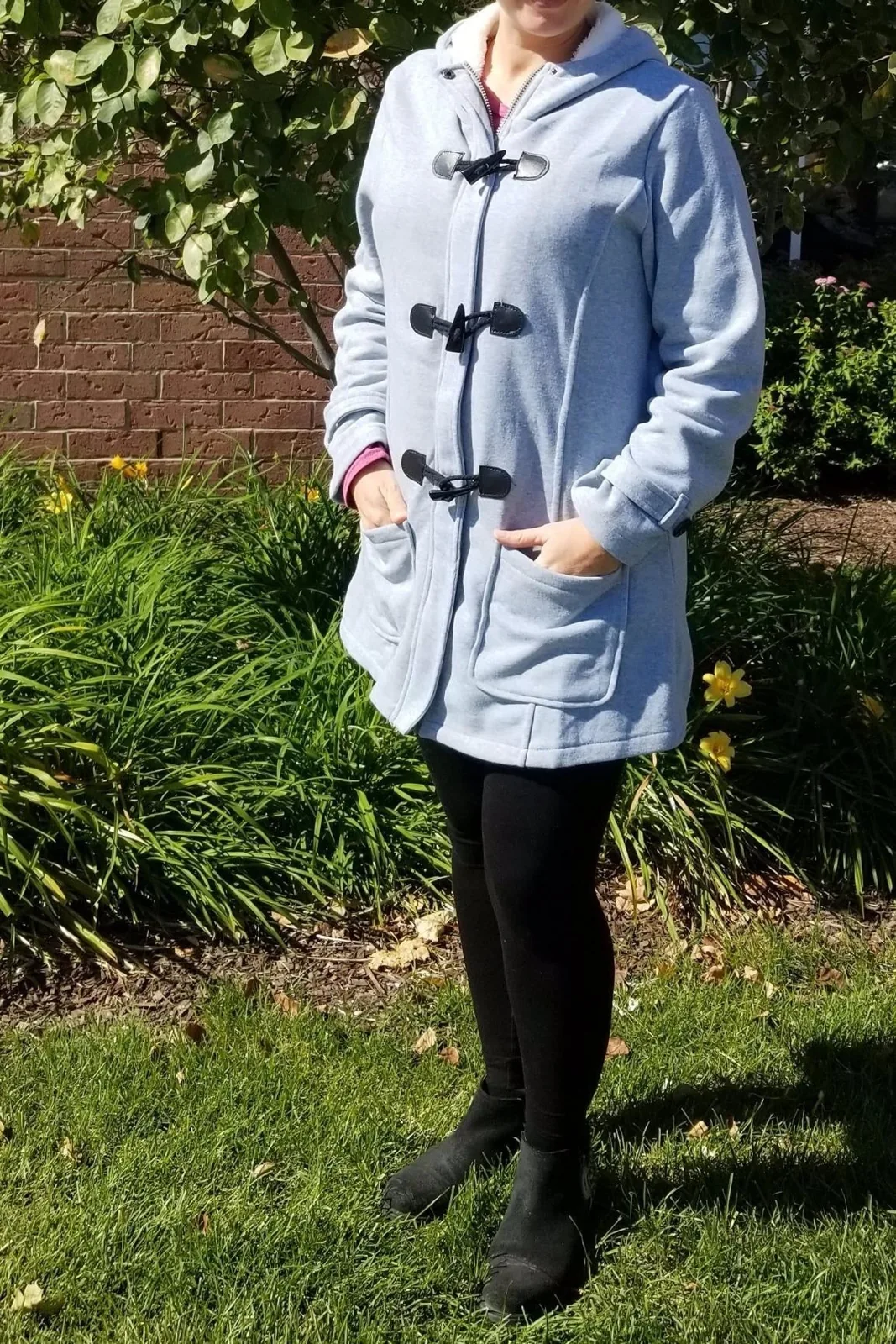
- Hip length is easy to move in and drive in, and it works well with jeans and boots. It leaves your thighs exposed, so it suits milder climates or people who are rarely outside for long.
- Mid-thigh to just above the knee is the most versatile range. It covers a blazer or a long sweater, works over trousers and most skirts, and suits nearly every height.
- Below the knee is noticeably warmer and looks elegant over dresses and midi skirts. Make sure you can climb stairs and sit down without the coat pulling across the hips.
- Ankle length is the warmest option and is common in long puffers. On a petite frame, a very long, voluminous coat can swamp the figure; a length that ends around the knee or mid-calf usually looks more balanced (more in our petite styling guide).
One quick check: the coat should be longer than the layers you wear under it most, such as a blazer or a long cardigan. A knit hanging below the hem looks accidental. Dresses and skirts are the exception: a midi skirt showing below a knee-length coat looks deliberate, as in the camel coat below, as long as the skirt is clearly longer, not just a few inches.

Read the fiber label, not the product name
Words like “wool coat” or “wool blend” in a product title tell you very little. The fiber content on the label or in the product details is what matters, and it is listed by percentage (our guide to reading fabric labels goes deeper).
Wool is the classic choice for tailored coats. It insulates even when slightly damp, breathes so you don’t overheat indoors, and resists odor. As a rough guide, a coat that is around seventy to eighty percent wool or more will feel and wear like a wool coat; makers of serious winter coats tend to aim for the higher end.
A small share of nylon or polyester is not a bad sign: it adds strength and helps the fabric keep its shape at the elbows and pockets. A coat that is mostly polyester with a little wool is different. It looks like wool in photos but is usually thinner, pills sooner and warms you less.
Look for melton or boiled wool in the description if wind is a concern. Both are woven or knitted and then felted, which shrinks the fibers into a dense, compact cloth that blocks wind far better than a loose, fluffy weave. Heavier melton is what traditional pea coats are made of. A little cashmere in a blend mostly adds softness rather than warmth.
A simple in-store test: hold a single layer of the fabric up to a light. If light shines through the weave easily, wind will too. Then squeeze a handful and let go; dense, springy wool bounces back with few creases, while thin blends stay crumpled.
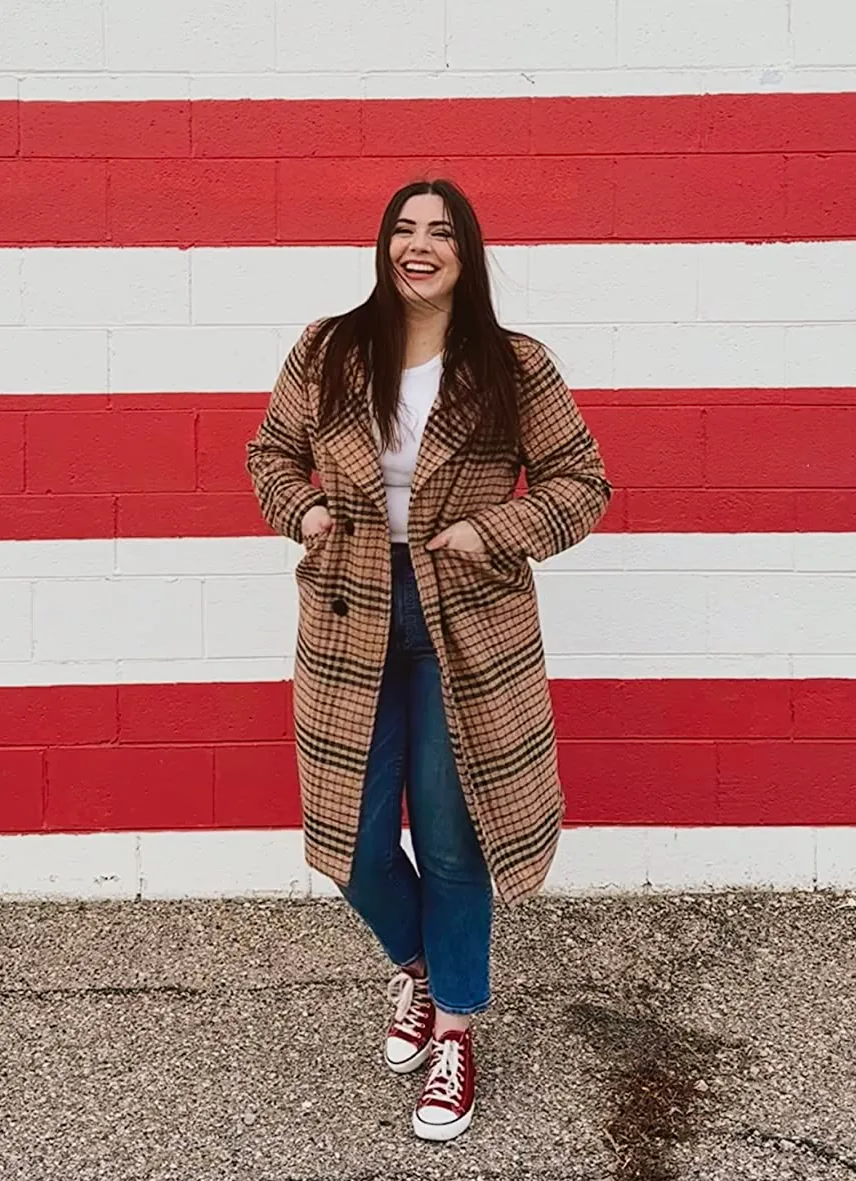
Patterned wool is a good way to get warmth without a plain dark coat. A long brown plaid coat, like the one below, looks smart over a white tee and cropped jeans and hides city grime better than a solid pale coat.
Down, synthetic or wool for real cold
Once temperatures drop well below freezing, an insulated coat usually beats even a heavy wool one. The two main fillings behave differently.
- Down gives the most warmth for the least weight. Fill power, a number usually between about 450 and 900, measures how much the down lofts; higher numbers trap more warm air per ounce. Fill power describes quality, though, not total warmth: a coat with a lot of mid-range down can be warmer than one with a little high-end down. Down’s weakness is moisture, because wet clusters collapse and lose their insulation.
- Synthetic insulation is a little heavier and bulkier for the same warmth, but it keeps insulating when damp and dries faster. It is a smart choice for wet snow, sleet and rainy cold, and for anyone who avoids animal products.
Whichever you choose, the outer shell matters. A water-resistant or waterproof shell keeps snow and drizzle from soaking in, and a hood that fits over a hat makes a bigger difference than most people expect.
Look at how a puffer is quilted, too. Sewn-through stitching, where the outer fabric is stitched straight to the lining, is lighter and cheaper but leaves thin cold lines along every seam. Box-baffle construction uses small fabric walls between layers so the fill stays even, which is noticeably warmer for long waits in serious cold.
For a coat you will wear in real winter, these small features matter more than they look:
- Knit or adjustable inner cuffs that seal your wrists against wind.
- A fabric flap behind the front zipper to block drafts through the teeth.
- A two-way zipper on longer coats, so you can open the bottom to sit, drive or take a long stride.
- Fleece- or flannel-lined hand pockets.
- A hood you can tighten, so it turns with your head instead of blocking your view.
Fit: the shoulders decide everything
Try every coat on over the thickest layer you plan to wear under it, whether that is a chunky knit or a blazer. Then check the fit in this order:
- Shoulders. The shoulder seam should sit at or just past the edge of your shoulder, unless the coat is deliberately dropped-shoulder or oversized. A tailor can take in a waist or shorten sleeves, but a coat that is tight across the shoulders cannot really be fixed.
- The hug test. Button or zip it, then cross your arms as if hugging yourself and reach forward as if grabbing a steering wheel. If the back pulls tight or the buttons strain, size up or choose a roomier cut.
- Sleeves. They should cover your wrist bone with your arms relaxed and still reach your wrist when you lift your arms. Short sleeves let cold air straight up your arms.
- Closure and collar. Close it all the way to the top. A coat that only looks good open will not keep you warm in a wind; the collar should sit close to the neck without choking.
Sizing up “to fit a sweater” is common advice, but it can leave the shoulders sloping off and the sleeves too long. Get the shoulders right first, then confirm there is room for your usual layer.
Small details that make a coat last
Before you commit, spend a minute on construction:
- Seams lie flat with no puckering.
- Buttons are sewn on firmly, ideally with a spare inside.
- Pockets are lined and deep enough for your whole hand.
- The lining is smooth and full, so the coat slides on over knits. A lining that is tighter or shorter than the shell will pull the coat out of shape.
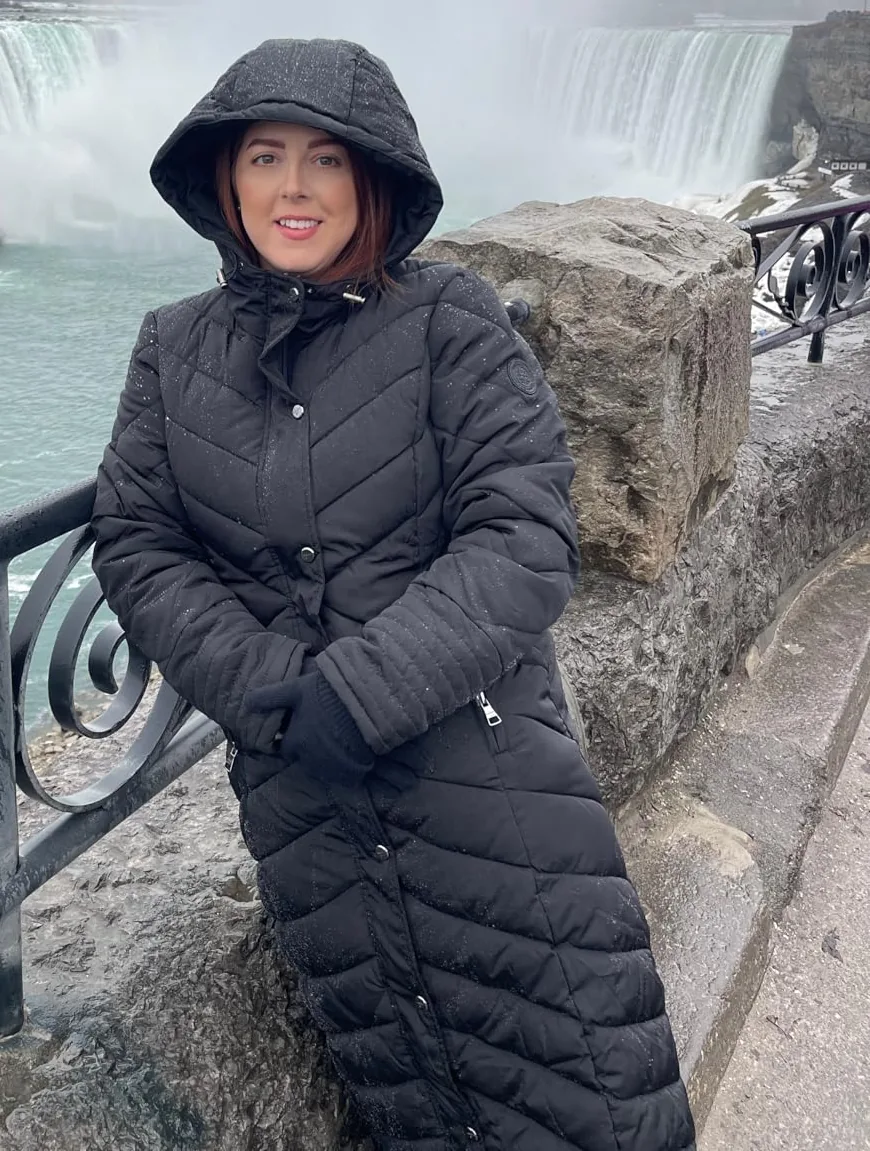
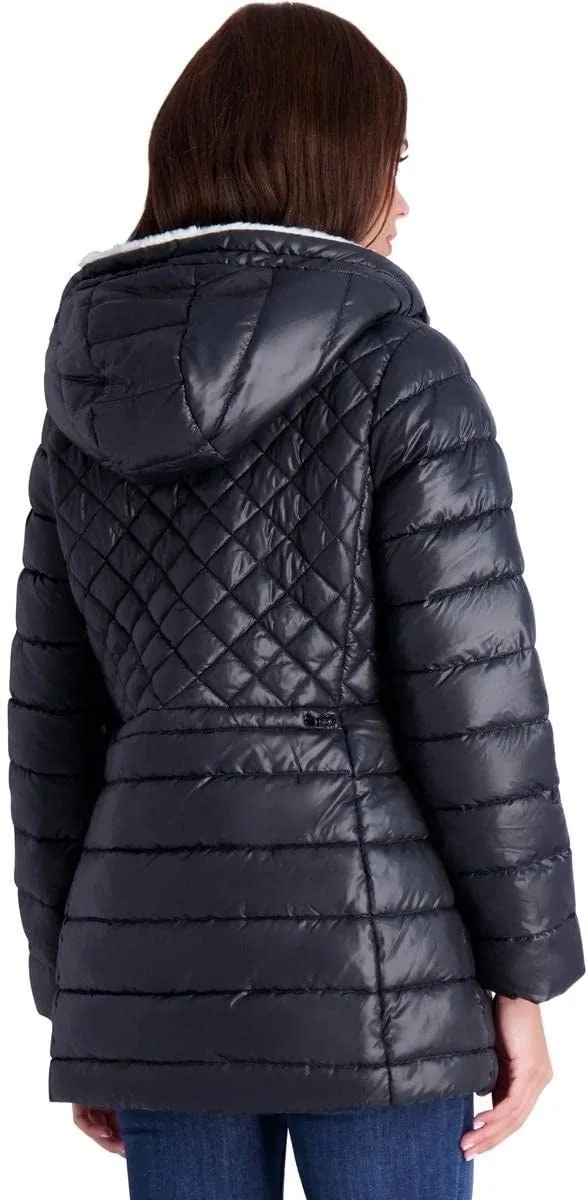
- On puffers, the zipper runs smoothly and the quilting stitches are even, since loose stitching is where fill starts to escape. A shaped, diamond-quilted puffer like the one above also shows how stitching can define the waist without adding bulk.
Color is the last decision, not the first. Camel, black, navy, grey, olive and cream work with almost everything; a bright or pale coat is a joy but shows wear and city grime faster. If this is your only coat, a neutral will earn its keep.
Make it last for many winters
A good coat can last a decade or more, mostly thanks to small habits rather than frequent cleaning.
- Brush a wool coat with a clothes brush after wear, in long downward strokes. It lifts dust and grit before they work into the cloth, and stretches the time between professional cleans.
- Hang it on a wide, shaped hanger. Thin wire hangers push dents into the shoulders within weeks.
- Dry a wet coat slowly at room temperature, away from radiators, and reshape it while damp. Direct heat can shrink and stiffen wool.
- Clean sparingly. Once or twice a season is plenty for wool, usually at the end of winter so stains and body oils do not attract moths in storage. Have loose buttons and small tears fixed first.
- Store it in a breathable bag, not the plastic one from the cleaner, which traps moisture. Cedar helps deter moths.
- For down, store the coat hanging or loose rather than squashed in a compression bag, and follow the label when washing. Down needs a long, low-heat tumble with dryer balls until it is completely dry, or it can clump and smell.
Quick answers
Is a wool coat warm enough for snow?
For short trips in light snow, yes, especially in a dense melton. For long waits outdoors or wet, heavy snow, an insulated coat with a water-resistant shell will keep you warmer and drier.
Should I buy a size up to fit a chunky sweater?
Only if the shoulders still fit at the larger size. Otherwise, look for a cut with more room in the body, or layer a thinner knit underneath.
Is real down the only warm option?
No. Good synthetic fills are slightly bulkier for the same warmth but cope better with damp weather. If you buy down, look for a responsible sourcing certification on the label.
If you remember one thing in the fitting room, make it the hug test over your thickest sweater: a coat that passes it will be worn all winter. Looking for an insulated option? Our roundup of puffer jackets covers styles from crisp mornings to deep freeze, and these cold-weather outfits show what to wear underneath.