Dry skin has a way of announcing itself: tightness right after you wash your face, foundation that clings to flaky patches by mid-morning, a dull look that no highlighter fixes. A good moisturizer will not change your skin type, but it can make dry skin feel comfortable all day instead of for twenty minutes. If you are not sure your skin is actually dry rather than dehydrated or combination, this simple at-home skin type test is worth doing first, because the right texture depends on it.
What we looked for
Dermatologists tend to describe a dry-skin moisturizer as a team of three ingredient types. Humectants such as glycerin and hyaluronic acid pull water into the top layer of skin. Emollients such as shea butter, squalane and plant oils smooth over rough flakes. Occlusives such as petrolatum, dimethicone, lanolin and beeswax slow the water from leaving again. Every pick below covers at least two of those jobs. We also leaned toward fragrance-free formulas, since dry skin is often easily irritated, and flagged the ones that do contain fragrance. Finally, we compared what professional testers and thousands of buyers said about texture, how long the comfort lasts and how each one behaves under makeup, because a cream that feels lovely but pills under foundation will not get used.
First Aid Beauty Ultra Repair Cream
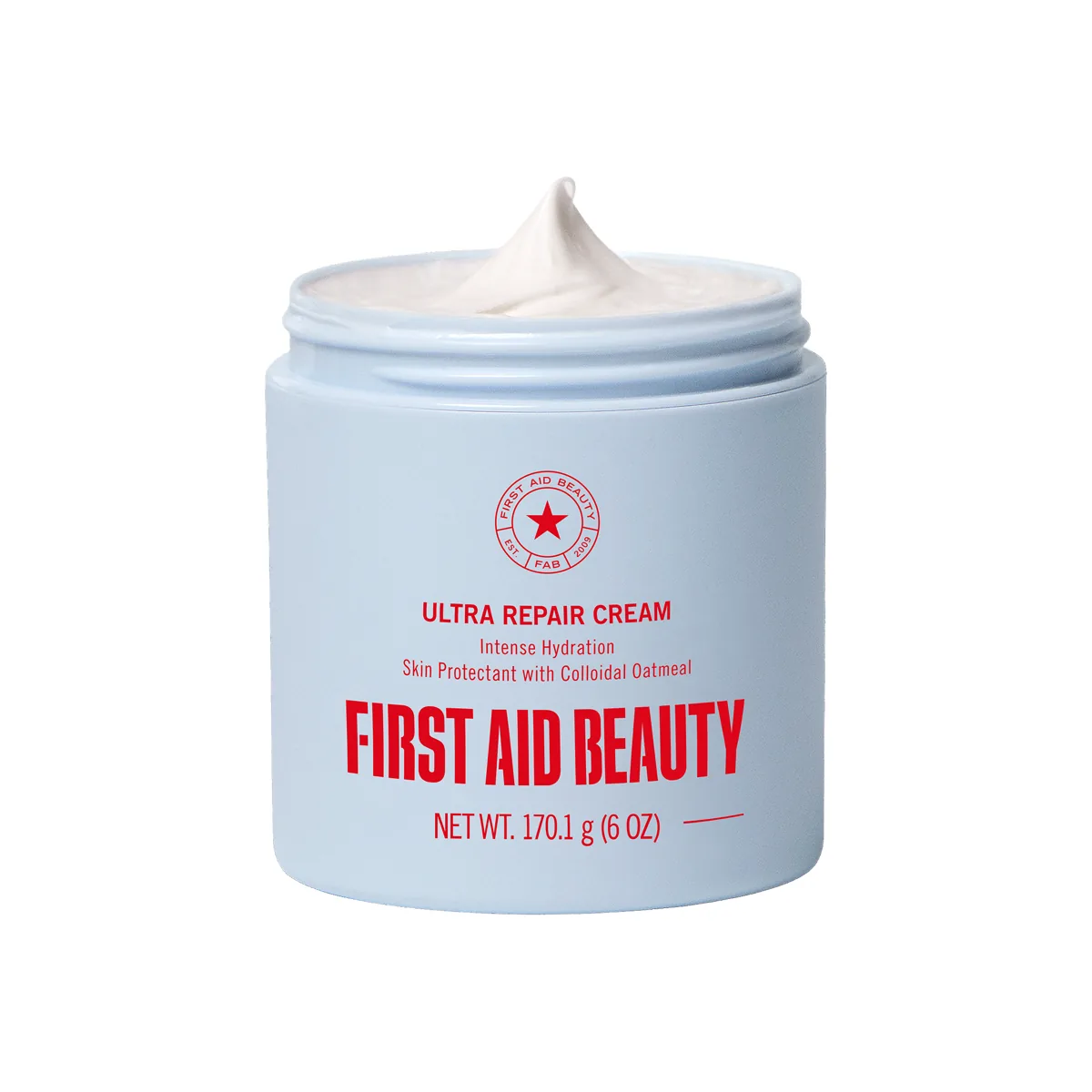
This whipped cream is the one to reach for when dry skin is also red, rough or reactive. The formula combines colloidal oatmeal, used here as a skin protectant, with ceramides and shea butter, and the brand lists it as free of artificial fragrance and drying alcohols. It carries seals of acceptance from the National Eczema Association, the National Psoriasis Foundation and the National Rosacea Society, which is a useful shortcut if you have struggled to find something your skin tolerates.
Despite looking thick in the jar, testers describe the texture as silky and easy to spread, with a dime-sized amount enough for the whole face and absorption in seconds rather than minutes. Buyers like that it works on face and body, which is why it comes in sizes from a travel tube to a large family tub. The trade-offs: the jar means scooping, so use clean fingers or a small spatula, and some people with oily T-zones find it too rich for daytime there.
Best for: dry skin that flares easily, and for anyone who wants a rich cream that does not feel greasy.
CeraVe Moisturizing Cream
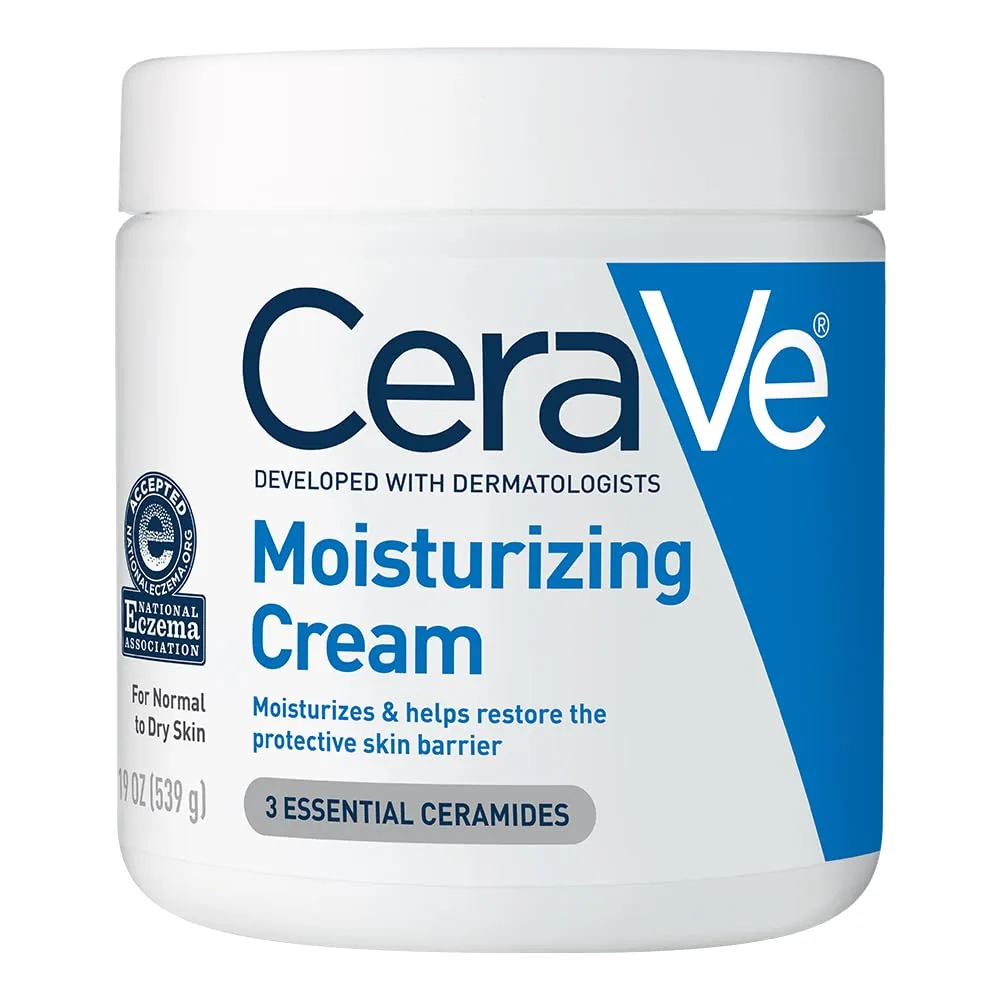
This is the cream most often named when dermatologists are asked for a no-fuss option, and it earns that by doing the basics well. The formula pairs three ceramides, which are fats that naturally make up a large share of the skin’s outer barrier, with hyaluronic acid and glycerin, and it uses a slow-release base so the comfort holds through the day. It is fragrance-free, non-comedogenic and carries the National Eczema Association Seal of Acceptance, and because the big tub is meant for face and body, one jar covers cheeks, hands and shins.
Buyers with very dry or sensitive skin say it calms tightness without stinging, absorbs without a sticky film and lasts all day; plenty mention using it on eczema-prone patches. The common complaints are practical. Scooping from a tub is messier and less hygienic than a pump, so dip in with freshly washed hands. Some people also find it too heavy under makeup and save it for night, swapping to a lighter lotion in the morning.
Best for: very dry or easily irritated skin that wants one reliable, fragrance-free cream for face and body.
La Roche-Posay Toleriane Double Repair Face Moisturizer
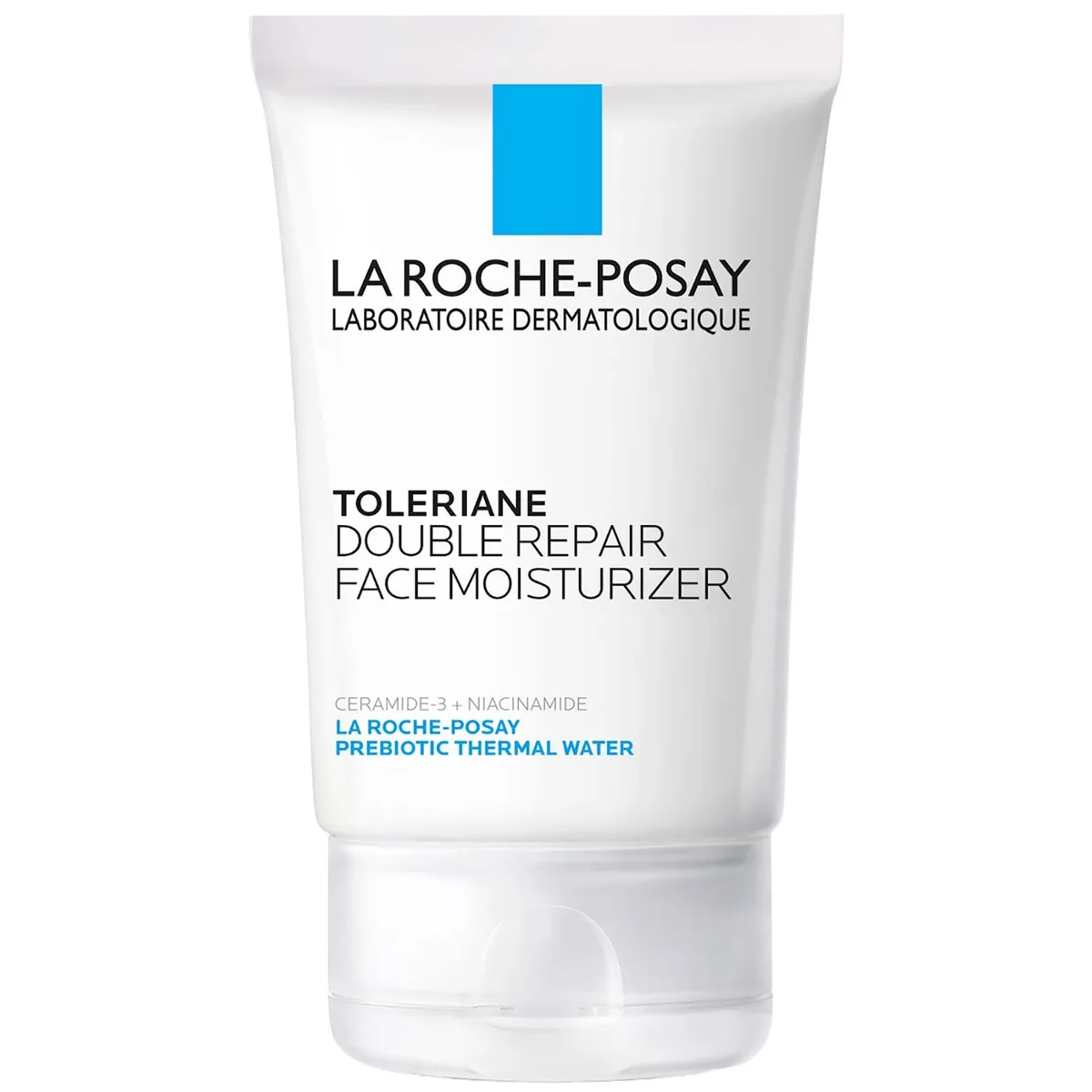
If thick creams feel suffocating but lotions vanish in an hour, this sits in the middle. It is a medium-weight cream built around ceramide-3, niacinamide and glycerin, plus the brand’s thermal spring water, and it is fragrance-free and oil-free. The brand positions it as a barrier-supporting moisturizer for all skin types, including sensitive, which makes it a sensible pick if your face is dry in some places and combination in others.
Its biggest strength is how well it plays with the rest of a routine. Reviewers on the retailer’s site repeatedly say it does not pill under foundation or sunscreen, does not leave a strong smell, and that a small amount goes a long way. Opinions on the finish do vary: some testers felt it went on slightly greasy and took a while to settle, while many buyers describe it as light and fast-absorbing. Applying a pea-sized amount to slightly damp skin and giving it a minute before makeup usually solves it.
Good to know: it comes in a fairly small size, so if you also want something for your body, pair it with a larger tub cream.
e.l.f. Holy Hydration! Face Cream
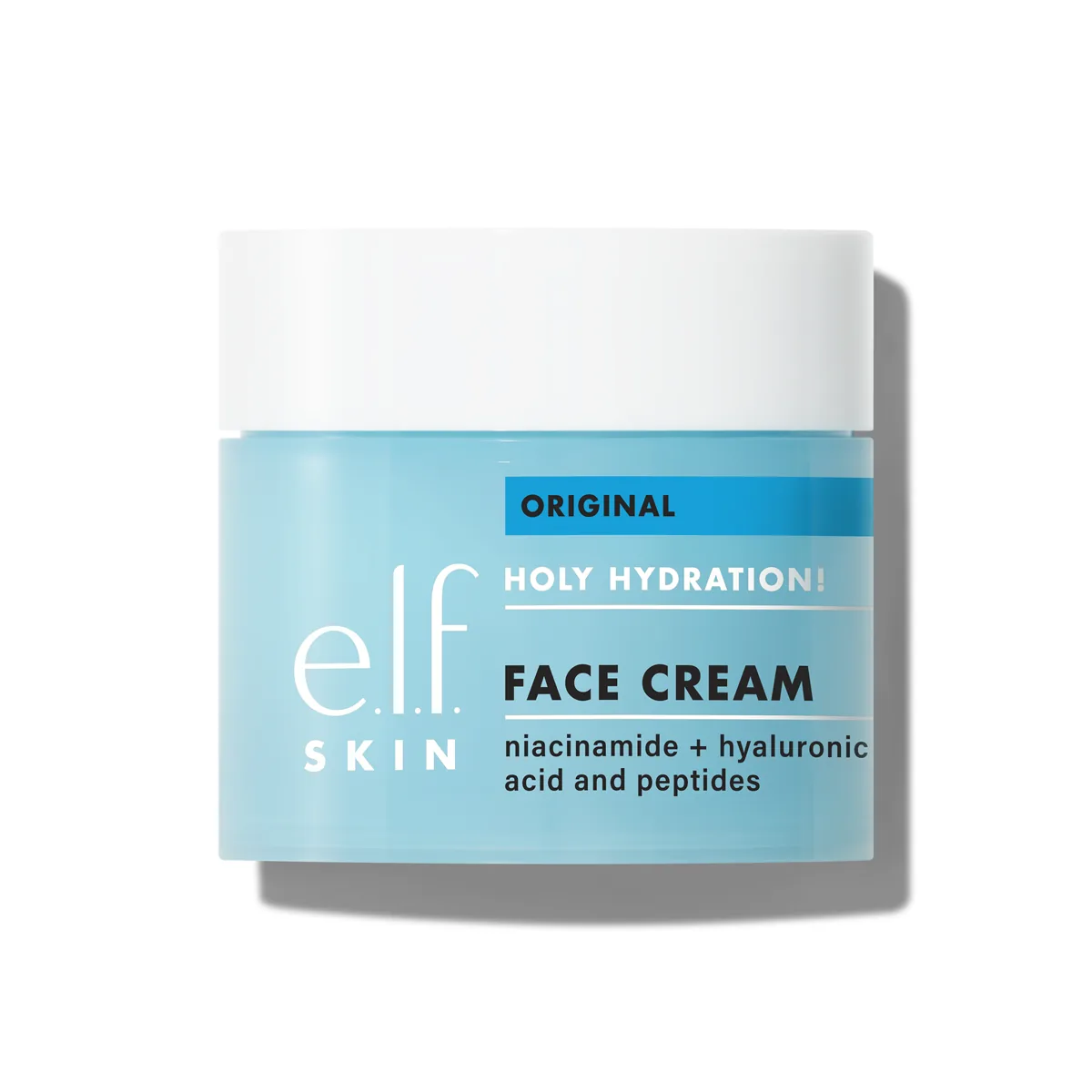
The budget pick here is lighter than the creams above but still made with dry skin in mind. Hyaluronic acid sits alongside squalane, niacinamide, panthenol and peptides in a soft cream that suits mornings, especially if your skin is dry but you still get a little shine by afternoon. It is a popular product, with thousands of ratings on the brand’s site averaging well above four stars.
In side-by-side testing it was named a strong choice for dry skin, keeping faces smooth and comfortable for several hours. The same tests noted two drawbacks: it takes a minute or two to sink in, and you need a little more product than with richer creams, so the jar goes faster than you might expect. Check the ingredient list if fragrance bothers you, because the standard formula includes it near the end. If your skin is very dry, use it under a richer night cream rather than on its own.
Best for: dry or dry-combination skin that wants a lightweight daytime cream under makeup or sunscreen.
Vanicream Daily Facial Moisturizer
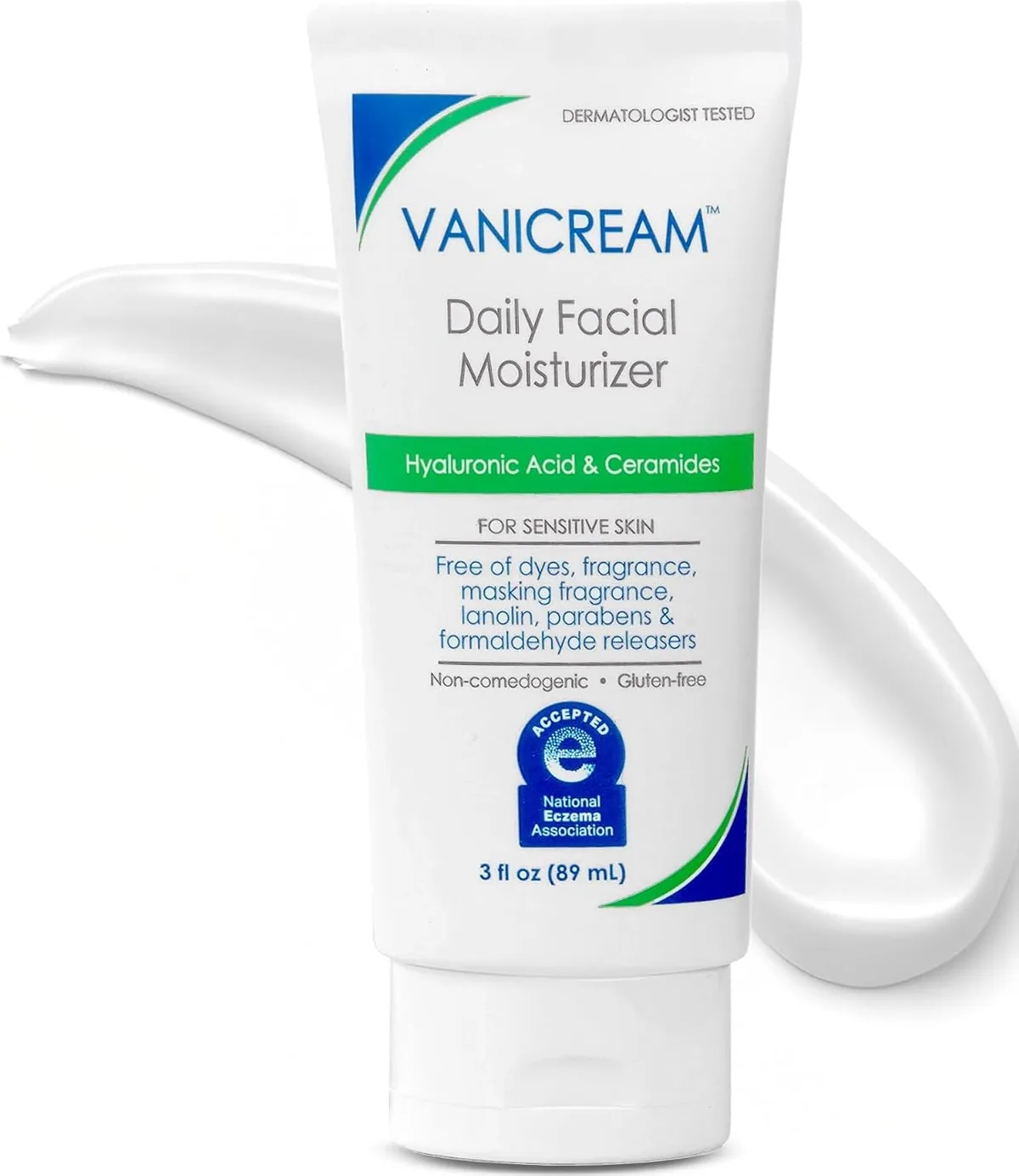
Vanicream builds its products for people who react to almost everything, and this lotion follows that approach. It contains hyaluronic acid and five ceramides, but no fragrance, dyes, lanolin, parabens, essential oils or botanical extracts, so the list is short and predictable. It also holds the National Eczema Association Seal of Acceptance and is non-comedogenic.
Buyers praise it for sinking in quickly, wearing well under makeup and not causing breakouts, which makes it a common pick for people who are dry and acne-prone at the same time. The honest limitation is that it is a lotion. Testers found it a bit runny, easy to over-squeeze from the tube and slightly tacky for a few minutes, and on very dry skin the comfort fades sooner than with a cream. Many people solve that by using it in the morning and layering a richer cream at night, or by adding a thin occlusive over flaky spots.
Best for: sensitive, dry skin that is also prone to clogged pores, or anyone doing an elimination routine.
Weleda Skin Food Ultra-Rich Cream
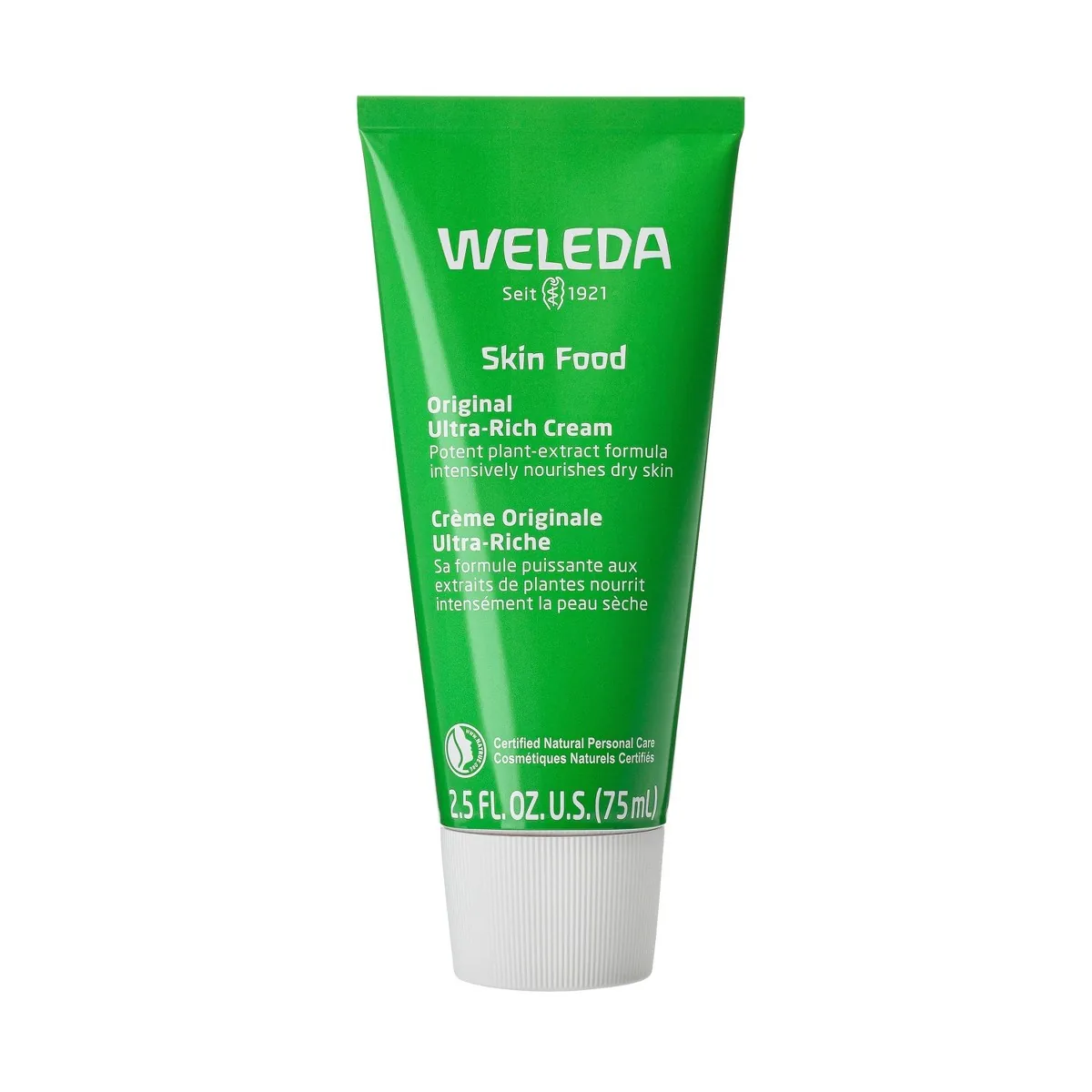
Skin Food is less a daily face cream and more a rescue balm for the driest spots. The base is sunflower and sweet almond oils with lanolin and beeswax, plus pansy, calendula and chamomile extracts, so it leans heavily on emollients and occlusives. It is thick, a little goes a long way, and makeup artists like a dab on cheekbones for a natural sheen.
Buyers love it most for hands, elbows, heels and flaky patches around the nose; several say rough hands feel soft by morning after an overnight layer. The main complaint is the same thing that makes it work: it can leave a greasy film, so it is better at night or in cold weather. Note that it contains fragrance from essential oils as well as alcohol and lanolin, which some sensitive skins do not tolerate, and some long-time fans miss an unscented version that is no longer easy to find. It is also too occlusive for most oily or breakout-prone faces.
Good to know: patch test on your jaw for a few nights before using it all over your face.
How to choose
Match texture to how dry you really are. Lotions suit mild dryness and humid climates. Creams suit most dry skin. Balms and ointments are for very dry patches, overnight use and freezing weather; dermatologists note that thick, low-water products are better outdoors in deep cold.
Check for all three helpers. Look for at least one humectant (glycerin, hyaluronic acid), one emollient (squalane, shea butter, oils) and one occlusive (petrolatum, dimethicone, lanolin, beeswax) near the top of the list. Ceramides are a bonus, since they are part of the skin’s own barrier.
Skip common irritants. Fragrance, essential oils and drying alcohols listed as alcohol denat. or SD alcohol can sting dry skin. Exfoliating acids such as glycolic and salicylic belong in a separate step, used sparingly, not in your everyday moisturizer.
Apply it on damp skin. Pat your face mostly dry after cleansing, then moisturize within a minute or two to seal in the water. Reapply on dry patches during the day if they feel tight. For where it goes in a longer routine, see our guide to skincare routine order.
Quick answers
Can I use a body cream on my face? Often yes, if it is fragrance-free and labeled non-comedogenic, as with the tub creams above. Heavily scented body lotions are the ones to avoid.
Do I need a separate night cream? Not necessarily. Many people use one cream twice a day, or a lighter lotion in the morning and a richer cream at night.
Why is my skin still flaky after moisturizing? Try a richer texture, apply it to damp skin and check whether your cleanser is stripping. If you have cracking, bleeding, persistent itching or a rash, see a dermatologist rather than switching products again.