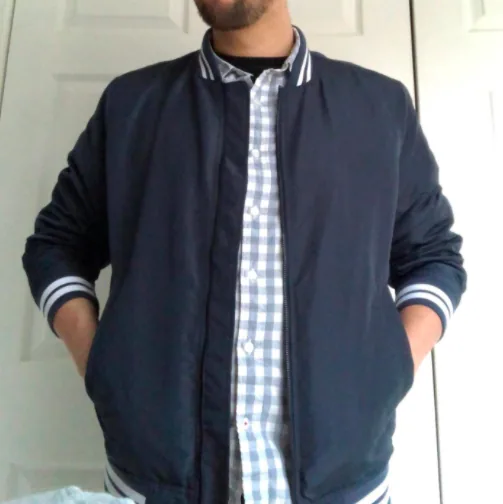
There is a stretch of the year when a T-shirt is not enough and a proper coat is too much. That is where the overshirt earns its keep. Cut like a shirt but made from heavier cloth such as flannel, twill, corduroy, wool or fleece, it sits somewhere between a shirt and a light jacket. You can wear it alone, throw it open over a tee or slide it under a coat when the weather really turns.
Before the outfits, two quick rules:
- Size it for what goes underneath. Over a T-shirt, a closer cut is fine; over a sweater, you need more room through the chest and arms. In the fitting room, button it over your thickest knit, reach forward as if grabbing a steering wheel, then lift both arms. If it pulls across the back or rides above your belt, go up a size.
- Wear it untucked. An overshirt is meant to hang loose, with the hem covering your belt and stopping around the middle of your fly.
Open Over a Tee, With Jeans
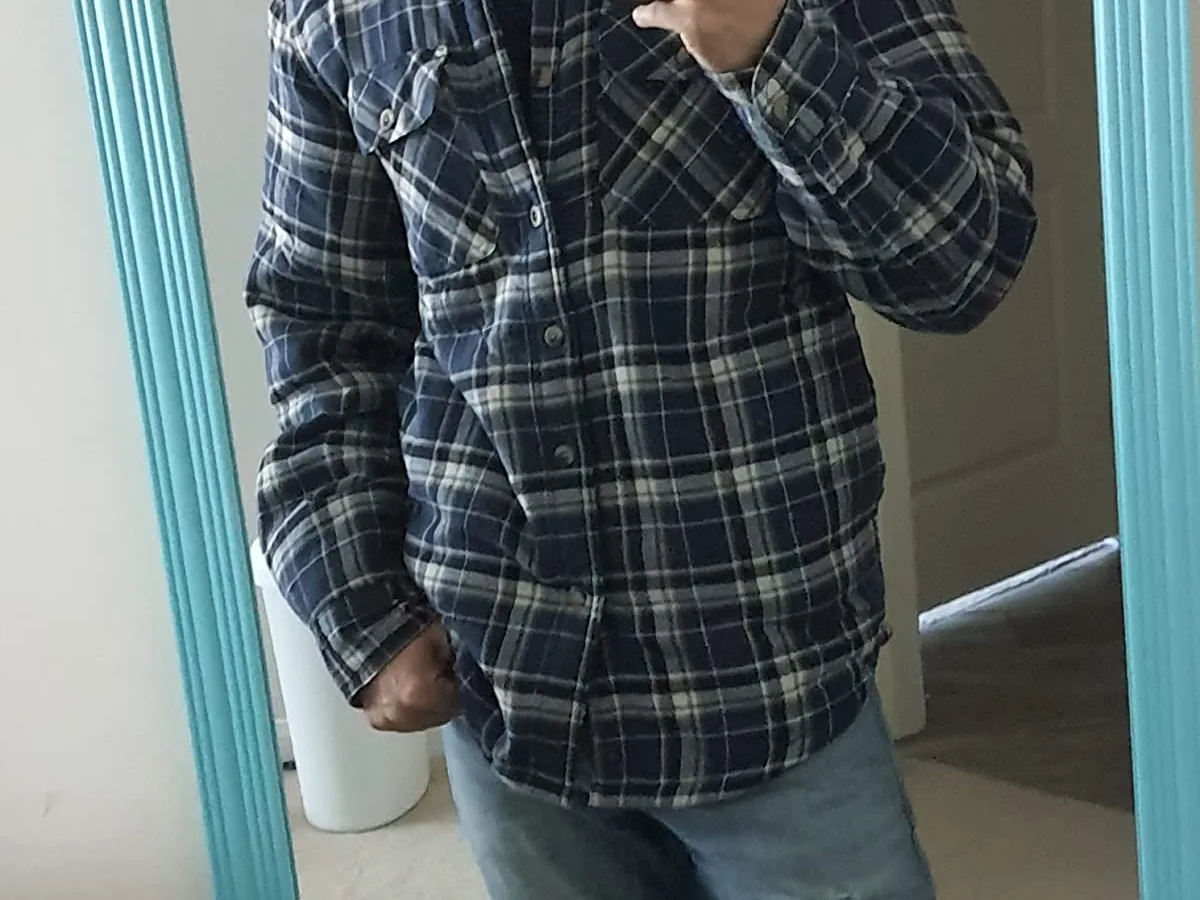
This is the starting point, and it is hard to get wrong. A plaid overshirt with a soft lining, worn unbuttoned over a plain crew-neck tee and straight jeans, looks relaxed but finished. The open front draws a long line down the middle of your body, which is also flattering if you carry a little weight around the waist.
Keep the layer underneath plainer than the overshirt: a navy, grey or white tee under a checked shirt, never two patterns fighting each other. Leather boots, suede chukkas or clean leather sneakers are the right shoes here; running shoes pull the look too far toward the gym.
Wear it to: a brewery, a game at a friend’s place, a Saturday that starts at the hardware store and ends at dinner.
Buttoned Up and Worn as a Shirt
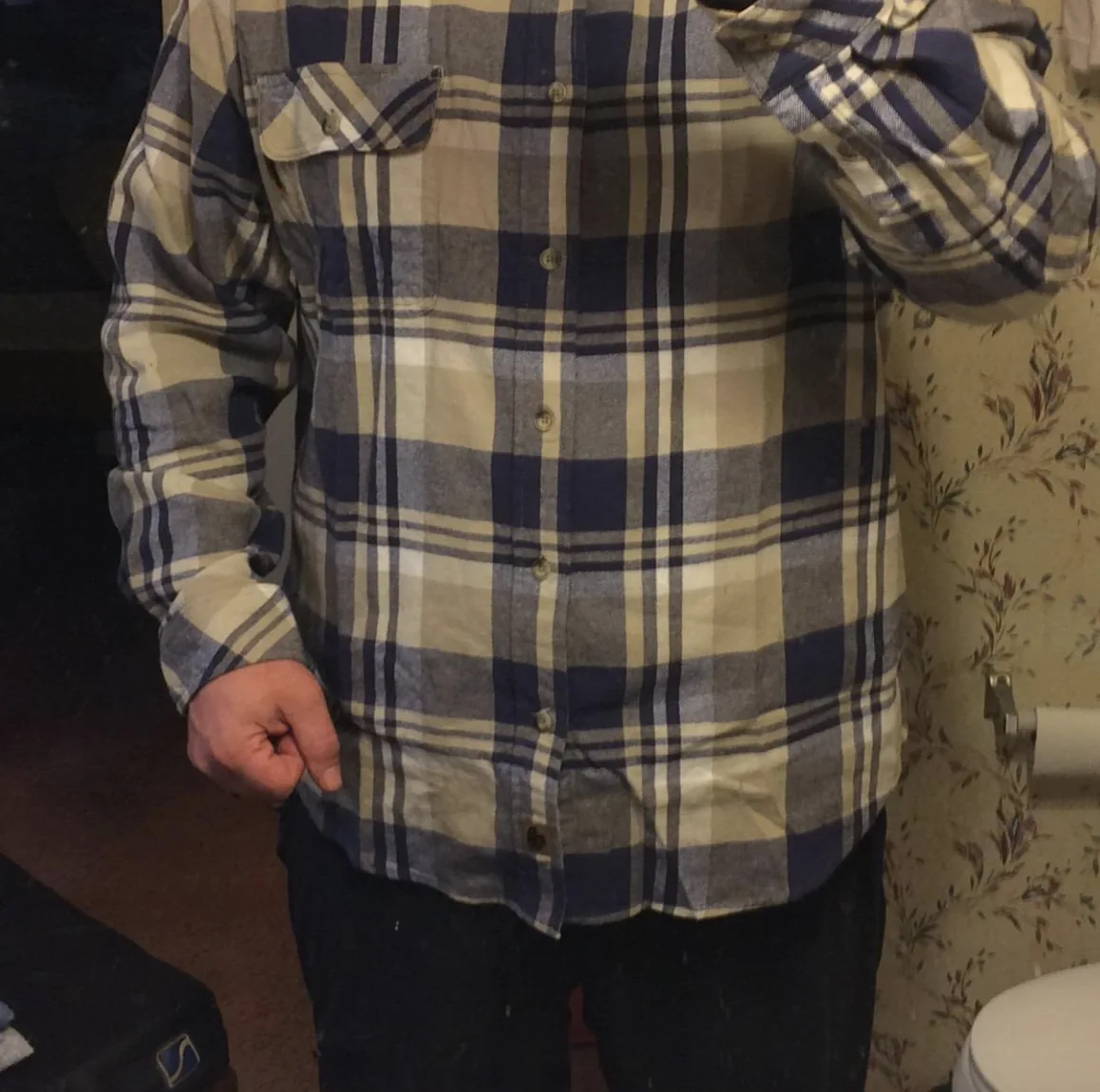
Lighter overshirts and heavy flannels do double duty as a regular shirt. Button it most of the way, leave the collar open and wear it on its own with dark jeans or navy chinos. Heavier fabric holds its shape better than a thin shirt, so it looks tidy even untucked.
A brown belt and brown boots finish it. If your frame is slim, this is where a bold check and two chest pockets help: they add a bit of width across the shoulders. If you are broad already, choose a smaller check or a solid color instead.
Over a Hoodie for Cold Mornings

On cold weekend mornings, a hoodie under an open overshirt is warmer than either piece alone and looks more put together than a hoodie by itself. The overshirt needs to be roomy enough for this, so check the sleeves: they should cover the hoodie cuffs, not stop short of them.
Pair it with joggers or chinos in khaki, olive or grey and simple white sneakers. A neutral hoodie in grey, navy or black keeps the focus on the overshirt. Add a cap or a beanie and you have a uniform for errands, dog walks and early coffee runs.
The Smart Version: Solid Shirt Jacket and Chinos

A dark or muted solid overshirt is the smartest of the bunch. Worn over a collared shirt or a fine merino crew-neck, it behaves almost like a relaxed sport coat: you get a second layer and a clean shoulder line without the formality of tailoring.
Try grey or navy with khaki chinos or grey wool trousers, a light blue oxford underneath and suede chukkas or loafers. Wear it buttoned with the top button or two open, and tuck the shirt collar inside the overshirt collar so the two do not compete. In a relaxed office this can stand in for a blazer; for a client meeting or a dinner with a dress code, a real sport coat is still the better call.
Good to know: most style guides skip the tie with an overshirt. Some classic menswear writers do pair a knit tie with a smart wool one, but if the occasion genuinely calls for a tie, it usually calls for a jacket.
The Chore Coat Cousin, Over a White Tee
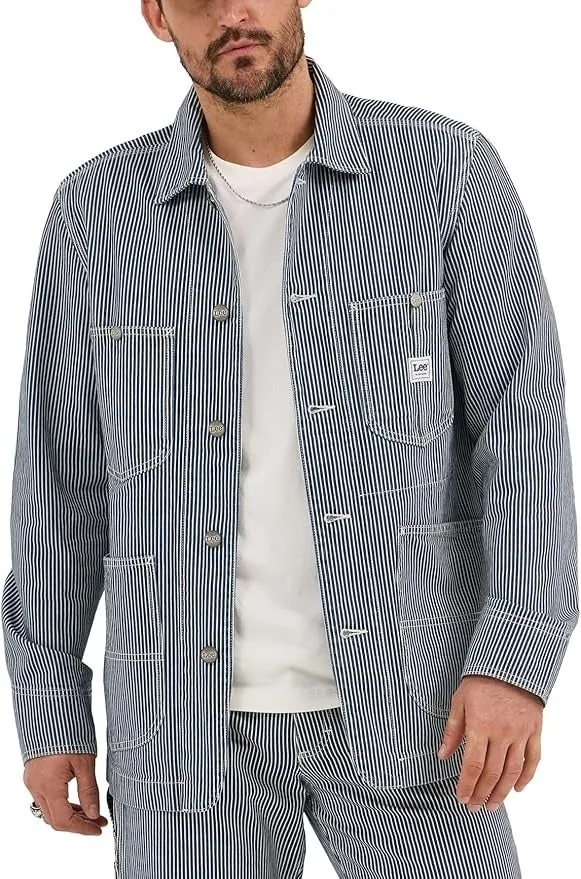
A chore coat is the overshirt’s workwear relative: a little longer, usually with big patch pockets at the hip, and cut to go over everything. Striped hickory denim, canvas and moleskin are classic choices. Wear one open over a white or cream tee with straight jeans or work pants and sturdy boots.
Because it is longer, keep the layers under it short. A tee or a henley works; a long shirt hanging below the hem does not. When the cold properly sets in, this is also the layer that sits neatly under a wool overcoat.
Adjusting for Your Build
- Shorter men: keep the hem at mid-fly or a touch higher, choose small checks or solids, and try tonal pairings such as a navy overshirt over a navy tee. A roomy fit is fine; a truly oversized one swallows a smaller frame, so the shoulder seam should still sit close to your shoulder edge.
- Slim or lanky: heavier fabrics, flapped chest pockets and bolder checks add useful bulk. Buttoned, or layered over a sweater, it fills out the chest.
- Broad or muscular: mid-weight, smooth fabrics in solids or small patterns. Skip epaulettes and big flaps, wear it open over a tee, and pair it with trousers that have room in the thigh so the top half does not look oversized.
- Carrying weight in the middle: darker solids in fabrics with some body, worn open, with a hem that clearly covers the widest point. Thin, clingy flannel shows every line.
Fabrics Through the Year
- Spring and summer: dense linen, light cotton twill or seersucker in natural, light colors, over a tee.
- Spring through fall: denim, cotton canvas and military-style twill in navy, olive or brown. With a denim overshirt, wear chinos or a clearly different wash of jeans rather than a near match.
- Fall and winter: flannel, corduroy (fine-wale if you are broad), moleskin and wool. Wool stays warm even when it gets damp, which makes it the best choice for the coldest weeks.
Avoid thin poplin “overshirts” that are really just shirts in a different color; you should not be able to see much light through the fabric. Flannel and cotton twill can shrink, so wash them cold and hang them to dry.
Mistakes Worth Avoiding
- Buying your dress shirt size. It will pull across the back the moment a sweater goes underneath.
- Going so big it looks like a tarp. Roomy means space to layer, not sleeves past your knuckles.
- Skinny jeans under a boxy overshirt. Relaxed tops need straight or slightly fuller trousers to balance them.
- A short jacket over a longer overshirt. The overshirt hem hanging below a bomber looks accidental; go for a coat that covers it.
Colors, Fabrics and Shoes
If you are buying your first overshirt, choose olive, navy or mid-brown. All of them go with jeans, chinos, grey trousers and most of the tees and sweaters you already own. Save bright colors and loud plaids for a second one.
Match the weight of the overshirt to the weight of your trousers. Corduroy, wool and thick flannel look right with dark denim, cords or heavier chinos, while a light cotton or linen overshirt in spring pairs better with lighter chinos than with heavy jeans. For shoes, stay in casual and smart casual territory: boots, suede loafers and leather sneakers. Shiny black dress shoes look out of place next to a garment with workwear roots.
Finally, keep the layering sensible. A tee, an overshirt and a coat on top is plenty; past that, you start to look bulky. For more on building warm layers, see our guide to layering for winter, our first-date outfits for an overshirt in action, or browse more menswear ideas.
Quick Answers
Overshirt, shacket or chore coat?
Brands use the names loosely. Broadly, an overshirt fits and feels like a heavy shirt; a shacket (shirt jacket) is thicker, sometimes lined or quilted, and fits more like a light jacket; a chore coat is a workwear jacket in canvas, denim or twill with hip patch pockets and a slightly longer, straighter cut. The thicker the piece, the more it behaves like outerwear.
Can I wear one straight over my skin?
Lighter ones, buttoned like a shirt, yes. Heavy wool and rough canvas are more comfortable with a tee underneath, and a layer underneath keeps the overshirt cleaner between washes.
Does an overshirt work at the office?
In a business casual office, a solid wool or twill overshirt over an oxford shirt or fine knit, with chinos or wool trousers and leather shoes, is generally fine. In anything more formal, wear a sport coat; our guide to the smart casual dress code shows where the line usually falls.