You leave the house and it’s freezing. Ten minutes later you’re on a packed train, then in an overheated office, then back outside at lunch with the wind cutting straight through you. One big coat can’t handle a day like that. Layers can.
Layering isn’t about wearing as much as possible. It’s about stacking a few thinner pieces that each do one job, so you can add or peel one off as the day changes. Done right, it’s warmer than a single heavy coat and looks a lot sharper too.
Think in three layers
The classic approach comes from outdoor gear, and it works just as well on a city sidewalk. A base layer sits against your skin and manages moisture. A mid layer traps warm air. An outer layer blocks wind and rain. Every cold-weather outfit is some version of those three, even if the mid layer is just a flannel shirt.
The trick is that each layer should be slightly roomier than the one beneath it. If your sweater is tight, your jacket won’t zip over it without pulling. If your shirt is baggy, it’ll bunch up under everything else. Fitted at the bottom, a little more relaxed toward the top, is the shape you’re after.
The base: thin, smooth and close to the body
Your base layer is usually a T-shirt, a henley or a long-sleeve tee. Keep it close-fitting and smooth so it slides under other layers without twisting. Cotton is comfortable for a regular day indoors and out, but it holds on to sweat, so if you’re going to be walking a lot or commuting by bike, merino wool or a synthetic performance tee will keep you drier and therefore warmer.
Merino base layers are sold by fabric weight in grams per square meter. Around 150 is a light, everyday tee that works year-round; around 200 is the all-rounder for most winter commutes; 250 and up is for real cold or long stretches standing still, like a game or a bus stop. The more you’re moving, the lighter you can go. On the coldest days, a thin pair of base-layer bottoms under your trousers adds a surprising amount of warmth and nobody can see it.
A crewneck is the most versatile neckline here. It sits neatly under button-up shirts and sweaters, and a sliver of white or grey at the collar of a heavier layer looks intentional rather than accidental.
The mid layer: where the warmth lives
This is the layer that does most of the heating, and the one with the most personality. Flannel shirts, sweaters, cardigans, fleece pullovers and vests all belong here. What they have in common is texture that traps air, and still air is what keeps you warm.
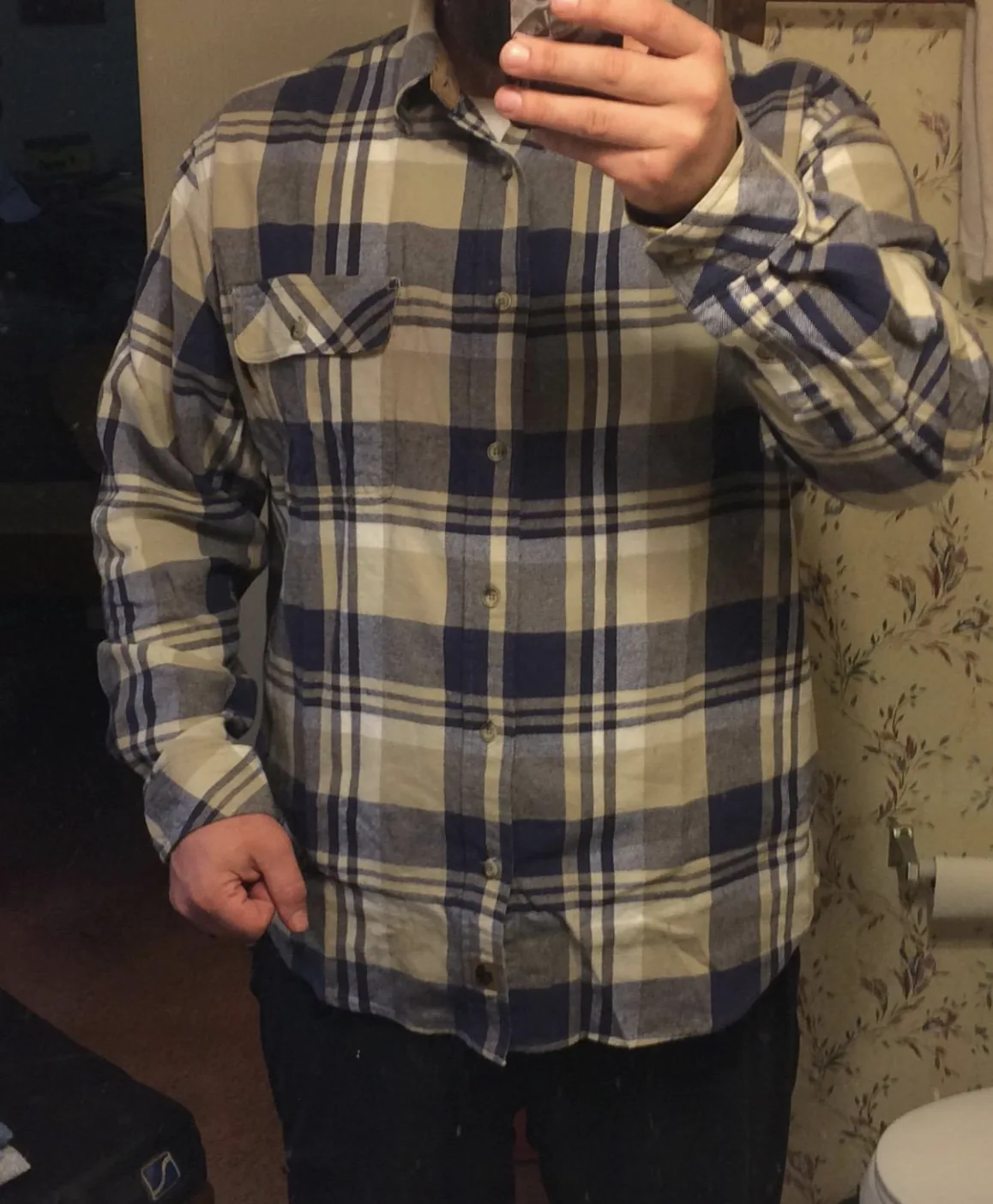
A flannel shirt is the easiest mid layer to wear well. Button it over a tee for a heavier look, or leave it open and let the tee show. If it’s genuinely cold, choose a thicker brushed flannel and treat it almost like a light jacket. Wool or wool-blend sweaters are the next step up in warmth, and they handle damp days better than cotton knits.
Fleece vests are underrated. They keep your core warm, which is where your body prioritizes heat, while leaving your arms free so you don’t overheat indoors. Throw one over a long-sleeve tee or flannel and you’ve covered most autumn days without touching a coat. A heavy overshirt does a similar job when you want sleeves.

The outer layer: block the wind
Your outer layer has one main job: stopping wind and wet from stealing the warmth your other layers just built. That’s why a thin windproof shell can feel warmer than a thick knit on a gusty day. Pick your jacket for the conditions you actually face, not the coldest day of the year; our guide to choosing a winter coat sorts overcoats, peacoats and parkas by climate.
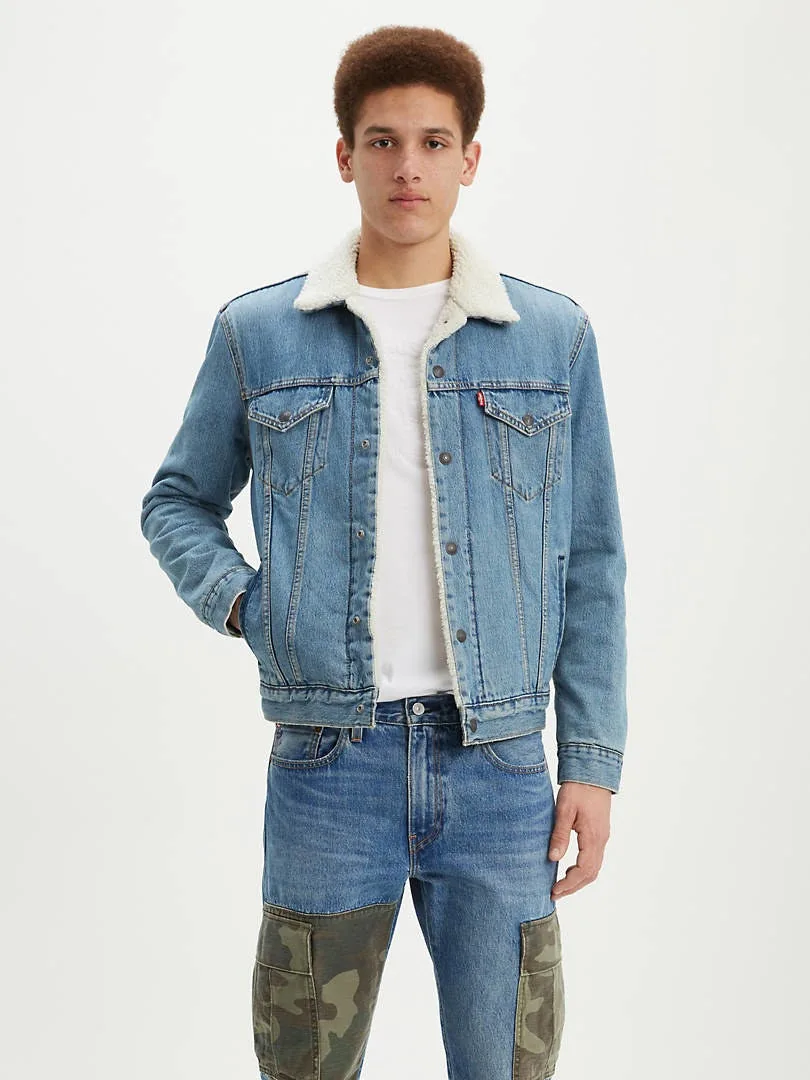
For dry, chilly days, a lined denim jacket or a canvas work jacket is hard to beat. Both are tough, both look better with age, and the lined versions add a layer of insulation on their own. A sherpa or blanket lining makes them noticeably warmer without adding much bulk around the shoulders.

When temperatures drop further, a quilted puffer is the most efficient choice. Down and synthetic fill trap a lot of heat for their weight, and lighter versions pack small enough to stuff into a bag once you get inside. Wear one open over a sweater on the commute, then zip it up when the wind picks up.

How to keep it from looking bulky
The puffy, wrapped-up look usually comes from too many thick layers rather than too many layers. A few simple habits help:
Go thin underneath. Save the chunky knit for the outer layers and keep everything close to your body slim and lightweight.
Vary the lengths. Let each layer be a little longer or shorter than the next, or tuck the base layer in. Hems stacked at the same height create a heavy band around your middle.
Mix textures, not just colors. Smooth cotton, brushed flannel, knit wool and canvas or nylon look intentional together. A whole outfit in the same fabric can look flat.
Stick to a tight color palette. Two or three colors that work together, such as navy, grey and tan, or olive, cream and brown, make several layers look like one outfit instead of several separate ones.
Don’t forget the edges
A lot of heat escapes through your head, neck and hands simply because they’re the parts left uncovered. The old claim that you lose most of your body heat through your head is a myth; your head loses heat roughly in proportion to its surface area, around a tenth of the total. But a cold head and neck do make your whole body feel colder, so covering them pays off. A knit beanie, a scarf and a pair of gloves add serious warmth for almost no bulk, and they’re the easiest place to bring in a brighter color if your coats and sweaters are mostly neutral.

Your lower half deserves a thought too. Heavier fabrics like flannel-lined chinos, corduroy or thicker denim make a real difference on windy days, and wool socks keep cold feet from dragging down the whole outfit.
A rough guide by temperature
Everyone runs a little hot or cold, and wind or damp can make a day feel ten degrees colder, so use this as a starting point for time spent walking or waiting outdoors:
- Around 50°F (10°C): tee plus a flannel, overshirt or light sweater, and a light jacket you can carry.
- Around 40°F (4°C): base layer, sweater or fleece, a lined jacket or wool coat. Add gloves if you’ll be out a while.
- Around 30°F (-1°C): warmer base, wool sweater, insulated jacket or heavy wool coat, plus hat, scarf and gloves.
- 20°F (-7°C) and below: merino base on top and bottom, a warm mid layer, a parka or long down coat, and every edge covered, including wool socks and waterproof boots.
One habit outdoor guides swear by: leave the house feeling very slightly cool. If you’re toasty standing at the door, you’ll be sweating five minutes into the walk, and damp layers make you colder the moment you stop.
Quick answers
Can I wear a hoodie under a coat?
Under a casual jacket, a parka or a work coat, absolutely. Under a tailored wool overcoat it can work in a relaxed outfit, but choose a slim, plain hoodie and let the hood sit flat outside the collar rather than bunched inside.
Collar in or out when I wear a sweater over a shirt?
With a crewneck or V-neck, tuck the shirt collar inside the neckline so only the points show; flipping it out over the sweater looks dated. With a quarter-zip, the collar sits naturally inside the zip.
Is cotton really that bad in winter?
Not for an ordinary day of short walks between heated buildings. It becomes a problem when you sweat and then stand still, because damp cotton stays wet and cold. That’s when wool or synthetic base layers earn their keep.
Putting it together
Three combinations cover most winter days:
- Office day, around freezing: white crewneck tee, light blue oxford shirt, merino crewneck in navy, grey wool trousers, charcoal overcoat, dark brown boots, grey scarf.
- Weekend, cold and dry: grey henley, navy and tan flannel shirt worn open, dark jeans, sherpa-lined denim or canvas jacket, brown boots, a beanie in a bright color.
- Raw wind or wet snow: merino long-sleeve base, fleece vest, wool sweater, quilted puffer or parka, corduroy or flannel-lined chinos, waterproof boots, wool socks and gloves.
Whatever you wear, test it with one question: can you adjust it in seconds? Coat off on the train, sweater off at your desk, scarf back on for the walk home. If you can do that without feeling frozen or overheated, and without looking like you’re wearing your entire closet, you’ve got it right.
Want more combinations to copy? Cold-weather outfits that don’t look bundled up takes these layers into full looks, and our overshirt outfits have plenty more.