One cool morning, a few pretty shop windows, and suddenly there are three new sweaters in your closet that don’t go with anything you own. A fall capsule stops that cycle. It is a small, deliberate set of pieces that all work together, so getting dressed becomes mixing rather than hunting.
You don’t need to throw everything out to build one. Most good capsules are mostly clothes you already own, plus two or three smart additions. Below: how to sort your closet, set a palette, cover the core jobs and shop only for real gaps.
Start with the closet you already have
Before buying anything, pull out every fall and transitional piece you own and lay it on the bed. Sort it into three piles: things you reached for constantly last year, things you like but rarely wear, and things you kept out of guilt. Only the first pile is the real foundation of your capsule.
Give the middle pile one honest question: is it the fit, the color or the occasion that keeps it on the hanger? If a tailor can fix it, it stays; if not, let it go.
Look closely at that favorites pile. It tells you more about your style than any trend report. If it is mostly jeans and soft knits, your capsule should lean relaxed. If it is tailored trousers and crisp shirts, plan around polish.
The goal is a wardrobe for the life you actually live, not the one in a mood board.
Pick a palette before you pick pieces
A capsule only works when almost everything can be worn with almost everything else, and color does most of that work. A simple formula is two neutrals, one or two accent shades, and a single print you love.
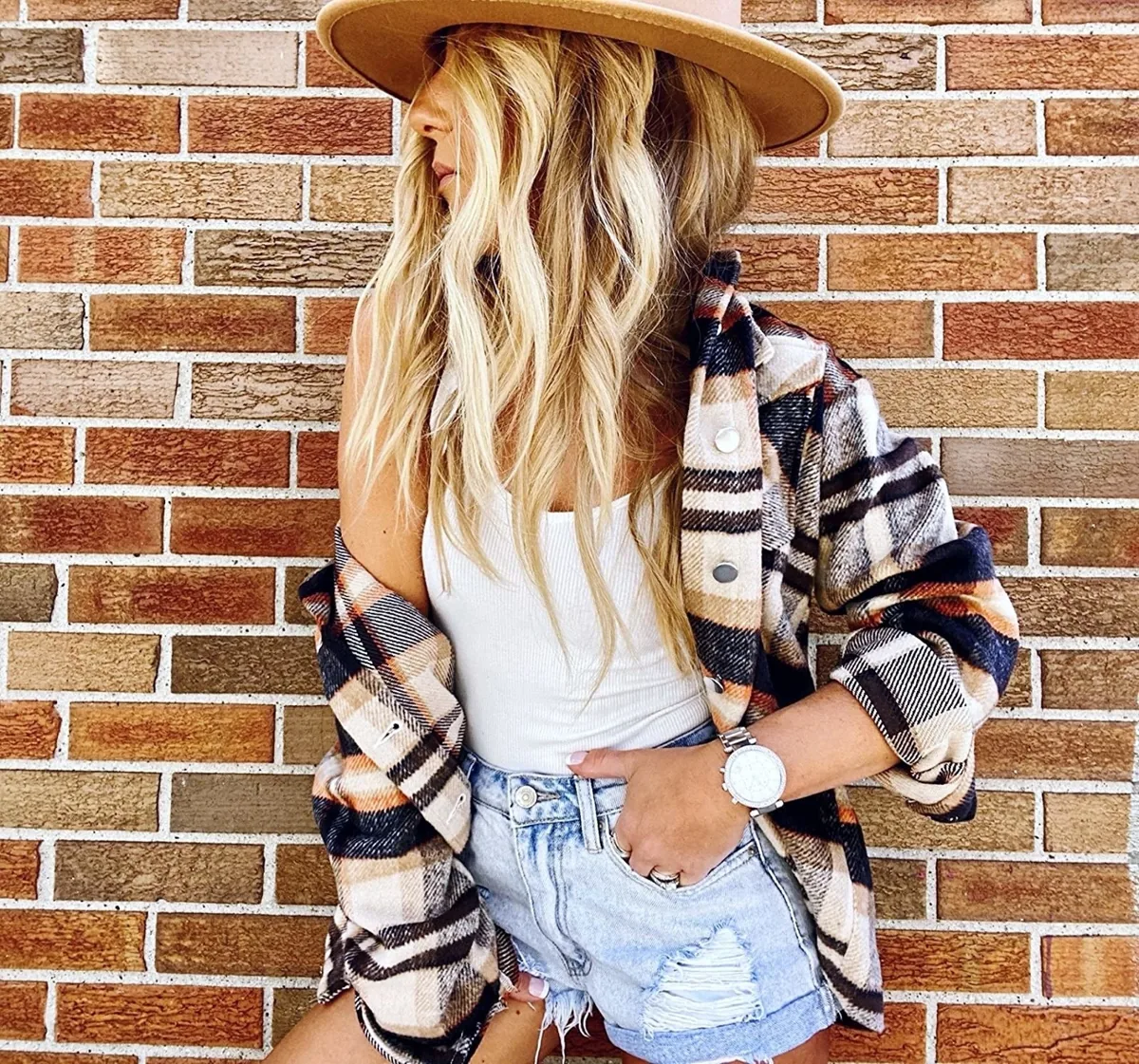
For fall, a dark base such as black, navy, chocolate brown, or charcoal pairs well with a lighter neutral like cream, oatmeal, camel, or grey. Accents can be seasonal without being loud: rust, olive, burgundy, mustard, or forest green. A plaid, check, or small leopard print counts as your pattern, and it will usually pull in two or three of your palette colors at once, which is exactly why a plaid shacket earns its place. In early fall it even works open over a white tank and denim shorts, then moves over a turtleneck and jeans once the mornings turn cold.
Once the palette is set, every shopping decision gets easier. If a sweater doesn’t fit the colors, it doesn’t make the cut, no matter how cute it looked on the hanger.
The core pieces most fall capsules need
There is no official list, but most well-working fall capsules cover the same jobs. Think in categories rather than specific items:
Bases. A few tees and long-sleeve tops in your neutrals, plus one or two fitted layers like a bodysuit or ribbed turtleneck. These sit under everything and should be the plainest things you own.
Knits. One chunky sweater or cardigan for comfort, one finer knit that looks neat under a jacket. A cardigan that ties or buttons at the front does double duty as a top.
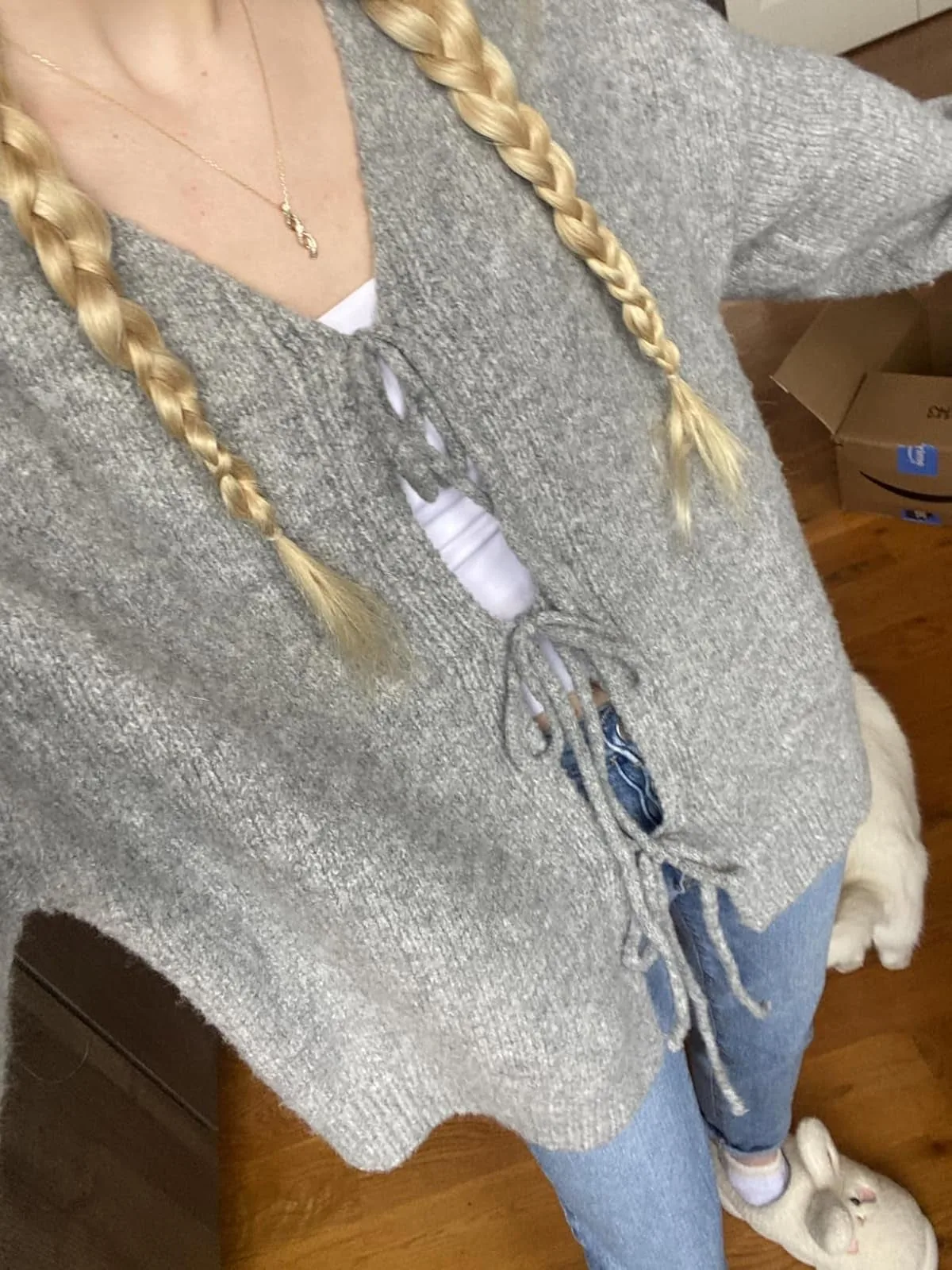
Bottoms. A dark pair of jeans, a lighter or different-cut pair, and one non-denim option such as trousers, a midi skirt, or comfortable knit pants. Three bottoms are plenty when the tops all match them.
A dress. One knit or long-sleeve dress, the easiest complete outfit of the season (more on that below).
Layers. One structured piece (a blazer or a faux-leather jacket) and one cozy piece (a shacket, fleece, or teddy jacket). Between them, you can dress almost any outfit up or down.
Shoes. Ankle boots, sneakers or flats, and a taller boot if your climate calls for it.
How many pieces is “enough”?
There is no magic number, and published capsules range from about ten core pieces to around forty once shoes, outerwear and accessories are counted. Three things push your number up or down:
- Laundry rhythm. If you wash once a week, you need enough bases to get through seven days without repeats that feel stale.
- Climate. Mild autumns need fewer coats; places that hit freezing by November need a heavier coat, warm boots and a thermal layer on top of everything above.
- How often you dress up. An office job or frequent dinners out add a few dressier pieces that a work-from-home week never needs.
A practical way to start is around fifteen to twenty clothing pieces plus three or four pairs of shoes, then adjust after a month of real wear.
Fabrics that earn their place in fall
Thin jersey and linen that carried you through summer start to look limp once you layer over them. For fall, lean on wool and merino knits, corduroy, flannel, ponte, denim, leather and suede. Ponte and boiled wool hold their shape far better than lightweight jersey, and thick, opaque cotton tees survive washing without turning sheer or wavy at the hem. Quick store test: hold a tee up to the light; if your hand shows clearly through it, it will not last as a base layer.
Make every layer earn its spot
Layering is what makes a small fall wardrobe feel big. The same white tee looks entirely different under a blazer, under a cardigan, and under a plaid shacket. When you consider a new layer, ask how many of your existing bases it can go over. If the answer is “most of them,” it belongs in the capsule.
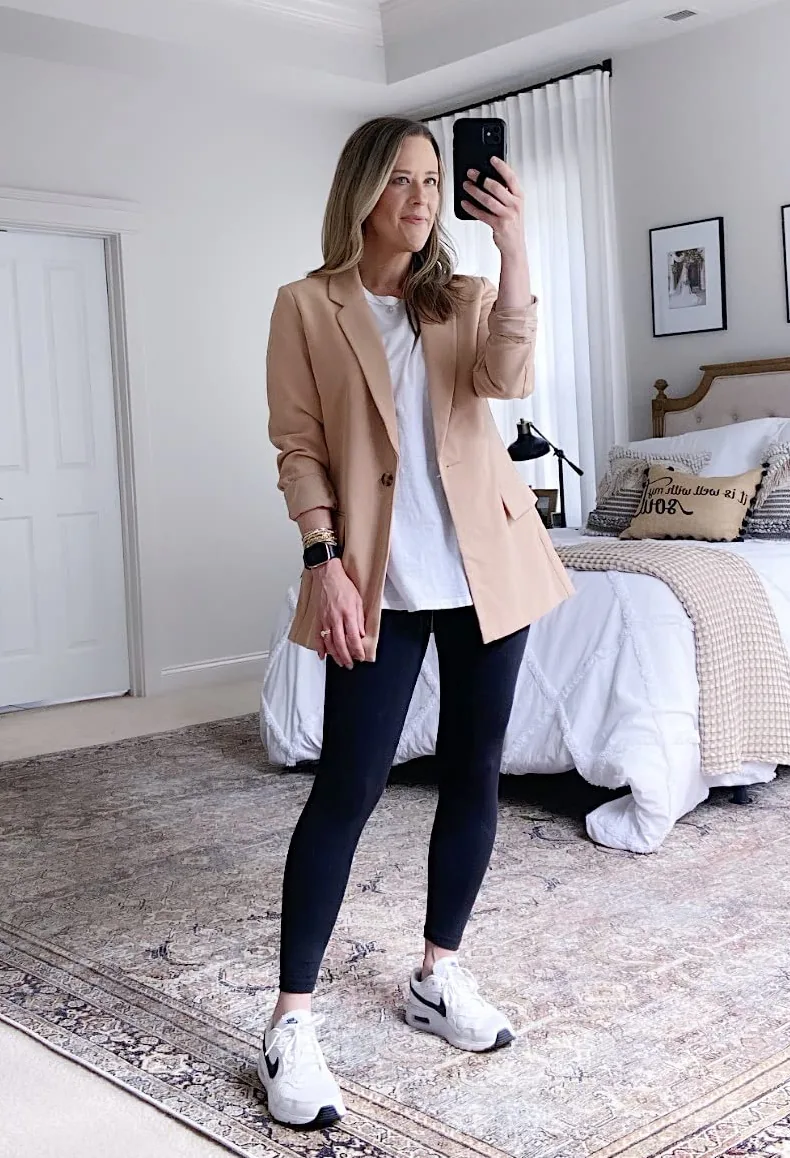
A blazer is the clearest example. Over a plain tee and leggings it reads as smart casual; over a fine knit and trousers it is ready for the office; over a dress it adds structure for dinner. Choose one in a neutral from your palette, with sleeves you can push up, and it will get more wear than almost anything else you own.
Proportion matters too. A longer layer (a duster cardigan or long coat) looks balanced with slim bottoms. A cropped jacket works well with high-waisted, wider pants. Mixing a little volume with something fitted keeps outfits from looking bulky as the layers pile on.
It helps to think in three layers, base, middle and outer, and to swap them as the temperature moves:
- Early fall, roughly 54 to 68°F (12 to 20°C): a tee or light long-sleeve, an unlined blazer or thin cardigan, and a denim or light leather jacket for the morning. Loafers or clean sneakers.
- Late fall, roughly 41 to 54°F (5 to 12°C): a turtleneck or fitted thermal, a chunky knit or wool cardigan, and a wool coat or quilted jacket. Ankle or tall boots, a scarf and heavier tights.
A knit dress counts as one layer, not three. On colder days it still needs tights and a coat, however cozy it feels on the hanger.
Let one dress do a lot of the work
Dresses get overlooked in capsule planning, which is a shame, because each one is a complete outfit. A knit midi or sweater dress can be worn alone with boots, layered over a thin turtleneck, belted for shape, or topped with your blazer or shacket when the weather turns.
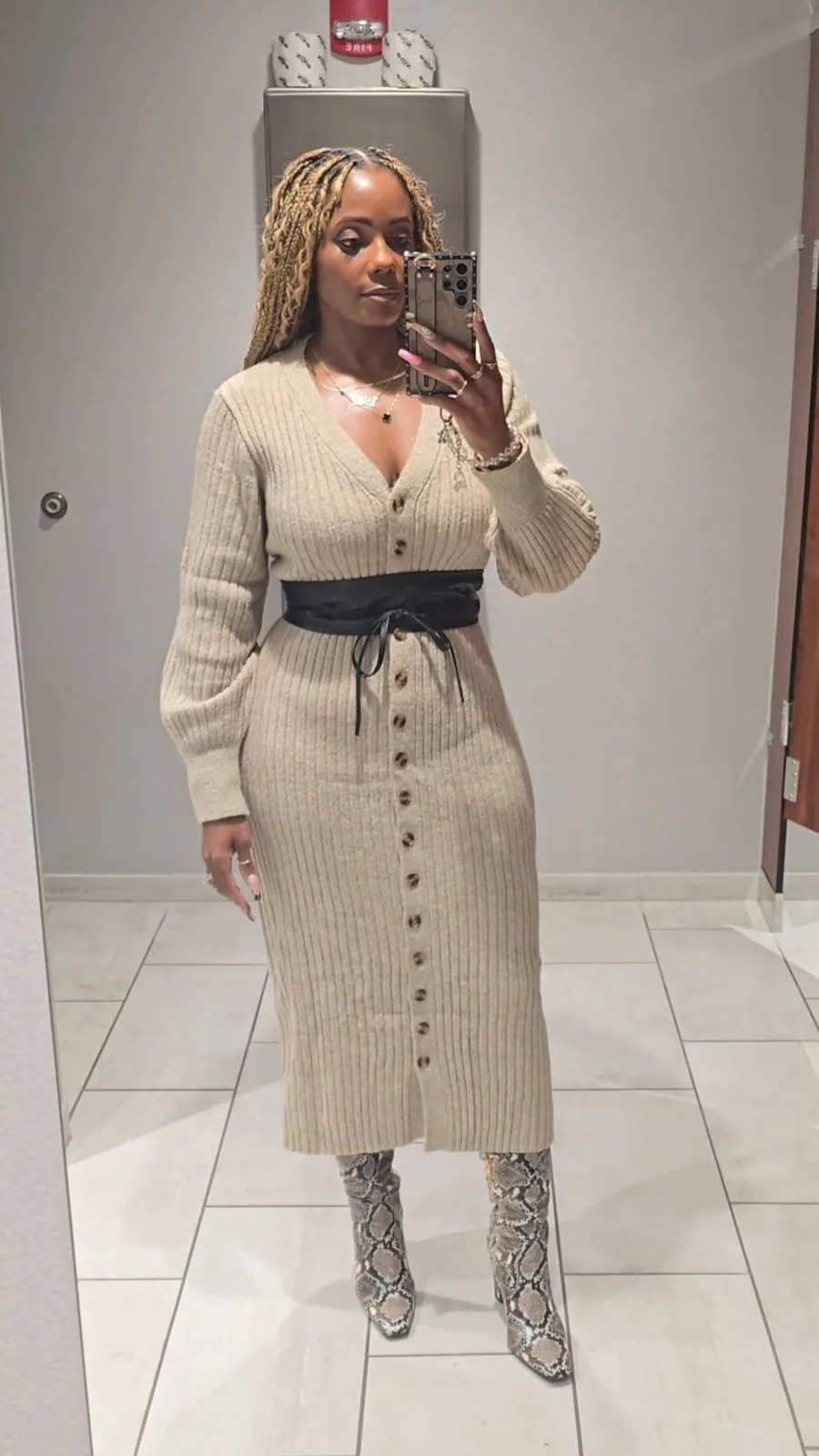
Look for a neutral shade from your palette and a length that works with both ankle and tall boots. A button-front style is especially flexible: buttoned up, it is a dress; left open over jeans and a top, it becomes a long cardigan.
Shoes are the quiet anchor
In a small wardrobe, shoes set the tone of every outfit. Ankle boots with a stacked heel will carry jeans, skirts, and dresses with equal ease, and a warm brown or cognac color works with black, navy, and every earth tone in a fall palette.
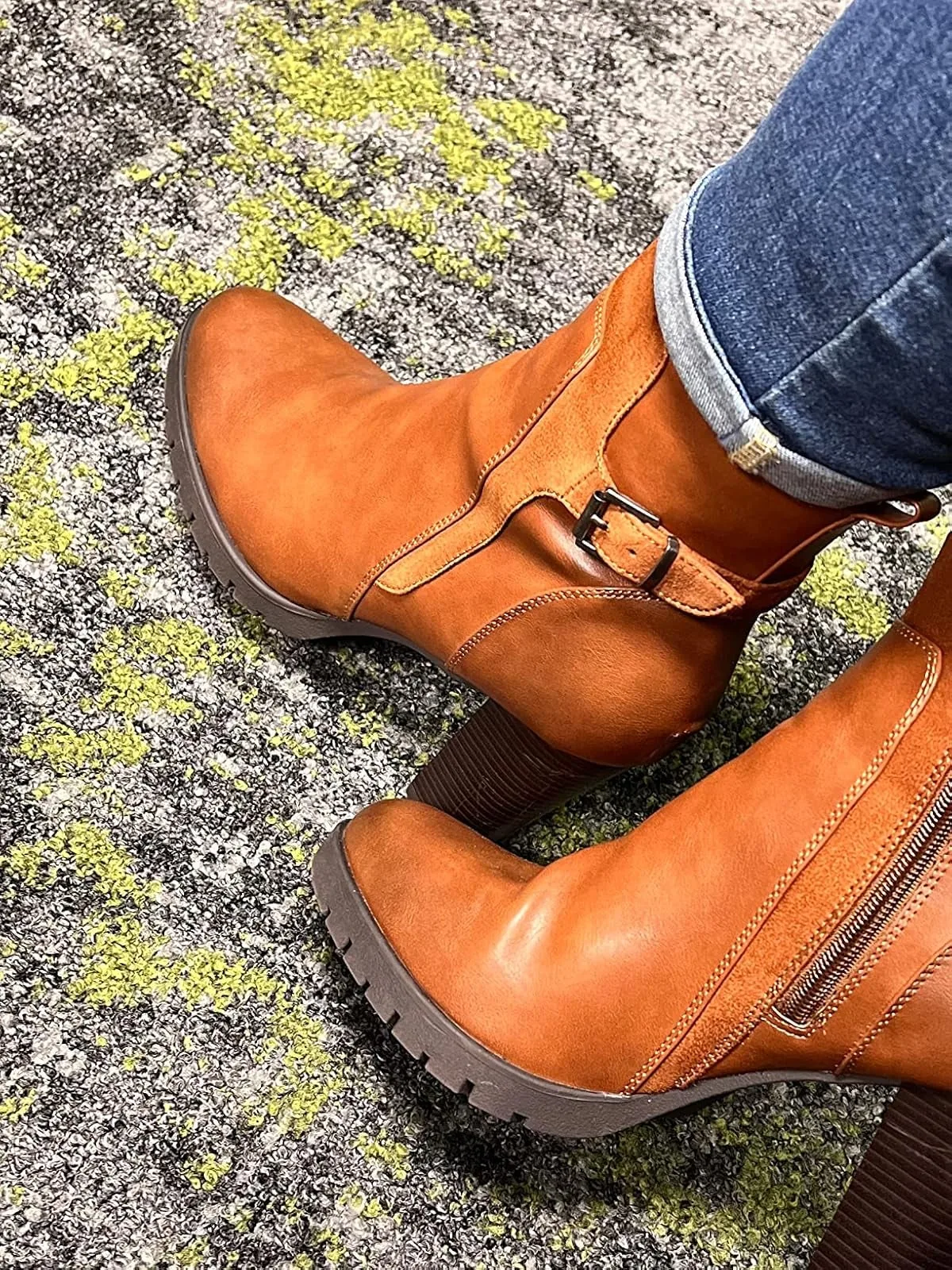
Keep the shoe count low and the quality as high as you can manage. Waterproof or easy-to-clean materials matter more than trend details when the leaves get wet, and a quick brush and conditioning keeps leather looking good all season (our suede and leather care guide covers the routine). For more ways to wear them, see our ankle boot outfit ideas.
Test it before you shop
Before buying anything new, try to build ten outfits from what is in your capsule so far. Write them down or take quick mirror photos. When you get stuck, note exactly what is missing.
Maybe every outfit wants a darker bottom, or there is nothing warm enough to wear over a dress. Those gaps become your shopping list, and nothing else does.
Then hold every potential purchase to a three-outfit rule. If you can’t picture it with at least three things already in your capsule, leave it in the store.
Where to spend, where to save
If your budget only stretches to a few new pieces, put it into the things you wear every day and that take the most abuse: a warm coat and a pair of boots that keep water out. Those carry the whole capsule for months. Basic tees, tanks and long-sleeves are the easiest place to save, as long as the fabric passes the light test above.
Common capsule mistakes, and how to fix them
- Building for a life you do not live. A rail of blazers looks great on paper but sits unworn if most of your week is school runs and laptop work. Fix: count how many days a week you actually spend in each setting, and plan pieces in that ratio.
- Copying someone else’s list. If you never wear collared shirts, a “must-have” white button-down will hang there forever. Fix: start from your favorites pile, not a checklist.
- Going so neutral it feels flat. Many people abandon a capsule because it feels boring by mid-October. Fix: keep the neutrals as the base, but let your accent colors and one print show up in at least a third of your tops.
- Purging everything on day one. Fix: box the doubtful pile and store it for the season. Anything you go looking for comes back; the rest can go.
Keep it flexible as the season changes
A capsule isn’t a contract. Early fall might lean on tees and light layers, while late November calls for heavier knits and a proper coat. Swap a few pieces in and out as the temperature drops, and store the rest out of sight so your main rail stays easy to read.
A low-effort way to keep score: turn every hanger backward at the start of the season and flip it the right way once you wear the piece. By December, the backward hangers show you exactly what to skip next year.
Quick answers
Can I wear black and brown in the same capsule?
Yes. Dark brown with black looks rich in fall, especially in different textures like a black knit with chocolate suede boots. Pick one to match your main bag and belt.
What if I get bored halfway through the season?
That is normal and not a sign the capsule failed. Swap in one piece from storage or add a single new accent, rather than starting over.
Start with your favorites pile and a palette, and only shop once the ten-outfit test shows you a real gap. When you do, browse Our Finds or read more style guides in our Women section.