Most men who say they don’t look good in a blazer have simply never worn one that fits. A jacket that is a size too big looks borrowed; one that is a size too small looks like it might split when you reach for your coffee. Get the fit close, though, and even an inexpensive jacket looks deliberate.
Fit is not a mystery. A jacket gives off a handful of signals, and you can read every one of them in a fitting-room mirror. Wear the kind of shirt you’d normally pair with it, bring your phone for a back view, and work from the top down: the higher up the problem, the harder it is to fix.
Know your size before you walk in
Jacket sizes look cryptic but follow a simple pattern. The number is your chest measurement in inches, taken around the fullest part of your chest and under your arms with the tape snug and your breathing normal. A 40-inch chest starts at a 40. The letter after it is length: S for short, R for regular, L for long.
Height is only a starting point for that letter. As a loose guide, men up to about 5’7″ (170 cm) usually start in short, 5’8″ to 6’0″ (173 to 183 cm) in regular, and 6’1″ (185 cm) and up in long, but charts differ by an inch or so between brands. Your torso matters more than your height: a man with long legs and a short body can need a short jacket at six feet tall.
If you are buying a suit rather than a separate blazer, check the “drop,” the gap between jacket size and trouser waist. The usual drop is six inches, so a 40 jacket comes with 34 trousers. Athletic builds with a big chest and a small waist often need a bigger drop, or separates bought in two different sizes.
Start with the shoulders, because they decide everything
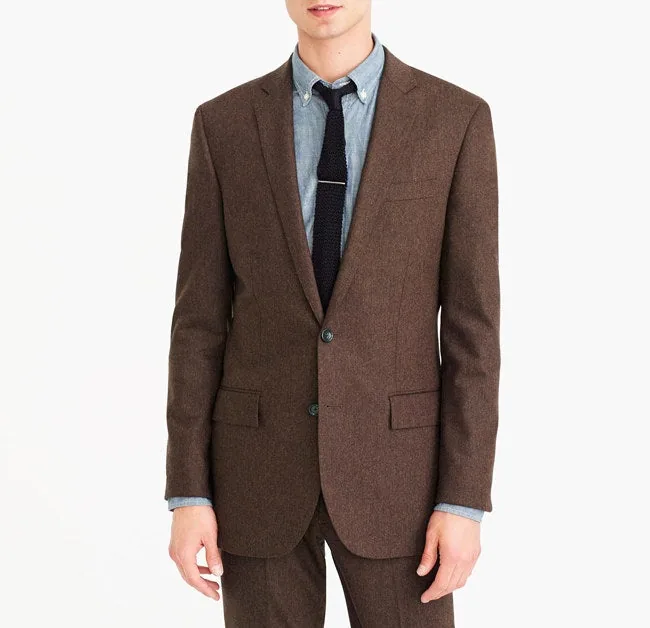
Look for the seam where the sleeve is sewn onto the body. On a well-fitting jacket it lines up with the end of your shoulder bone, so the sleeve drops straight down from there. If the seam hangs past your shoulder and you see a little dent or ripple at the top of the sleeve, the jacket is too wide for you. If the seam sits inward and the fabric pulls across the top of your arm, it is too narrow.
A quick way to double-check: stand side-on to a wall and lean your shoulder into it. If the padding touches the wall well before your arm does, there is too much jacket. Some structured styles are cut with a slightly extended, sharper shoulder on purpose, but the line should still look like an extension of you, not a coat hanger inside the jacket.
Treat this as a deal-breaker. Re-cutting shoulders means taking apart the most complicated part of the garment, and most tailors will either decline or charge so much that it isn’t worth it. If the shoulders are wrong, put the jacket back.
Collar and lapels: smooth and flat
Turn around and check the back of the neck. The jacket collar should rest against your shirt collar all the way across, with a little of the shirt collar visible above it. A gap where the jacket collar stands away from your neck often comes from posture or shoulder shape rather than size, and it is fiddly to correct. Small gaps can sometimes be eased by a tailor; large ones are another reason to keep looking.
A gap is easiest to spot when you can see nothing else. If you’re checking at home, try the jacket over a turtleneck or a plain T-shirt and take a side photo: any daylight between the collar and your neck shows up straight away.
Then look at the lapels. They should lie flat against your chest and roll gently toward the top button. If they bow outward or flip open when the jacket is buttoned, the chest is too tight. Lapel width is mostly a style choice, but it reads best when it is roughly in proportion to your build and your tie.
The button test
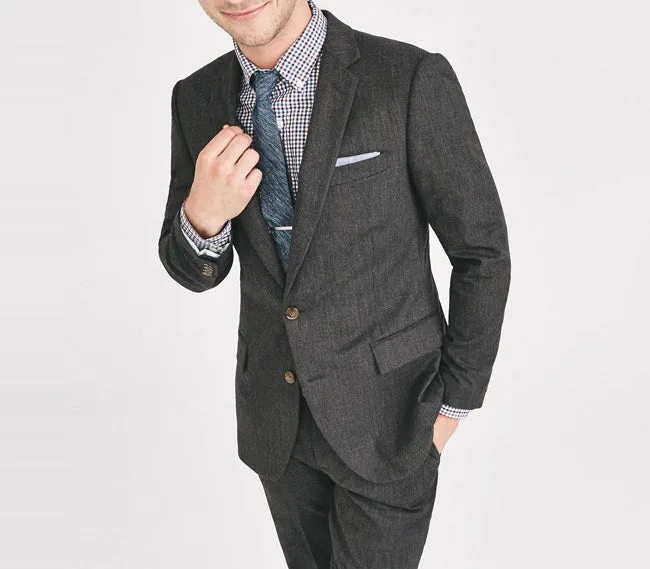
Fasten the jacket. On a two-button jacket that means the top button only; the bottom one stays open, always. On a three-button, close the middle and, if you like, the top.
Now look at the front. The fabric should run smoothly from the button toward your shoulders and hips. If it pulls into an X shape around the button, the jacket is too tight through the middle. If it sags and you can grab a fistful of cloth at the stomach, it is too loose.
A good rule of thumb is that you should be able to slide a flat hand between the buttoned jacket and your shirt without strain, but not a fist. The fastened button itself should land just above your navel, around your natural waist. Too low and your legs look shorter; too high and the jacket looks like it shrank.
Finally, move. Give yourself a hug, reach forward as if shaking hands, sit down. A jacket that fits will move with you and settle back into place. One that is too tight across the back will grab at your shoulder blades the moment your arms come forward.
Sleeves: a sliver of shirt cuff
Let your arms hang naturally at your sides. The jacket sleeve should stop around the point where your wrist meets your hand, so that a small strip of shirt cuff, roughly a quarter to half an inch, shows below it. That strip of cuff is what makes a jacket look tailored. No cuff showing means the sleeves are too long; a wide band of shirt means they are too short, or your shirt sleeves are too long.
Check the width too. You want enough room in the upper arm to bend your elbow comfortably, then a gentle taper toward the wrist. Sleeves that look like tubes all the way down make even a slim jacket look boxy.
Then look for diagonal ripples running down the back or front of the sleeve while your arms hang still. That usually means the sleeve has been set into the jacket at an angle that doesn’t match how your arms naturally fall, which tailors call the pitch. It often shows on one arm only, because few people stand perfectly symmetrically. A tailor can re-hang a sleeve, but it is a bigger job than shortening one, so a little rippling is something to note rather than an instant no.
Sleeve length is one of the most common and affordable alterations. The one catch is working buttonholes at the cuff: if the buttons actually unbutton, the sleeve usually can only be shortened from the shoulder end, which is a far bigger job. Most ready-to-wear jackets have decorative buttons, so it is rarely an issue, but ask before you buy.
Length: cover the seat
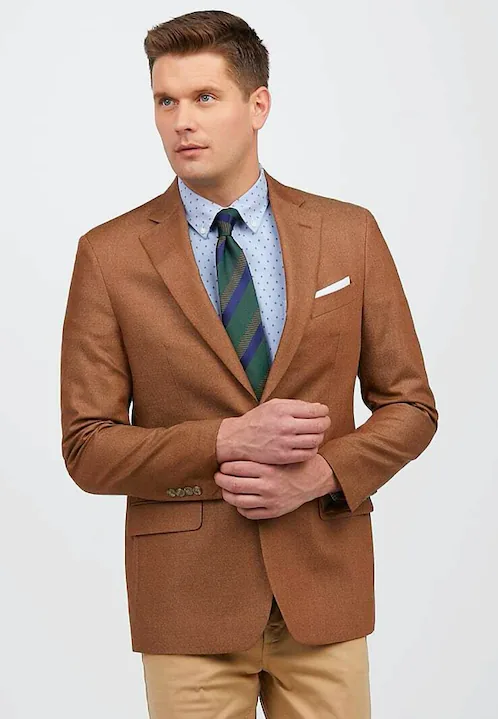
A classic jacket should cover the seat of your trousers, or come very close on a slim modern cut. A simple check is to let your arms hang and curl your fingers: the hem should land around the middle of your cupped hand. Too short and it looks like you outgrew it; too long and it drifts toward overcoat territory and shortens your legs.
Length can’t really be changed. A tailor can take up a hem slightly, but it throws off the pocket placement and the balance of the jacket, so most will advise against it, and almost none will move it more than an inch or two (2.5 to 5 cm). If you are tall or short, look for long or short sizes rather than hoping the regular can be adjusted.
Look at the back
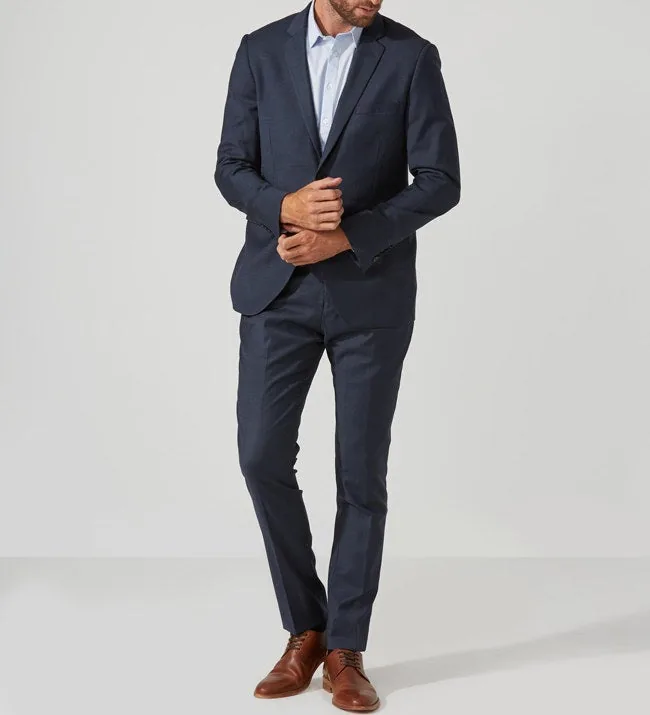
This is where the phone comes in. Have someone snap a photo of your back while you stand relaxed, arms at your sides. The fabric should fall cleanly from collar to hem. Horizontal folds just under the collar usually point to tightness across the upper back; loose vertical folds suggest extra fabric that a tailor could take in.
Then check the vents, whether one in the center or two at the sides. They should hang closed and straight, not spread open like a curtain. Vents that pull apart while you’re standing still usually mean the jacket is too tight around the hips and seat.
Single- versus double-breasted
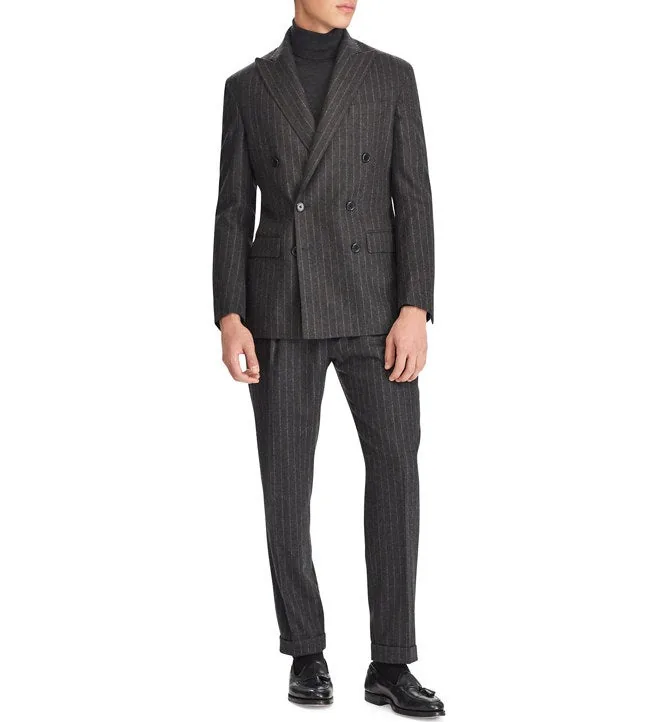
Everything above applies to both, but a double-breasted jacket is less forgiving because it is designed to be worn buttoned. It needs a closer fit through the waist and a clean, overlapping front. It tends to suit taller frames and leaner builds best, and it makes a stronger statement. If this is your first jacket, a single-breasted, two-button style in navy or mid-grey is the most versatile place to start.
What a tailor can fix, and what they can’t
Before you buy, sort any problems into two piles. Easy fixes, the kind most alteration shops handle routinely: shortening sleeves, lengthening them when there is spare fabric inside, taking in or letting out the waist a little, and moving a button slightly. Difficult or impossible fixes: shoulders that are too wide or narrow, a jacket that is too short, a chest that is clearly too small, and significant collar gaps.
The practical takeaway is to buy for your shoulders and chest, accept that sleeves and waist may need a small adjustment, and budget for it. A jacket that fits at the shoulders and has been nipped in at the waist will look better than a more expensive one worn straight off the rack.
The fitting-room checklist
- Shoulder seam sits at the end of your shoulder bone, with no dent at the top of the sleeve.
- Jacket collar touches your shirt collar all the way around the back.
- Buttoned, the front lies smooth: no X-shaped pull, no fistful of spare cloth.
- A quarter to half an inch of shirt cuff shows with your arms relaxed.
- The hem covers your seat and lands around your cupped fingers.
- Vents hang closed, and you can reach forward without the back grabbing.
Adjusting the rules for your build
- Broad chest, narrow waist: fit the shoulders and chest first, then have the waist taken in. Jackets labeled athletic or with a softer, unpadded shoulder tend to sit better than very structured ones, which can make wide shoulders look wider.
- Fuller middle: resist sizing up until the button closes with room to spare, because the shoulders will then hang off you. Choose the size that fits your shoulders, check that it buttons without an X-shaped pull, and favor a classic rather than slim cut. Darker solids like navy and charcoal keep the line clean.
- Slim frame: a lightly padded shoulder and a jacket with some shape at the waist add structure. Higher armholes keep the body from billowing when you move.
- Shorter men: err toward the shorter end of the length rule, keep the button point at or just above the navel, and skip heavy patterns and wide lapels, which crowd a small frame.
Quick answers
Should a blazer feel tight?
Close, not tight. You should be able to hug yourself and reach forward without the seams straining, and a flat hand should slide inside the buttoned front. If you can’t breathe deeply or sit comfortably, it’s too small.
Do you unbutton a blazer when you sit?
Yes. Undo it as you sit so the front doesn’t bunch and pull, and fasten the top button again when you stand. Double-breasted jackets are the exception and usually stay closed.
Is it worth tailoring a cheap blazer?
If the shoulders fit and it only needs sleeves and a little waist shaping, usually yes. If it needs five or six changes, the alterations can cost more than the jacket is worth, and a different size or brand will serve you better.
Wear it with intent
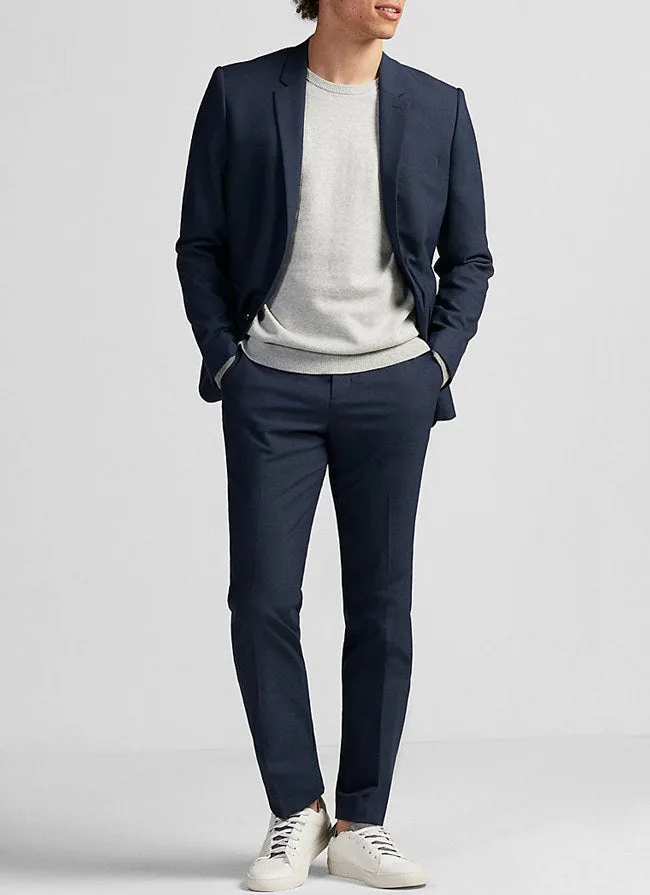
Once the fit is right, the rest is styling. A navy or grey jacket works with chinos, dark jeans or wool trousers, over a crisp shirt, a fine-gauge knit or even a good plain T-shirt. Make sure the shirt underneath fits as well as the jacket does; our shirt fit check covers collar, shoulders and sleeves the same way. For outfit ideas from office to weekend, see how to style a blazer.