Somewhere around the first properly cold morning, a hat stops being optional. The trouble is that many of us grab whatever is by the door and then spend the day either too warm, flattened or quietly convinced it looks wrong. A winter hat that suits you is mostly a matter of fit and placement, with a little thought about fabric and color. Get those right and almost any style works.
Know your head size first
Knit beanies stretch, which is why so many are sold in one size, but structured hats like berets, felt styles and lined bucket hats are not so forgiving. Wrap a soft tape measure, or a piece of string you then lay against a ruler, around your head about an inch above the eyebrows, just over the tops of the ears and around the fullest part at the back. Keep it level and comfortable rather than tight, and measure twice. Use that number against each brand’s own chart, since sizing is not identical from one maker to the next.
For a rough idea, a head of about 22 inches (56 cm) is a US hat size 7 and sits between small and medium, depending on the brand. Around 22½ to 23 inches (57 to 58 cm) is usually a medium. If you fall between two sizes in a structured hat, go up; a thin strip of hat-sizing tape inside the band takes up the slack, while a hat that is too small cannot be fixed.
A hat that is too small creeps up all day and leaves a red line on your forehead. One that is too big slips over your eyes and makes the head look larger. If a beanie is slightly loose, a cuffed style can be folded deeper for a closer fit.
Fitted, slouchy or cropped: choosing a beanie shape
The fitted, pulled-down beanie is the most polished and the warmest. It sits close to the head, covers the ears and needs no styling, which makes it the easiest choice with a tailored wool coat for the office. A fine rib knit in a dark neutral or a soft camel is the version that looks most grown-up.
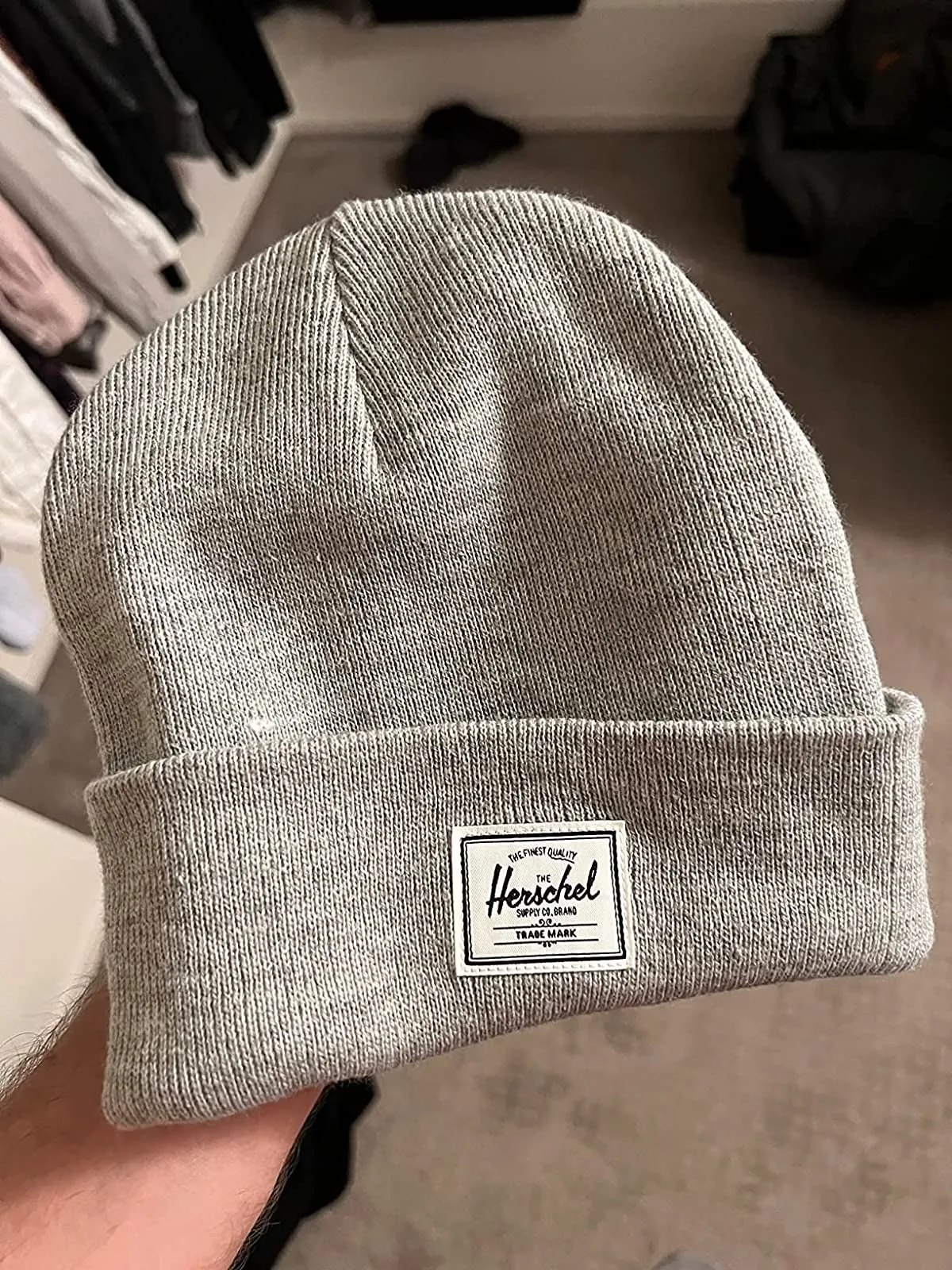
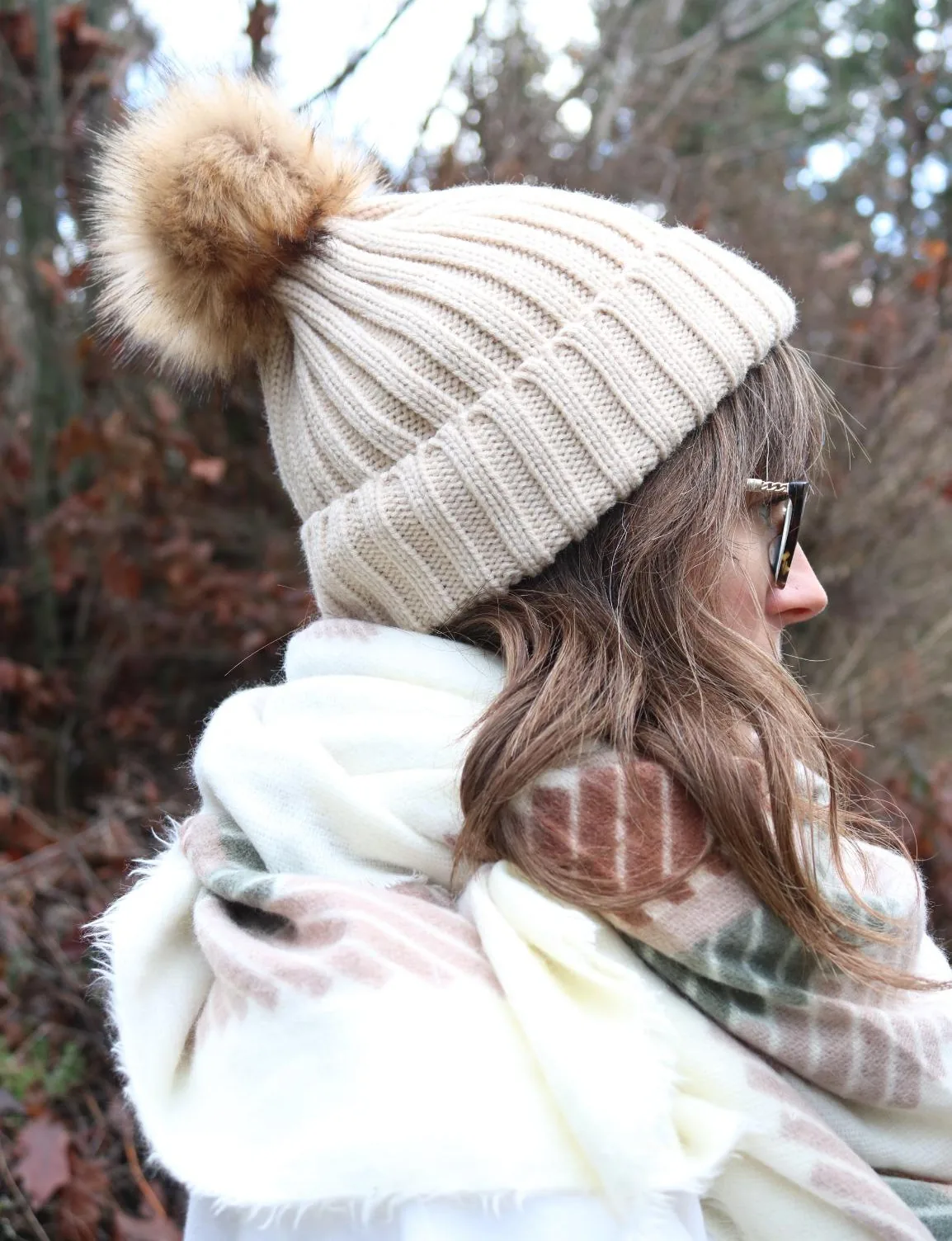
The slouchy beanie is more relaxed. The trick is to wear it toward the back of the head so the extra knit drops down behind you instead of piling up on top. It suits weekend jeans, chunky knits and parkas, and the added height can flatter rounder face shapes.
The short, cropped beanie that sits high above the ears is mostly a style statement. It shows off earrings and a clean hairline but gives up warmth, so save it for milder days or pair it with earmuffs or a high collar when the wind picks up.
Making it work with your hair
Long hair balances a beanie naturally, so you can wear it down, tucked behind the ears or pulled into a low ponytail or braid. If you tie it back, place the elastic just below the edge of the hat so the back of your head looks smooth. A ponytail beanie, with an opening at the back, lets a high ponytail or bun pass through and avoids the flattened crown altogether.
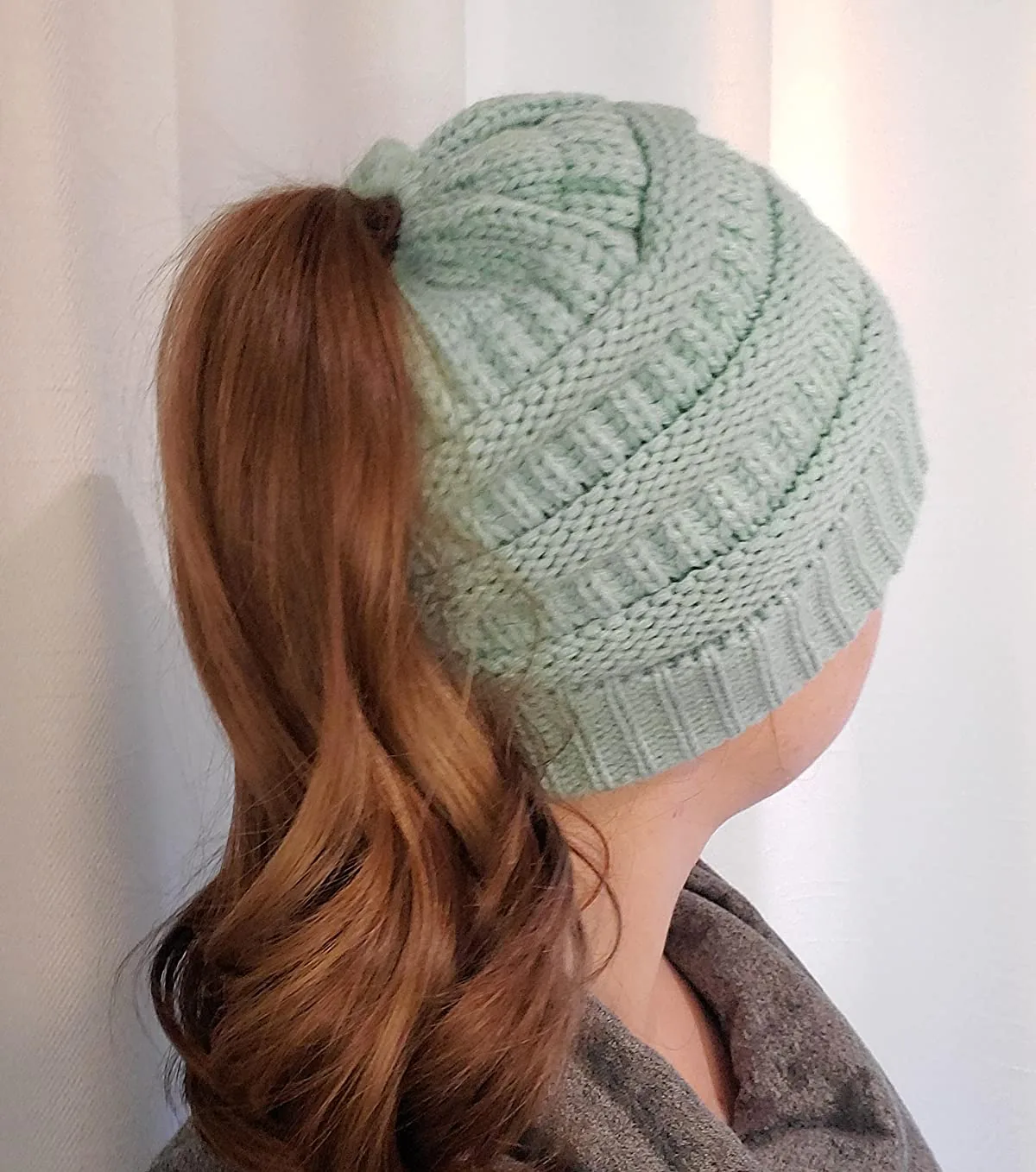
With a fringe, set it first and push the beanie a little farther back on the head so it frames rather than flattens. Short hair looks best when a little shows at the temples and the nape.
To limit hat hair, put the hat on only when your hair is completely dry, smooth a drop of leave-in cream or light oil through the lengths to calm static, and keep a little dry shampoo for the roots. When you take the hat off, flip your head and shake the roots loose with your fingers before reaching for a brush.
Fabric and lining matter more than you think
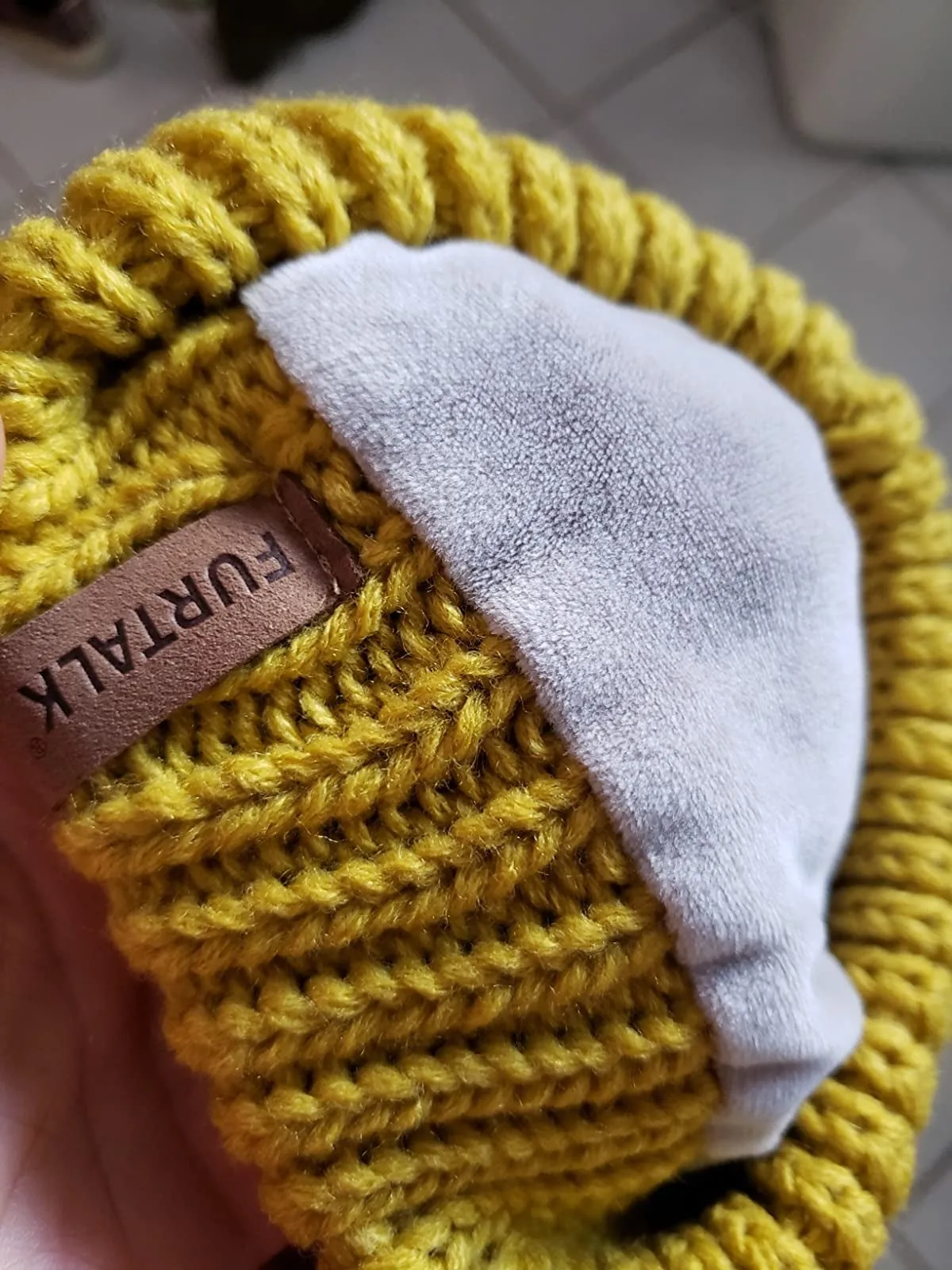
Wool keeps you warm even when it gets damp and breathes well indoors, while cashmere and cashmere blends add softness for skin that finds plain wool scratchy. Acrylic is affordable, easy to wash and comes in every color, but it tends to trap heat and build up static. A lining changes everything: fleece or plush adds warmth to a light knit, and a satin or silk-like lining reduces friction, which helps curly, coily and frizz-prone hair arrive looking the way it left.
If wool makes your forehead itch, the culprit is usually fiber thickness rather than wool itself. Fine merino and cashmere have much thinner fibers and feel far softer. A hat with a cotton or fleece band at the forehead, or a satin lining, puts a barrier between skin and knit, and it also cuts down on static. Acrylic tends to build more static than wool, so if your hair stands on end every time you take your hat off, the fabric may be the reason.
To keep a knit hat in shape, hand wash it in cool water with a wool detergent, press the water out in a towel rather than wringing it, and dry it flat, reshaped, away from radiators. Heat and agitation are what felt and shrink wool, and hanging a wet beanie stretches it out of shape. A fabric shaver or sweater comb removes pilling in a few strokes.
How to wear a beret without looking like a costume
A beret is easier than its reputation. Place the band across the forehead about an inch above the eyebrows, tuck the inner edge under to anchor it, then pull one side down so it just covers the top of an ear. Tilting it forward over the brow looks more dramatic; pulling it back and to the side looks more casual. If you prefer less tilt, set it straight and tug gently on the center to give the top some volume.
Thick or curly hair usually does better with the beret pushed slightly forward, while fine, straight hair can take a deeper placement toward the back. A spritz of dry texture spray at the crown helps it grip, and a couple of bobby pins in your hair color keep it in place on windy days.
To keep it modern, skip the striped top and red lip worn together. A black wool beret looks fresh with a camel coat, straight jeans and loafers; a cream one softens a black knit dress and tall boots; a navy one sharpens a trench. Faux leather and chunky knit berets read more casual than felted wool, so save them for weekends.
Fuzzy bucket hats and brimmed knits
A bucket hat in faux fur, sherpa or quilted fabric is the most playful option. The soft brim frames the face, so wear it level or tipped slightly back rather than pulled low over the eyes, and let your hair fall loose underneath. It pairs naturally with a puffer, a shearling-collared jacket or a long wool coat, and it is a good choice for anyone who finds beanies too close-fitting. Because these hats have a lining and a set shape, check the size chart; many come with an inner drawstring to adjust the fit.
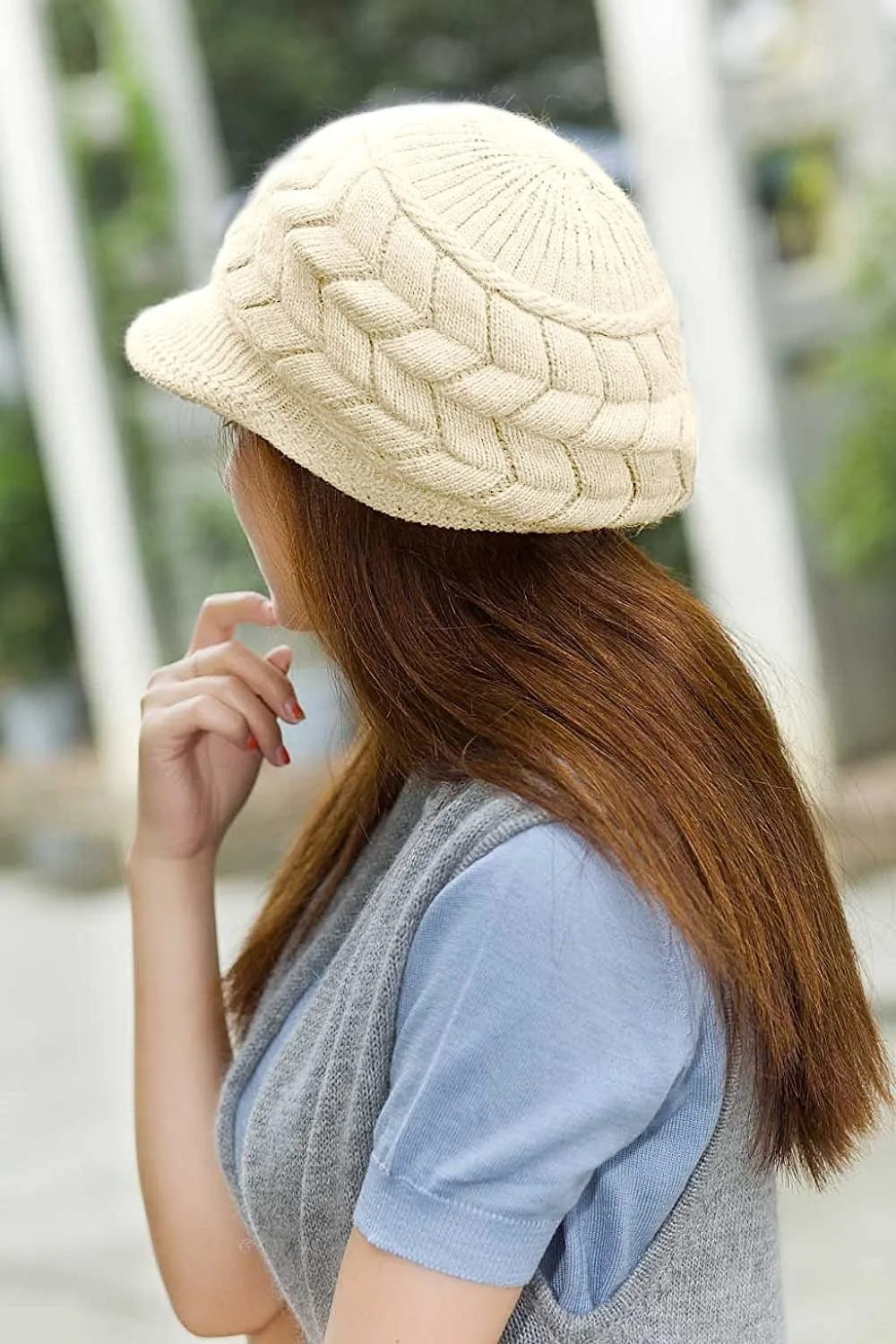
Knit hats with a short brim, sometimes called newsboy or visor beanies, sit somewhere between a beanie and a cap. The brim shades the eyes on bright winter days and gives a sporty shape to a simple outfit. Wear them straight on, a little back from the hairline, with long hair down or in a low twist.
Matching the hat to the rest of your outfit
The easiest way to make a hat look intentional is to repeat one of its colors elsewhere: a camel beanie with a camel scarf, a cream beret with cream boots or a grey hat with a grey coat. Tonal outfits in shades of one color always look calm and considered. If the coat is already bold or patterned, keep the hat plain; if the coat is simple, the hat is a good place for texture, a pom or a brighter shade.
Think about proportion too. A big, chunky hat looks balanced with a substantial coat, while a fine knit or neat beret suits a slimmer, tailored silhouette. Whatever you choose, keep the rest of your accessories in the same mood so the whole look feels like one idea rather than several.
Quick Answers
Do you really lose most of your body heat through your head? No. That idea comes from an old military test where people wore insulated suits but no hats. Your head loses heat in proportion to its surface, about a tenth of the body. A hat still matters, because the head and ears are often the only uncovered parts, and cold ears are miserable.
Which hat is warmest? A close-fitting wool or merino beanie that covers the ears, ideally lined. Berets and cropped beanies leave the ears out, so pair them with earmuffs or a high collar on very cold days.
Can I wear a beanie with glasses? Yes. Put your glasses on first, then pull the hat down over the arms so it holds them in place. A thinner knit is more comfortable than a chunky one, which can push the arms into your head.
Should my hat match my scarf and gloves? It does not have to. Repeating one color between two of the three is enough to look planned.
If you buy only one hat this winter, make it a fine-rib wool beanie in a color that matches your coat; it is warm, packs into a pocket and works from the office to the weekend. For complete outfits built around warm layers, see our ideas for cold-weather outfits that do not look bundled up, and if a hat is not your thing, our guide to wearing earmuffs with real winter outfits has another way to keep your ears warm.