A scarf sits closer to bare skin than almost anything else you wear in winter, which is why a scratchy one gets left on the hook no matter how good it looks. The neck is sensitive, and coarse wool fibers that feel fine through a sweater can prickle there within minutes. The other common letdown is a scarf that turns fuzzy and pilled by January because the yarn was short-fibered or loosely spun.
The good news is that a soft, warm scarf comes down to a few things you can check: the fiber, how fine it is, and how the scarf is made. Below are the wool and cashmere scarves that do well on all three, and that owners keep wearing season after season, plus one wool-free pick for anyone who can’t wear wool at all.
What we looked for
We started with the scarves fashion editors and menswear writers recommend year after year, then read buyer reviews for comments about itch, warmth and pilling, which matter more here than color or style. Fiber came first. Cashmere is among the finest animal fibers used in clothing, and fine fibers bend when they touch skin instead of poking it, which is why good cashmere doesn’t itch. We also favored scarves with clear labels: pure cashmere or pure wool rather than vague “cashmere feel” blends, which are often acrylic. Woven scarves got extra credit for durability, because a tight weave holds fibers in place and sheds fewer pills than a loose knit. Finally, we wanted a useful size: long enough to wrap once and knot, and wide enough to tuck into a coat collar.
Fishers Finery Classic Cashmere Scarf
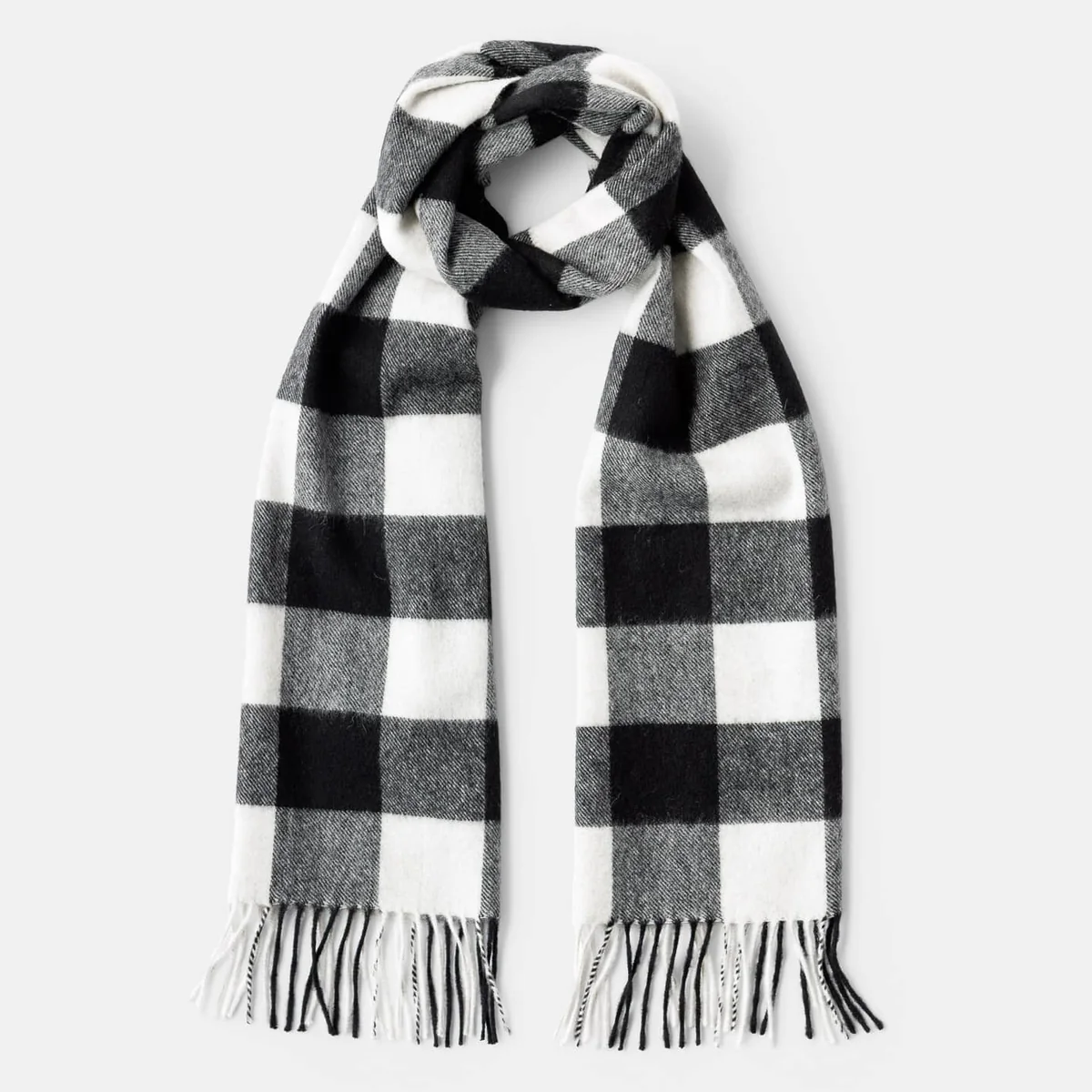
If you want one scarf that does everything, this is a sensible place to start. It is woven from pure Grade-A cashmere that has been de-haired, which removes the coarse guard hairs that make cheap cashmere prickly, and spun into a two-ply yarn so it holds up better to daily wear. At about sixty-six by twelve inches with a fringe on each end, it is long enough to loop and knot over a coat and wide enough to fold for extra warmth. It comes in solid neutrals and a run of plaids, including this black and white buffalo check.
The fabric is certified to the OEKO-TEX Standard 100 for harmful substances, and the cashmere is certified by the Sustainable Fibre Alliance for responsible sourcing. Reviews on the brand’s site are strongly positive, though there are only a few dozen for this exact scarf, so there is less owner feedback here than for the mass-market picks below. The care is simple: hand wash in cool water or dry clean, and lay it flat to dry.
Best for: a first good cashmere scarf, for women or men, that looks smart with a wool coat or a parka.
Johnstons of Elgin Cashmere Scarf
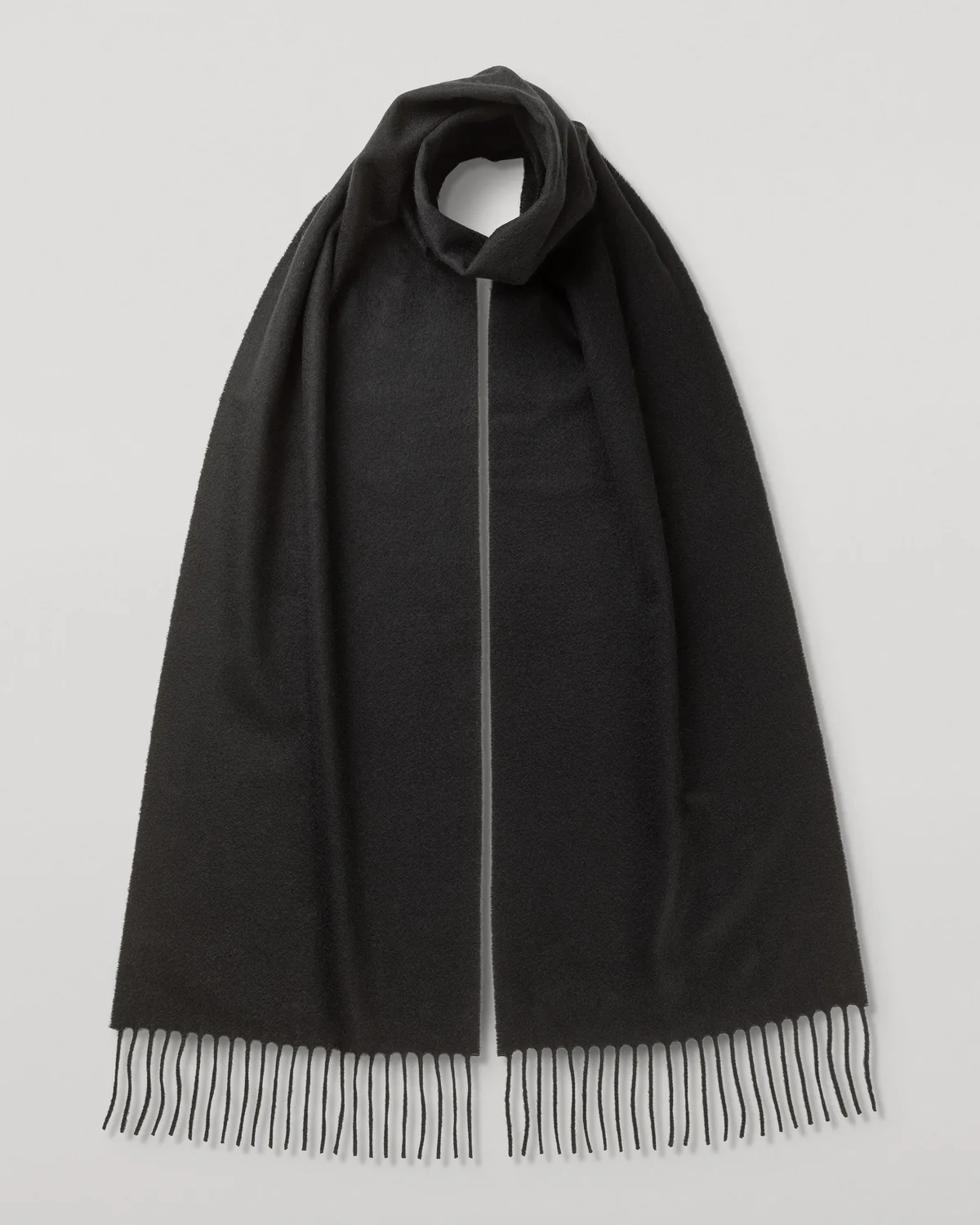
Johnstons has been weaving in Elgin, in the north of Scotland, since the late eighteenth century, and its plain cashmere scarf is the one menswear writers tend to call the benchmark. This one is woven and finished at the mill from pure cashmere, then given a ripple finish by hand. That step gently raises the surface fibers, which gives the scarf a soft, slightly brushed hand and a little extra loft for warmth. It comes in classic shades such as black and camel, and the brand offers personalised embroidery on request.
There are no owner reviews on the brand’s own page to quote, so this pick rests on the scarf’s long reputation and on the specifics: Scottish weaving, pure cashmere and a finish that is done by hand. Expect a little surface fuzz in the first weeks, as with any brushed cashmere, which settles down with wear. Use a cashmere comb rather than a razor if pills appear, and store it folded rather than hung so it keeps its shape.
Good to know: it is the most expensive scarf here, but it is also the one most likely to last for years.
Quince Mongolian Cashmere Scarf
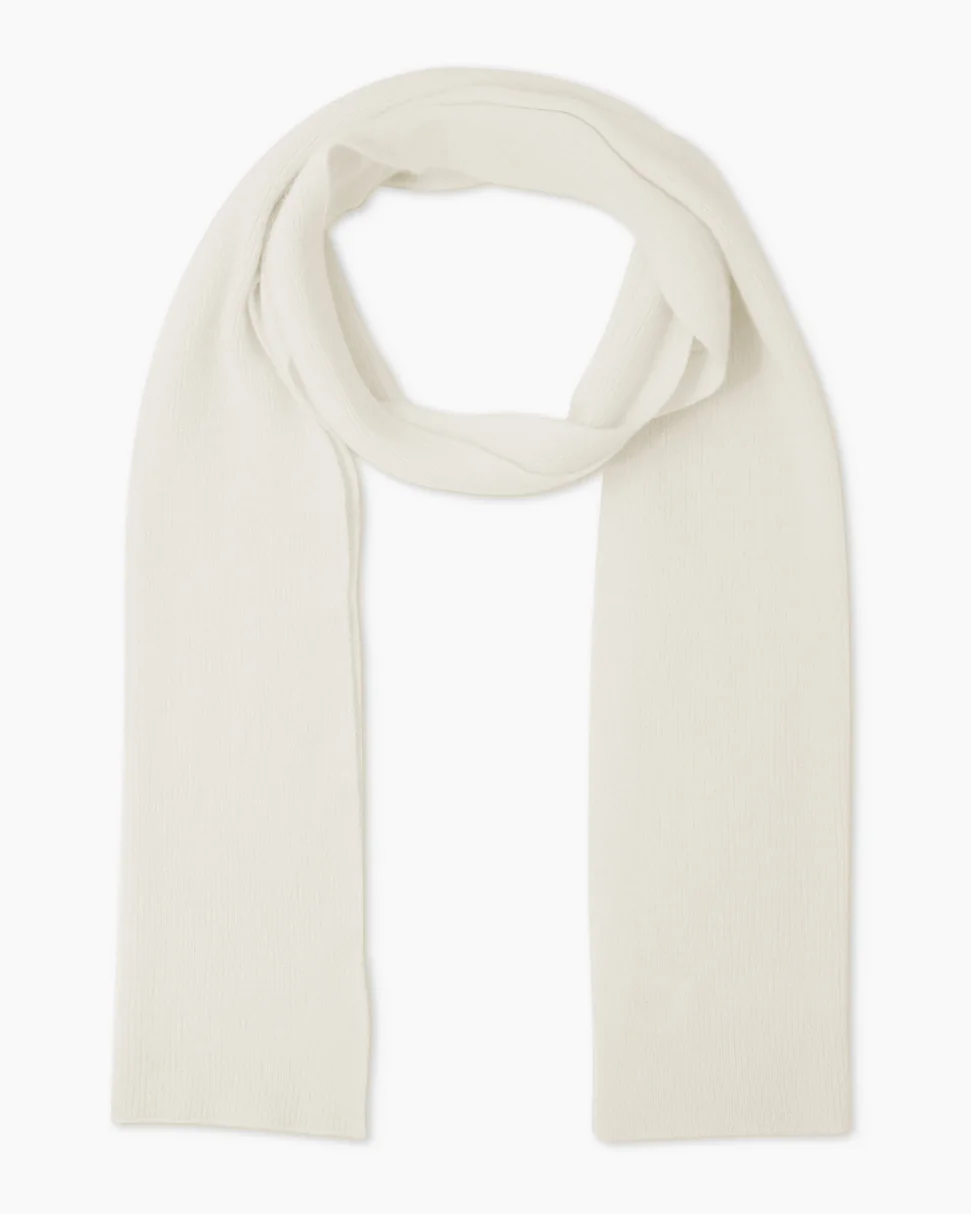
Quince is unusually specific about its cashmere, which makes it easy to judge. The scarf is pure Grade-A Mongolian cashmere with an average fiber diameter of roughly sixteen microns, well within the range that feels smooth on skin, and the fibers are long, which reduces both scratchiness and pilling. It is a soft 12-gauge knit, about ten inches wide and seventy inches long, so it wraps easily without bulk and doubles as a light wrap over the shoulders. The color range is wide, from ivory to teal, burgundy and navy.
With nearly two thousand reviews averaging close to five stars, owners agree on the basics: it is soft, warm and generous in length without feeling bulky, and many say it looks more expensive than it is. One reviewer specifically praised it for not pilling. Quince itself is upfront that a little light fuzzing can show up with regular wear, which is normal for a knit. Hand wash in cold water with a neutral soap or baby shampoo, rinse without rubbing and dry it flat away from sunlight.
Best for: anyone who wants a soft knit scarf in a particular color, or a matching scarf and glove set.
Villand Pure Cashmere Scarf
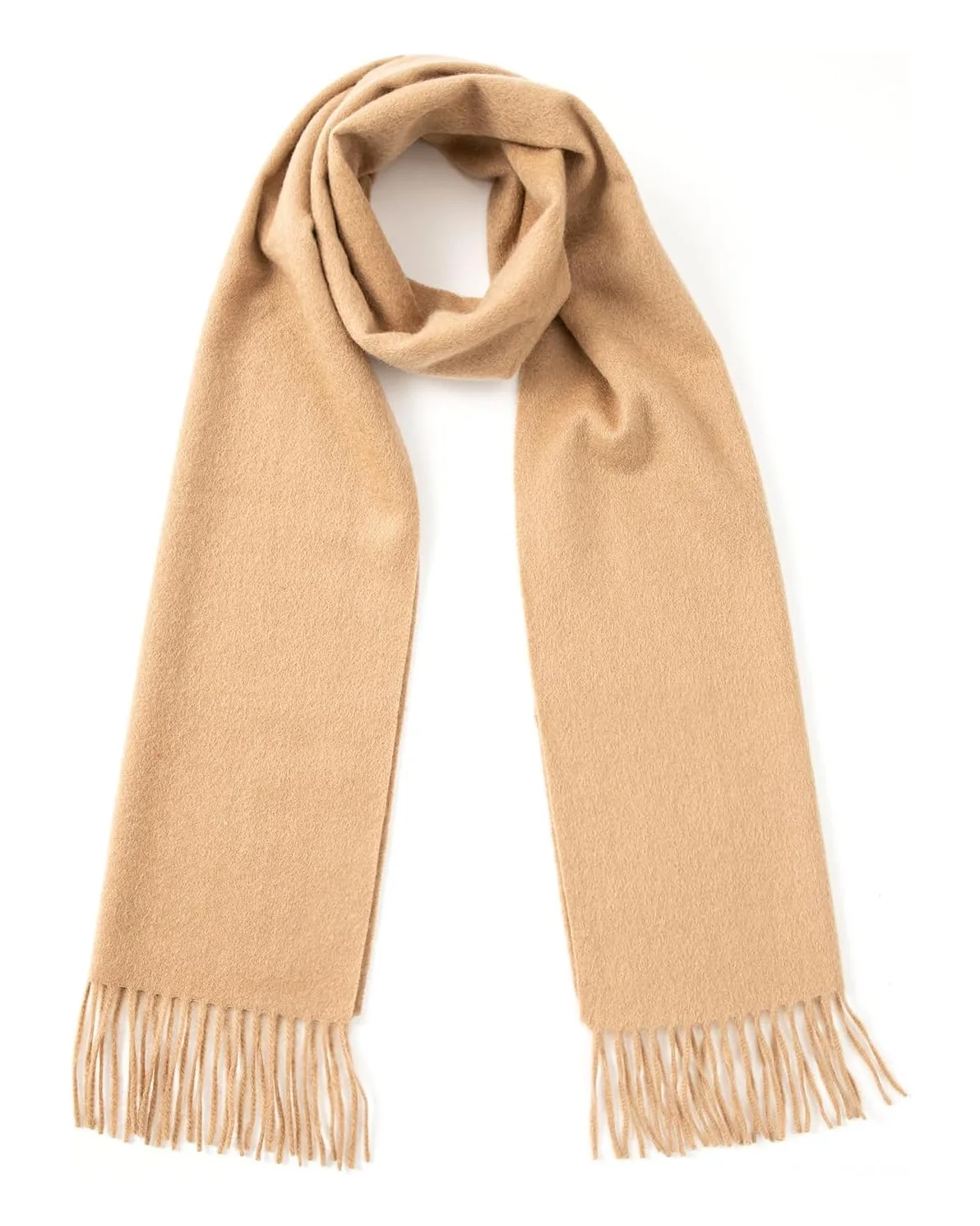
This is the budget cashmere scarf that holds up best under scrutiny. The label is clear, one hundred percent Mongolian cashmere in a two-ply yarn, and it is a plain weave rather than a knit, which helps it resist pilling. It measures about twelve inches wide and sixty-six inches long, plus a six-inch fringe at each end, and arrives in a gift box, which makes it a popular present.
Amazon reviews average well above four and a half stars. Every buyer who mentioned the feel called it soft, and several describe it as luxurious for the money. Owners like the size in particular: one said it is not too thick and fits neatly under a jacket or overcoat, which is exactly what you want from a scarf you’ll wear every day. Several owners mention that it keeps them warm. The few negative notes are about value for money; this is a light, plain-woven scarf, so if you want something thick and chunky, look at the knits above. Hand wash only.
Best for: a gift, or a first cashmere scarf to wear daily under a coat.
TBCo Lambswool Blanket Scarf
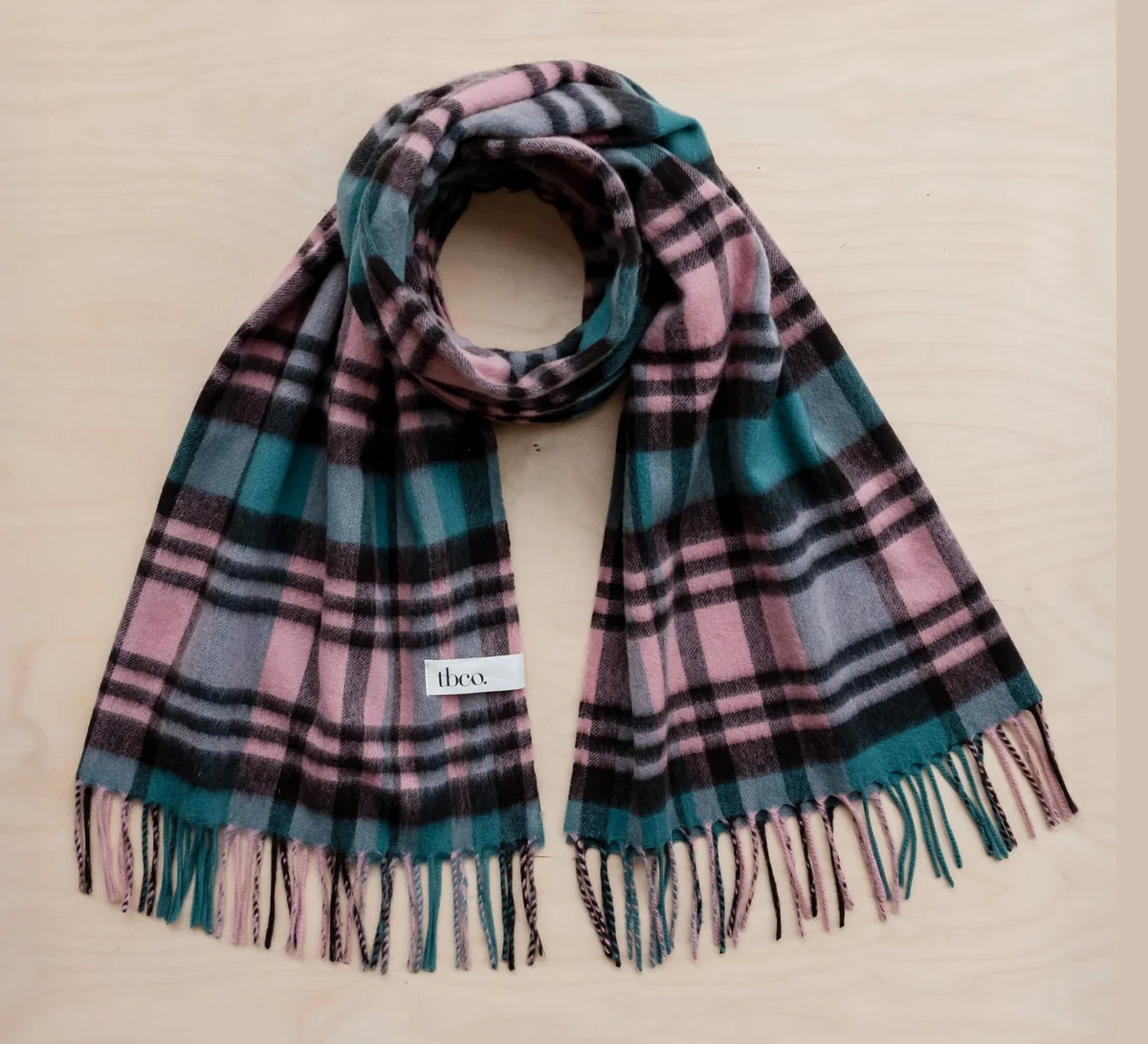
If you prefer wool to cashmere, or want a bold tartan you can wrap like a blanket, this is the pick. It is pure lambswool, which comes from a lamb’s first shearing and is finer and softer than ordinary wool, though still a touch more textured than cashmere. It is designed in Edinburgh and woven in Inner Mongolia, and it is big: about thirty by seventy-nine inches including the fringe, so you can wear it doubled around the neck or over your shoulders on a freezing platform.
Out of about a hundred and fifty reviews on the brand’s site, nine in ten give it five stars. The most useful comments come from people who usually can’t wear wool: one reviewer who is sensitive to fabric textures said they were surprised it wasn’t scratchy, and others describe it as warm and very soft. One buyer was disappointed to learn the scarves are no longer woven in Scotland. If your skin reacts to any wool at all, start with cashmere instead. Hand wash and dry flat.
Best for: the coldest days, and anyone who likes an oversized, cozy scarf with color.
Rails Oslo Scarf
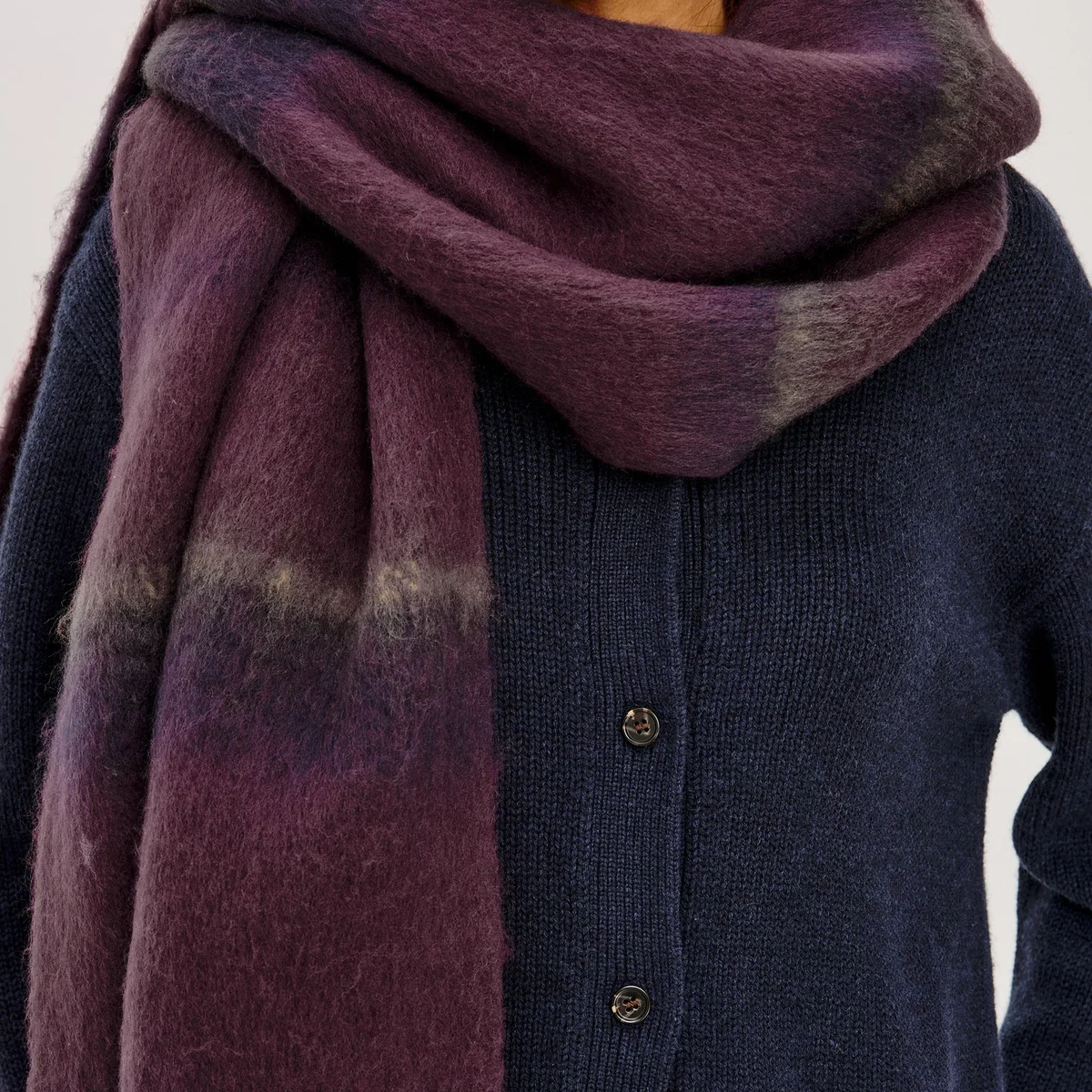
This is the one pick here that is not wool at all, and that is the point. If even fine wool bothers your neck, a soft synthetic is the simplest way around it. The Oslo is polyester brushed into a fuzzy, mohair-like surface, with a fluid drape, a little stretch and long fringe at both ends, so it has the cozy look of a chunky wool blanket scarf without the fiber that makes some people itch.
It comes in bold brushed stripes and checks, from cool blue and gray to plum and bright red plaid, which makes it the most colorful scarf in this roundup. Wrap it twice and let the fringe hang over a dark wool coat, or loop it once over a cardigan and jeans. It will not have the warmth-for-weight of cashmere, so think of it as a style scarf for city days rather than the one you reach for in a deep freeze.
Best for: anyone who can’t wear wool, or wants a bright statement scarf over a plain winter coat.
How to Choose a Scarf That Doesn’t Itch
Read the fiber label. Pure cashmere, merino or lambswool should be named on the tag. Wool experts measure fiber diameter in microns, and fibers much thicker than about thirty microns are the ones that prickle. Cashmere usually sits in the mid to high teens, fine merino in the high teens to low twenties, and regular wool is coarser. Words like “cashmere feel” or “cashmere touch” usually mean acrylic or polyester. Our guide to reading fabric labels explains what to look for.
Choose woven for durability, knit for softness. Woven scarves are flatter and pill less because the fibers are locked in place. Knits feel plusher and stretch around the neck, but they fuzz up more at friction points, especially where the scarf rubs a coat collar.
Check the size. Around seventy inches is long enough to loop and knot; ten to twelve inches wide works for most people. Blanket scarves are warmer but bulkier under a fitted coat.
Expect a little pilling, and deal with it gently. Some fuzz in the first weeks is loose short fibers working their way out, not a defect. Remove pills with a cashmere comb or sweater stone, rest the scarf between wears, and store it folded and clean. Our guide to caring for sweaters and stopping pilling works just as well for scarves.
Quick answers
Why does my wool scarf itch? Usually because the fibers are thick enough to poke the skin rather than bend. Rough guard hairs left in cheap cashmere do the same thing. Switching to finer cashmere or merino solves it for most people.
Is cashmere warmer than wool? Weight for weight, cashmere is warmer and lighter, which is why a thin cashmere scarf can feel as cozy as a thicker wool one. A dense lambswool scarf is still very warm, just bulkier.
How often should you wash a cashmere scarf? Only a few times a season, or when it smells or looks dirty. Airing it out between wears is usually enough. When you do wash it, use cool water and a wool detergent, press out the water in a towel and dry it flat.