Pick the wrong weekender and you spend the trip either digging through a bottomless pit or sitting on a bag that will not close over one extra sweater. The right one swallows two or three days of clothes, carries comfortably through a station, fits the overhead bin and still looks neat on a hotel luggage rack. Here is how to check size, shape, pockets and material before you buy.
Start with how you travel
Think about your usual short trip before you look at bags. Do you mostly drive, take the train or fly? Do you travel with only this bag, or with a laptop tote or a rolling suitcase as well? Do you pack one outfit a day or a few options? A weekender for car trips can be generous and soft, while one that has to pass airline size checks needs firmer limits.
Size: match it to the nights, not the dream
Capacity is usually listed in liters. As a rough guide:
- One or two nights: a compact bag that holds a change or two of clothes, a small toiletry kit and one pair of shoes. Small versions can pass as a personal item under the seat in front of you.
- Two or three nights: a medium bag, roughly thirty to forty-five liters, the size that suits most people. It fits a few mix-and-match outfits plus one extra pair of shoes.
- Long weekends and work trips: larger weekenders act like a small suitcase, but they get heavy fast on one shoulder.
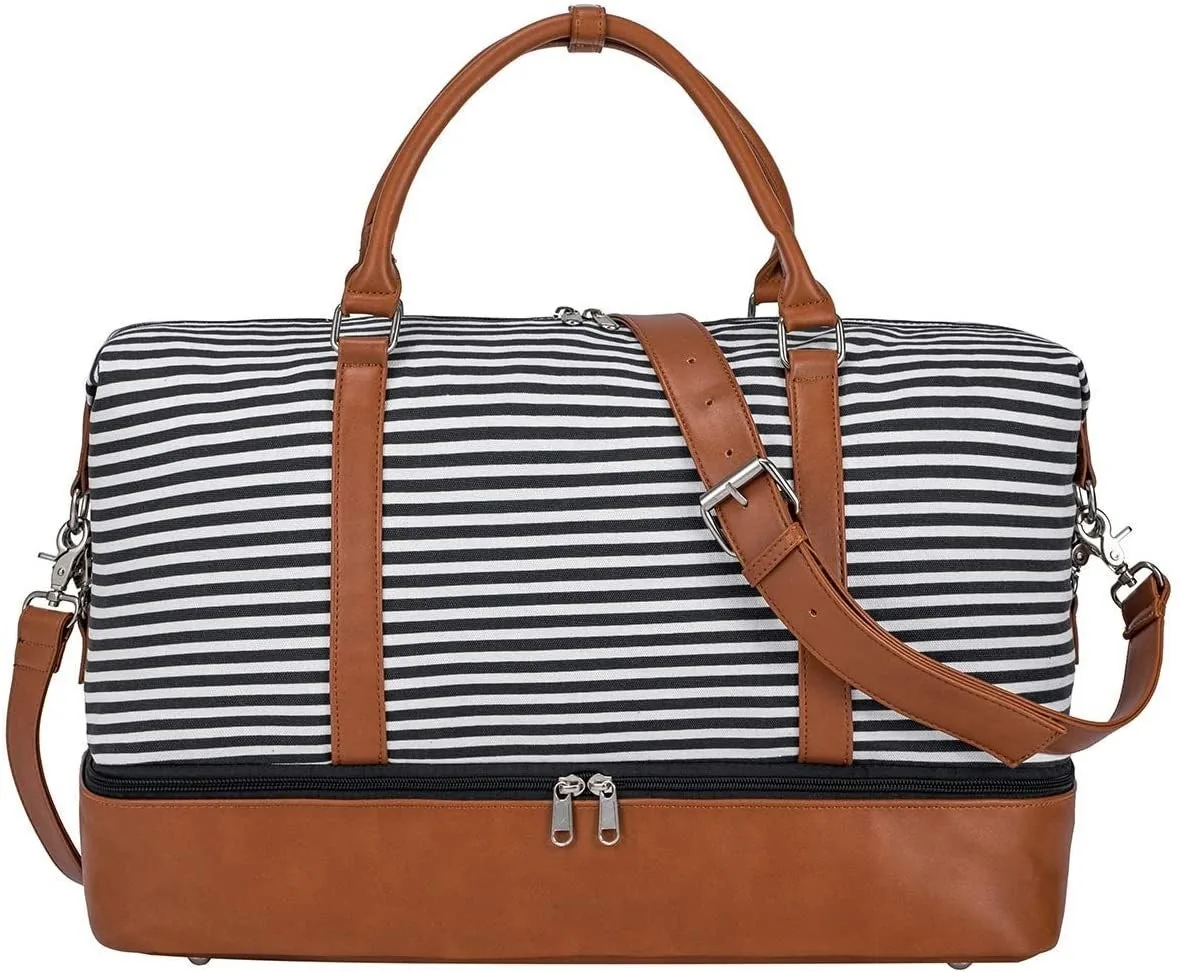
The striped canvas bag at the top of this page sits in that middle range: soft enough to squeeze into a trunk, with leather trim where the handles take strain.
If you fly, look up your airline’s carry-on and personal-item dimensions before buying, since they vary between carriers and fare types. Check the bag’s packed dimensions rather than the flat measurements in a product photo; a soft bag that measures neatly empty can bulge well past the limit when full. On many US airlines the carry-on limit is around 22 by 14 by 9 inches, and personal items are much smaller, often small enough to fit under the seat.
Personal-item limits among US carriers mostly sit around 17 to 18 inches long, 13 to 14 inches high and 8 to 9 inches deep, and the strictest ones are noticeably smaller. That matters more than it used to: basic economy fares and low-cost carriers often allow only a personal item for free, and gate agents may ask you to fit it in the sizer. A soft, squashable weekender that is not packed to bursting has the best chance of sliding under the seat. Some airlines, especially outside the US, also cap cabin bags by weight, which is another reason to count the empty weight of a leather bag.
A simple test: lay out what you would pack for a typical weekend, including shoes and toiletries, and compare the pile with the bag’s stated capacity or a bag you already own. Most people need less space than they think, and a slightly smaller bag keeps packing disciplined.
Shape and opening
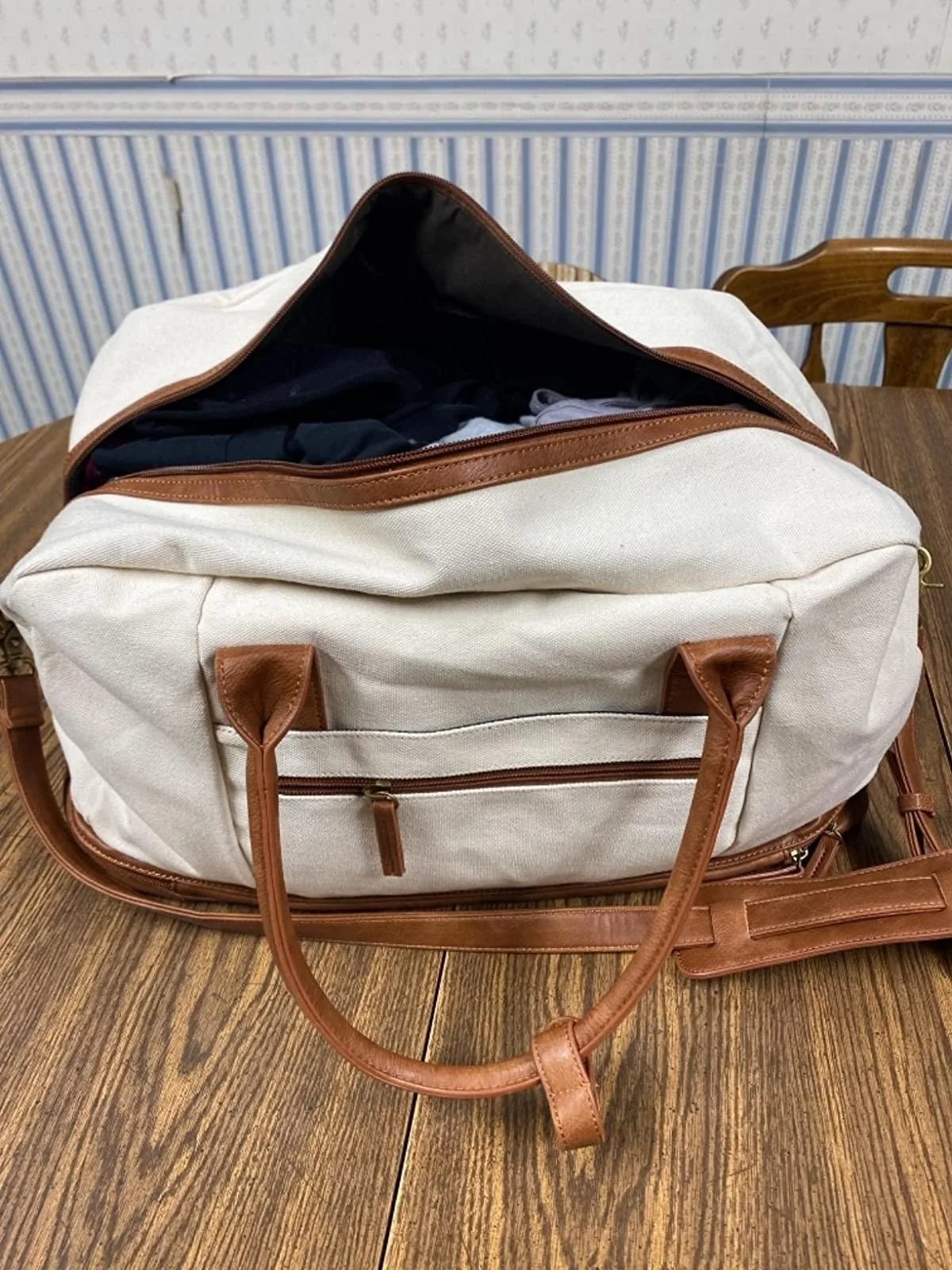
A classic duffel, round or barrel-shaped, is easy to squash into car trunks and overhead bins, but things tumble into a heap at the bottom. A boxier, more structured weekender keeps its outline, packs more like a suitcase and looks smarter at a hotel or a dinner straight from the station.
Look closely at the zip. A wide opening that runs along the top and down the ends, sometimes called a U-shaped or clamshell opening, lets you see everything inside and pull out a shirt without unpacking the rest. A narrow top zip is fine on small bags but becomes frustrating on larger ones.
Weekender or duffel?
The names overlap, but in general a weekender is more structured, sized for a few days and set up with pockets and a shoe compartment, while a duffel is a looser tube with one big space that expands or squashes to fit. Choose a weekender for city breaks, work trips and anything where you want to look put together on arrival. Choose a duffel for gym bags, road trips, outdoor weekends or bulky kit, when flexibility matters more than shape.
Pockets that earn their keep
Organization is personal, but a few features help almost everyone:
A separate shoe compartment, usually a zipped section at the base or one end, keeps soles away from clean clothes. It also holds a wet swimsuit or gym kit.
An outside pocket for the things you reach for on the way: ticket, passport, phone charger, headphones, lip balm.
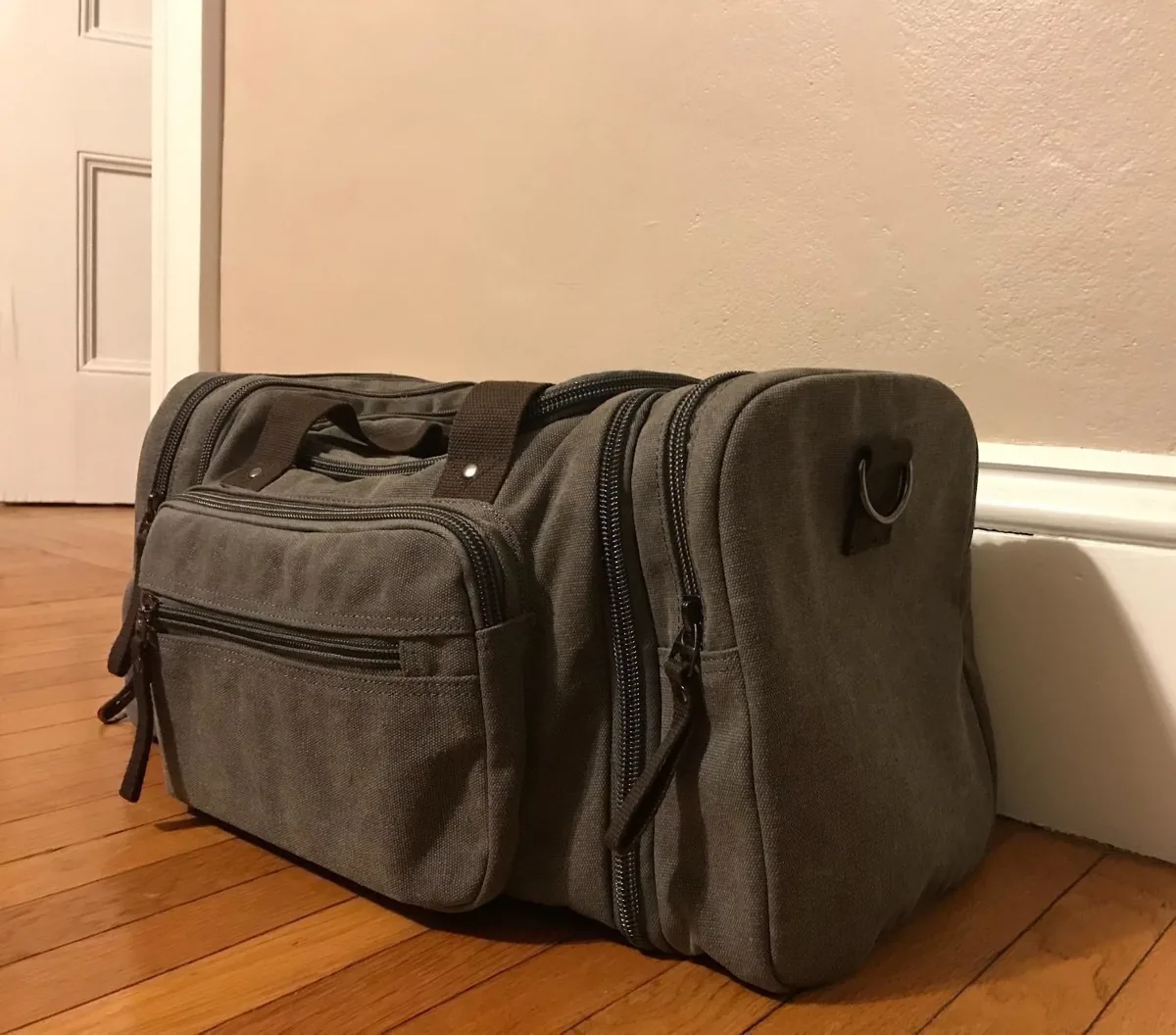
A few inside pockets for small items such as chargers, jewelry pouches and keys, so they do not sink to the bottom.
Resist a bag with pockets everywhere. Every divider adds weight and reduces the flexible main space, which is what a weekender is for.
Carrying it comfortably
Short handles are for lifting in and out of cars and racks; the shoulder strap does the real work. Look for one that is detachable and adjustable, with a strap pad or a wide strap that will not dig into your shoulder when the bag is full. Sturdy metal clips and stitching that reinforces where handles meet the body are signs the bag is built to carry weight.
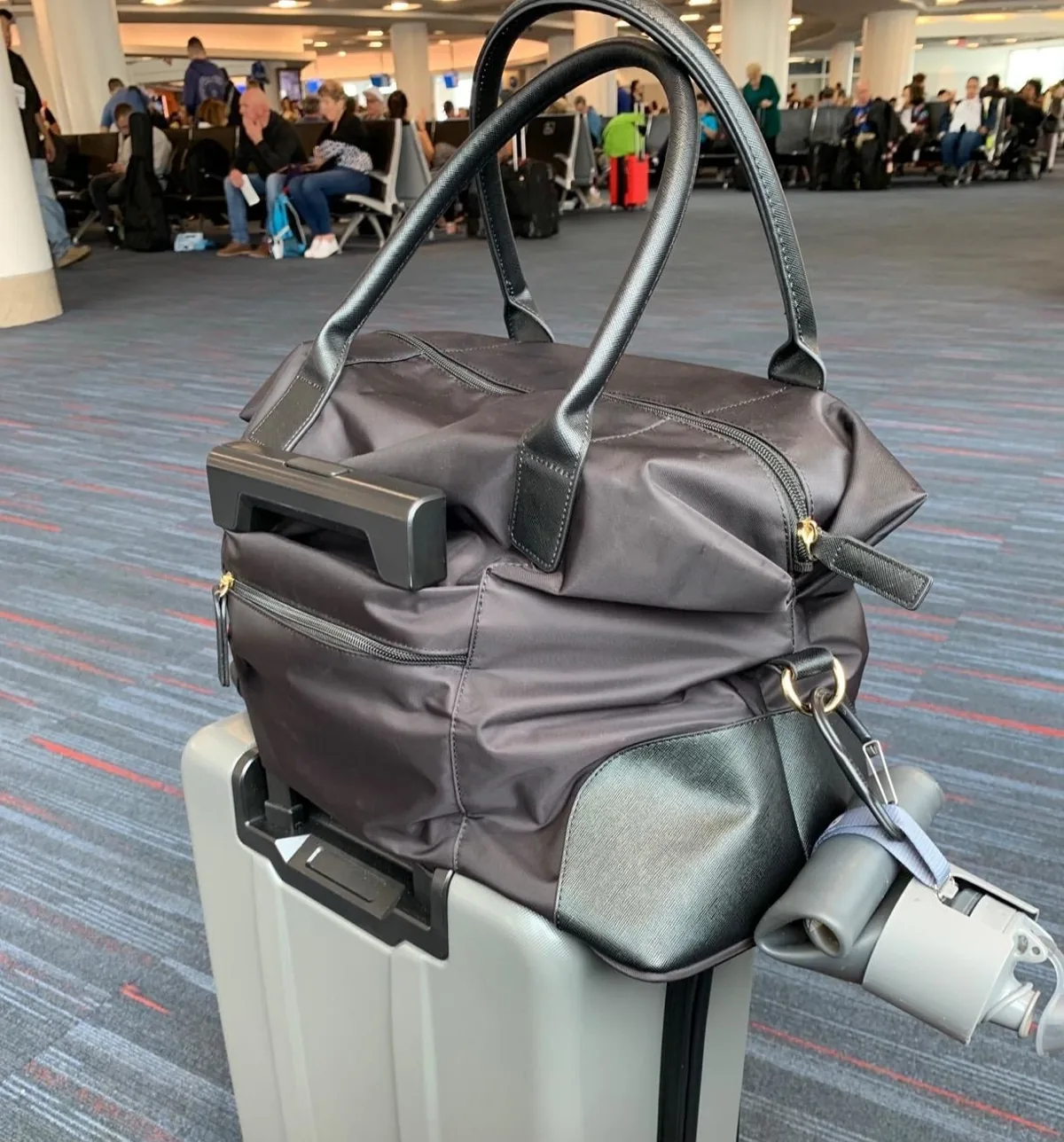
If you often travel with a rolling suitcase, a sleeve on the back that slides over the suitcase handle is surprisingly useful. The weekender rides on top through the terminal, and your shoulder gets a break.
Materials and how they travel
Canvas is sturdy, relaxed and generally lighter than leather. Coated or waxed canvas resists rain and stains better than plain canvas, and both pair well with leather trim on handles and corners, where wear happens first.
Nylon and polyester are the lightest and most weather-resistant options and are easy to wipe clean. They look sporty or sleek depending on the finish, and many fold flat for storage.
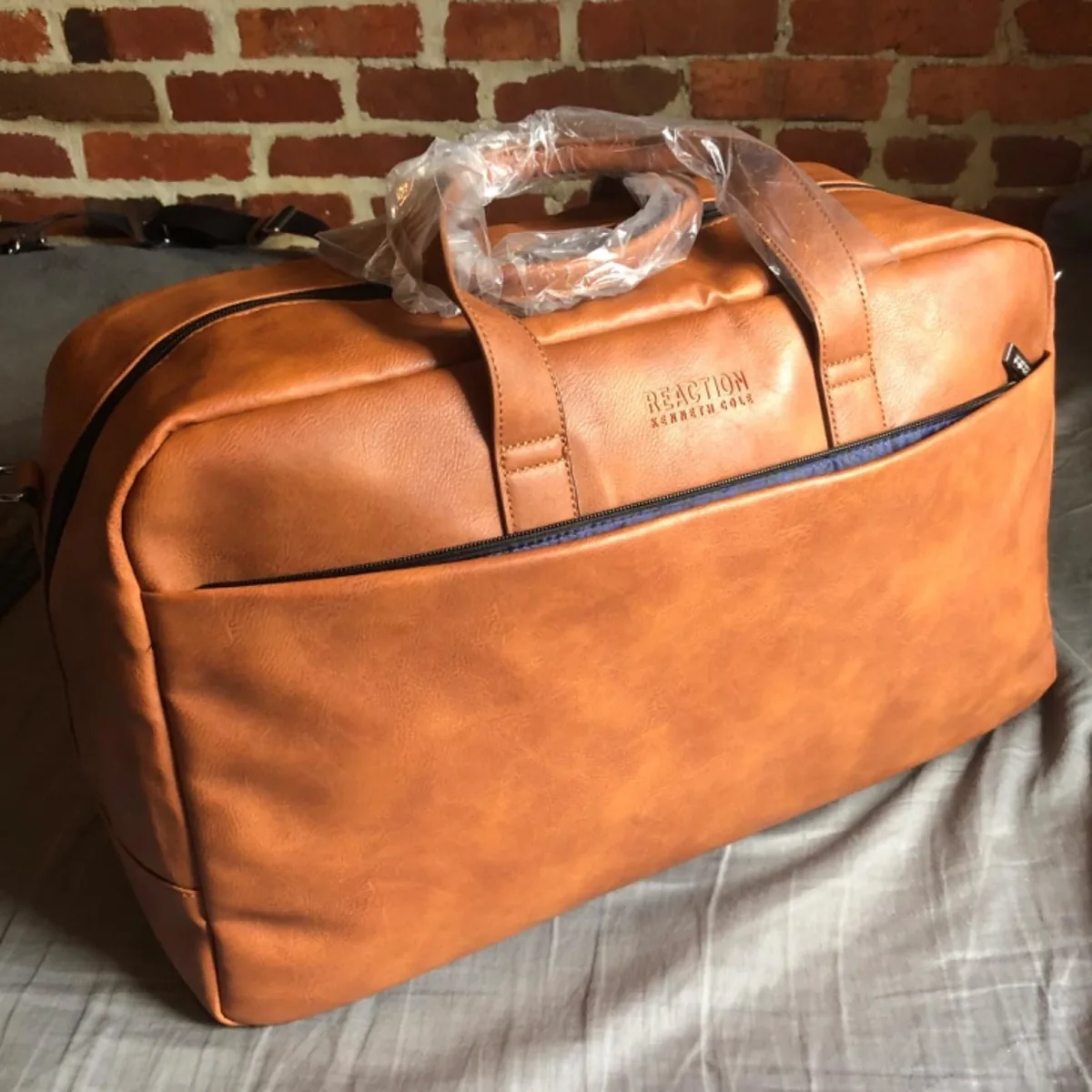
Leather looks polished and ages well, but even an empty leather bag is noticeably heavier, which matters when you carry it everywhere. Faux leather gives a similar look at a lower weight, though it does not develop the same character over time and can peel with heavy use.
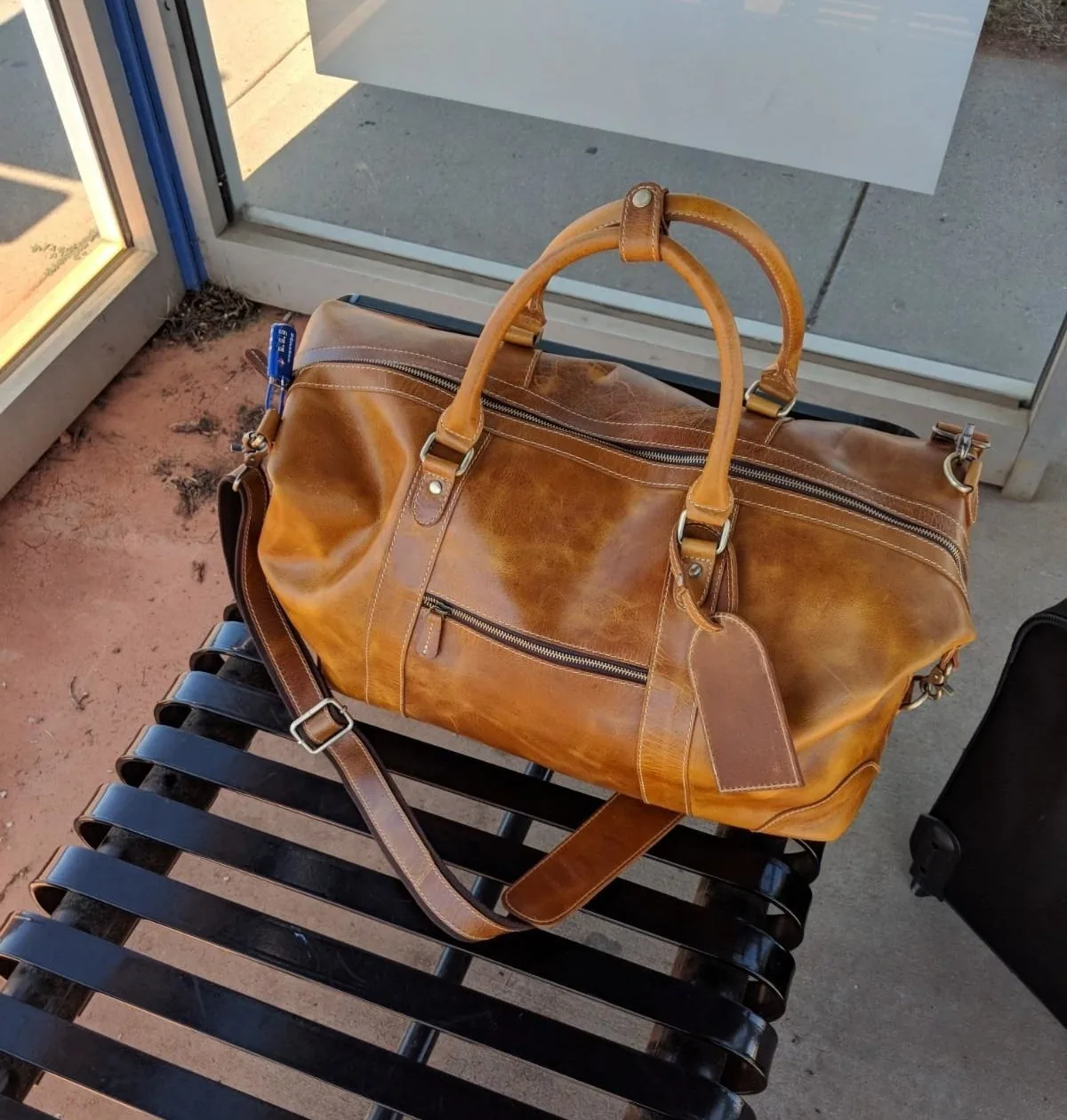
Whatever the material, check the base. A reinforced or coated bottom, or small feet, protects the bag when you set it down on station floors and wet pavements. A lining in a light color also makes it much easier to find things inside.
Choosing a look you will reach for
A weekender is often the bag you carry into a friend’s home, a hotel lobby or a family dinner, so it is worth choosing one that matches the rest of your wardrobe. Navy, black, olive, tan and cream work with almost any coat; stripes and prints are fun but can clash with a patterned jacket. If the bag will sit beside your work tote, matching the metal hardware and leather tones keeps the pair looking deliberate.
Finally, pick it up empty. If it already feels heavy in your hand, it will feel twice as heavy on the walk to the platform. Then pack it once at home with a real weekend’s worth of clothes, shoes in the base, and zip it without forcing. If it closes easily and still sits flat on your shoulder, you have the right size.
Packing it so it carries well
- Heavy things low and close to your back: shoes, in bags, go along the base or in the shoe compartment, so the bag does not tip or swing.
- Roll the soft things, fold the crisp ones: tees, knits and sleepwear roll well; shirts, trousers and a blazer stay smarter folded flat on top.
- Use packing cubes or pouches: one for clothes, one for underwear and socks. They turn a single big compartment into drawers and make unpacking at a hotel a minute’s work.
- Keep liquids reachable: in the US, carry-on liquids must be in containers of 3.4 ounces (100 ml) or less, all in one quart-size bag. Put it in the outside pocket so security takes seconds.
- Wear the bulkiest pair: travel in your boots or sneakers and pack one lighter pair, which frees up a surprising amount of room.
- Plan outfits, not items: two bottoms, three tops that work with both, and one layer that goes over everything cover most weekends.
Quick answers
Can a weekender be my carry-on?
Usually, yes. Most medium weekenders fall inside standard carry-on limits, and compact ones can pass as a personal item. Check the packed depth, since that is the measurement soft bags most often exceed.
How many liters do I need for three days?
Guides disagree, with suggestions ranging from about 20 to 50 liters. Around 30 to 45 liters suits most people; careful, light packers can manage with 20 to 25, especially if they wear their bulkiest layers.
Do I need a laptop sleeve?
Only if you travel for work. A padded sleeve against the back panel protects the laptop and keeps the bag flat on your shoulder, but it adds weight to every trip, so skip it if you rarely bring one.
Leather or nylon for flying?
Nylon or canvas if you fly often or face weight limits; leather if you mostly drive or take the train and want a bag that ages handsomely.
Planning what goes inside? Our guide to trip outfits for changing weather helps you pack light, and for a smaller bag to carry around town once you arrive, see our hands-free bag guide.